Solid Wood vs. Veneer Furniture: Which Is Better?
Is solid wood better than veneer? Seville Home explains why the finest luxury casegoods use veneer on purpose, and how to tell true veneer from cheap laminate.
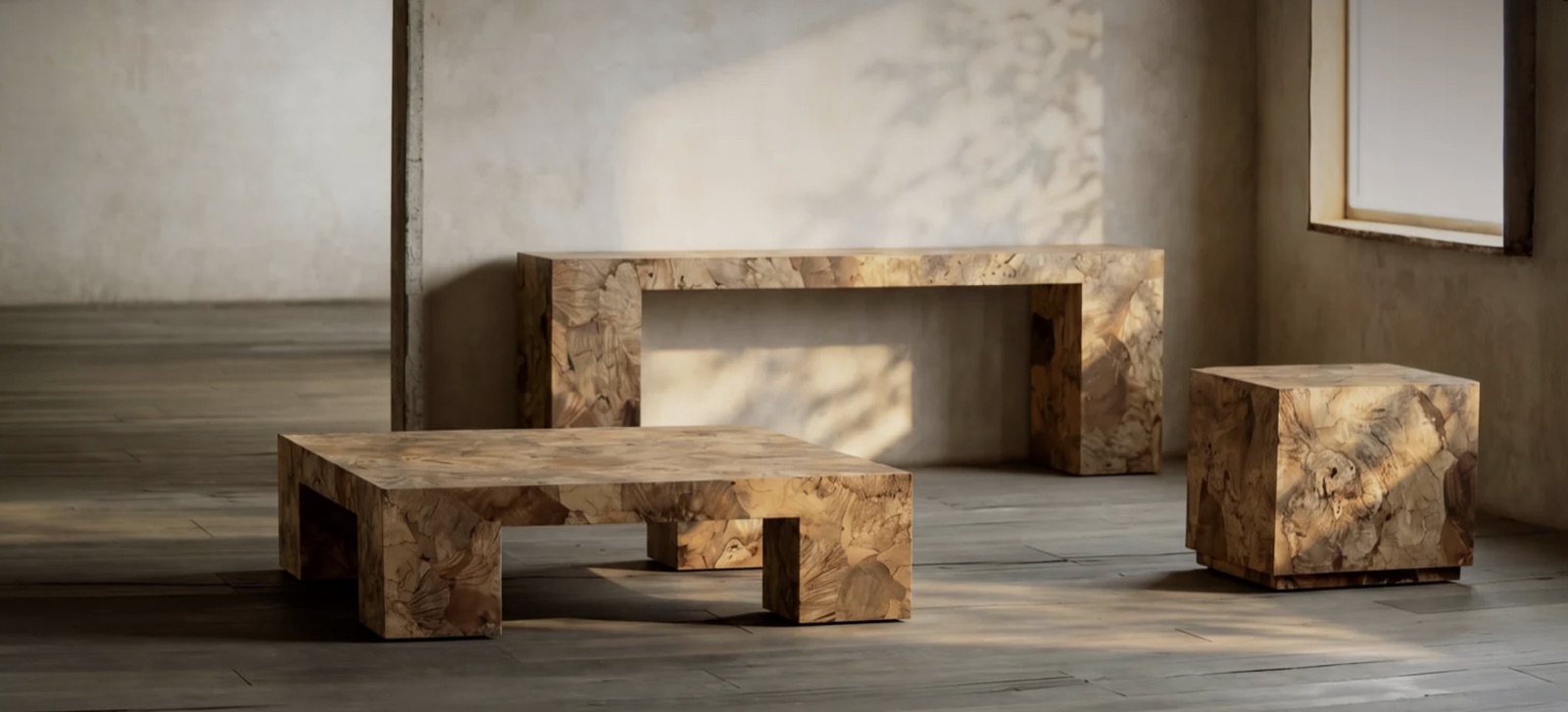
Stand in front of any chest, dining table, or sideboard long enough and one question surfaces: is it solid wood? Every shopper asks it, and it feels like the whole test, a single pass or fail for quality. It is the wrong question. Veneer describes a construction method, not a quality tier, and some of the finest casegoods ever built, from eighteenth-century French commodes to the pieces leaving the best workshops today, wear veneer on purpose.
A more useful habit is to judge a wood piece along two separate axes. First, what is the visible surface: a solid board, a fine wood veneer, or a plastic laminate printed to look like wood? Second, what is that surface built on: solid lumber, a furniture-grade engineered core, or particleboard? Quality lives in the combination. The failures people blame on veneer, the bubbled desktop, the corner that chipped to reveal gray dust, are almost always laminate over particleboard. Real veneer over a proper core is a different material in every way that matters.
What is veneer furniture, really?
Veneer is a thin slice of real hardwood, bonded to a stable core and sanded, stained, and finished exactly like solid wood. Picture a log of figured walnut sliced into sheets thinner than a credit card. Those sheets carry the same grain, the same color, the same warmth as the board they came from, because they are the board they came from. A furniture maker bonds them to a core engineered for flatness, usually furniture-grade MDF or lumber-core panel, then finishes the surface with the same stains and lacquers used on solid stock. The technique is centuries old. Cabinetmakers were veneering long before power tools existed, precisely because it solved problems solid lumber could not.
Laminate is something else entirely: a photograph of wood grain printed on paper or plastic and sealed under resin. No tree required. When people say veneer with a wrinkled nose, laminate is usually what they are remembering.
Is solid wood always better than veneer?
No. Solid wood and fine veneer are different tools, and the best makers use each one where it performs best. Wood never stops being a natural material. It absorbs moisture in a humid August and releases it in a dry January, expanding and contracting across the grain the whole time. A narrow leg barely shows it. A wide solid panel, a table top or a cabinet side, can cup, warp, or split along a glue line as it moves. Cabinetmakers have known it for three hundred years, which is why even the great antique makers veneered their widest surfaces. A veneered panel over an engineered core stays flat because the core does not move the way a wide plank does.
Walk the floor at Seville Home and you will see the honest answer everywhere: mixed construction. Solid hardwood legs, frames, and drawer sides where strength and carving matter, veneered tops and panels where flatness and figure matter. Makers like Century, Theodore Alexander, Bernhardt Interiors, Woodbridge, and Vanguard build this way not to save money but because it is the correct engineering.
What are the advantages of solid wood?
Solid wood can be carved, shaped, sanded, and refinished repeatedly, and it ages with real character. A turned leg, a fluted post, a hand-carved apron: those forms only come from solid stock. Solid wood also forgives. A deep scratch in a solid dining table top can be sanded out and refinished, not once but several times over the life of the piece. Dents and wear soften into patina rather than damage. A well-built solid piece is the one your grandchildren argue over.
The trade-off is the movement described above, which is why solid construction shines in legs, frames, chairs, and narrower surfaces, and why a maker who veneers a forty-inch-wide top is often protecting you, not shortchanging you.
Why do fine furniture makers choose veneer?
Makers choose veneer for dimensional stability and for grain patterns that solid lumber cannot physically produce. Slice a log into sequential sheets and you can open two adjacent slices like a book, mirroring the grain down a center seam. Bookmatched walnut on a credenza door, a radial starburst on a round table top, a field of burl on a chest front: none of it is possible in solid boards. Veneer is also the responsible way to use rare and slow-growing species, since a single exceptional log yields hundreds of surfaces instead of a handful of planks.
Veneer has limits worth naming. The wood layer is thin, so a deep gouge cannot be sanded out the way solid can; repairs mean touch-up or a restorer's patch. Skilled veneer work is also labor-intensive, one reason quality furniture costs what it costs.
How can I tell quality veneer from cheap laminate?
Check the grain for repeats, study the edges and end grain, and open a drawer: real wood construction tells on itself. A few tests you can run in any store:
- Grain repetition. Printed laminate repeats its pattern; look across a wide surface for the same knot or swirl appearing twice. Real veneer never repeats.
- Edges. Laminate shows a hard seam or a strip of plastic edge banding where surface meets side. Fine veneer work wraps edges in real wood.
- End grain. On solid wood, growth rings run through the end of a board. Laminate ends look printed or capped.
- Weight and drawers. Quality casegoods are heavy, with dovetailed drawers in solid secondary woods. Feather-light weight and stapled drawers signal particleboard underneath.
How do I care for each?
Solid wood and veneer want the same things: stable humidity, protection from direct sun, and quick attention to spills. Keep pieces away from heat vents and radiators, use coasters and pads, and never let standing water sit on any wood surface. Solid pieces appreciate steady indoor humidity so seasonal movement stays gentle. Veneered surfaces ask only that you avoid soaking and abrasion, since the wood layer is thin. The full routine, including polish choices and sun management, lives in our guide to caring for wood furniture.
Where can I compare solid wood and veneer in person?
The fastest education is ten minutes with real casegoods: open the drawers, feel the weight, and see bookmatched veneer up close. Photographs flatten the difference; your hands will not. The Seville Home showroom at 5205 W 135th Street in Leawood, Kansas is open Monday through Saturday, 10 a.m. to 5 p.m., and the floor is full of both constructions from makers who do each one well. Plan your visit, or if you are furnishing a whole room and want a second set of eyes on construction, finish, and scale, book a design consultation and bring your questions with you.
Common questions
Is veneer furniture lower quality than solid wood?
No. Veneer is a thin slice of real hardwood bonded to a stable core, and the finest furniture makers in the world use it deliberately for stability and grain figure. The failures people associate with veneer, like bubbling and chipped corners, almost always come from plastic laminate over particleboard, a different material entirely.
How can you tell real wood veneer from laminate?
Real veneer has grain that varies across the surface, visible wood at the edges, and natural warmth to the touch. Laminate is a printed image of wood on plastic, so the grain pattern repeats, the edges show a hard seam or plastic banding, and the surface feels uniformly slick.
Can veneer furniture be repaired?
Light scratches and finish wear on veneer can be touched up or professionally refinished, though a deep gouge that cuts through the veneer layer cannot be sanded out the way solid wood can. A skilled restorer can patch or replace damaged veneer, which is how antique veneered pieces survive for centuries.
Do high-end furniture brands use veneer?
Yes, deliberately. Heirloom-grade makers such as Century, Theodore Alexander, and Bernhardt Interiors combine solid hardwood legs and frames with fine veneers over furniture-grade engineered cores, because veneer stays flat across wide surfaces and allows bookmatched grain patterns solid lumber cannot produce.