How to Choose the Right Rug Size for Every Room
A room-by-room guide to choosing the right rug size, with the exact measurements designers use for living rooms, bedrooms, and dining rooms.
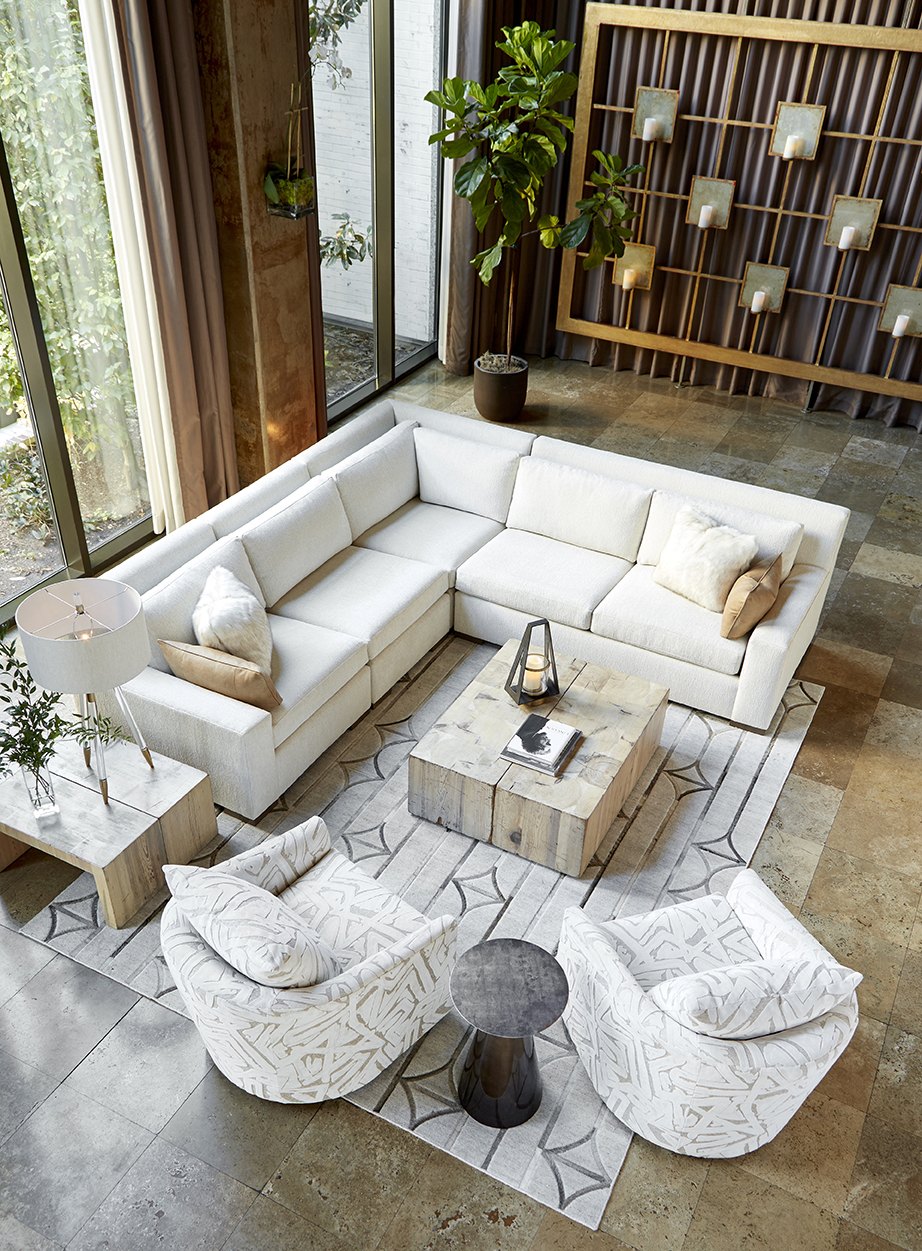
A rug is the quietest decision in a room and one of the easiest to get wrong. Too small, and the whole space feels like it is floating, no matter how good the furniture is. The right size does the opposite. It gathers the seating into one group, defines the room, and makes everything above it look intentional.
Here is the room-by-room guide our designers use, with the measurements worth knowing before you buy.
What size rug goes under a living room sofa?
A 9-by-12-foot rug suits most living rooms, sized so the front legs of the sofa and the chairs around it all rest on the rug.
The goal is a rug large enough to unite the seating group, not a mat that sits marooned under the coffee table. Two numbers make it easy. The rug should run 8 to 12 inches past each end of the sofa, and it should leave 10 to 18 inches of bare floor between its edge and the walls. That border of floor is what frames the rug and keeps a room from feeling wall-to-wall.
In a smaller living room, a 8-by-10 can work. In a generous one, a 10-by-14 keeps the proportions right. When in doubt, size up. The most common mistake we see is a rug a size too small.
Should all the furniture legs be on the rug?
All legs on the rug is the most grounded look, and front legs on is the minimum.
There are three ways furniture meets a rug. All legs on the rug reads as the most considered and works beautifully when the rug is sized generously. Front legs on, with the back legs on the floor, is a perfectly good option in a mid-size room and the one most people land on. All legs off, with the rug floating in the middle, is the one to avoid. It shrinks the room and makes the furniture look like it wandered in from somewhere else.
Whichever you choose, apply it to every seating piece in the group so the sofa and the chairs relate to the rug the same way.
How do you size a rug for a sectional?
The rug should extend past both arms of the sectional, so the whole L rests on it.
A sectional is a large, angled shape, and a rug that only reaches one arm fights it. Let the rug run beyond both ends of the sectional and past the front edge, so the coffee table and the front legs sit comfortably on top. Because sectionals tend to live in bigger rooms, this often means a 9-by-12 at a minimum and frequently larger. When a sectional is built to your room through a program like custom upholstery, it is worth planning the rug at the same time so the two are scaled to each other.
What size rug goes under a bed?
An 8-by-10 under a queen and a 9-by-12 under a king, set so the rug reaches past the sides and the foot of the bed.
A bedroom rug has one job beyond looking good: it is the first thing your feet touch in the morning. Slide the rug about a third of the way under the bed, starting below the nightstands, and let it extend well past both sides and the foot. You want softness where you step, not a strip you have to aim for. In a large primary bedroom, two runners on either side of the bed are a handsome alternative when a single rug would swallow the floor.
How big should a dining room rug be?
Large enough that the chairs stay on the rug even when pulled out, which usually means about 24 inches of rug beyond the table on every side.
The test in a dining room is the chair. When someone pushes back to stand, the back legs should still be on the rug, not caught on the edge. Measure your table and add roughly two feet in every direction. For most rectangular tables that lands on a 9-by-12; for a longer table, size up again. A round table looks best on a round rug sized the same way.
What if my room falls between sizes?
Between two standard sizes, choose the larger one, or have a rug cut to your room.
Standard rug sizes are a starting point, not a rule. When a room sits awkwardly between a 8-by-10 and a 9-by-12, the larger size almost always looks better than the smaller one. And for rooms that refuse to cooperate, many of the mills we carry will make a rug to your exact dimensions in a weave and color you choose. It is the same thinking behind small design decisions that make a big difference: the piece is built to the room rather than the room apologizing for the piece.
See rug sizes in your own space
The surest way to size a rug is to see it against your furniture, and that is what our designers are for.
Bring a floor plan, a few photos, or the measurements of your sofa, and a Seville Home designer will help you land on the right size and the right rug for the room, alongside the sofas and sectionals and case pieces it sits with. Your first consultation is complimentary, in the Leawood showroom or your home. You are also welcome to plan a visit and walk the floor first.
Common questions
What size rug goes under a living room sofa?
A 9-by-12-foot rug fits most living rooms and lets the front legs of the sofa and the surrounding chairs rest on it. Aim for the rug to run 8 to 12 inches past each end of the sofa, and leave 10 to 18 inches of bare floor between the rug and the walls.
Should all the furniture legs sit on the rug?
Ideally yes. All legs on the rug is the most grounded look. If the room or the budget calls for a smaller size, keep at least the front legs of every seating piece on the rug so nothing floats. Furniture with no legs on the rug is the most common sizing mistake.
What size rug fits under a queen or king bed?
An 8-by-10-foot rug works under a queen bed and a 9-by-12 under a king, with the rug starting below the nightstands and extending past the sides and foot of the bed so your feet land on softness when you get up.
How big should a dining room rug be?
The rug should extend about 24 inches beyond the table on every side so the chairs stay on the rug even when pulled out to sit. For most rectangular tables that means a 9-by-12, and for a large table a larger size still.