Will It Fit? How to Measure for Furniture Delivery
Measure doorways, stairs, and elevators before your furniture arrives. A step-by-step fit guide from Seville Home, Kansas City's luxury furnishings showroom.
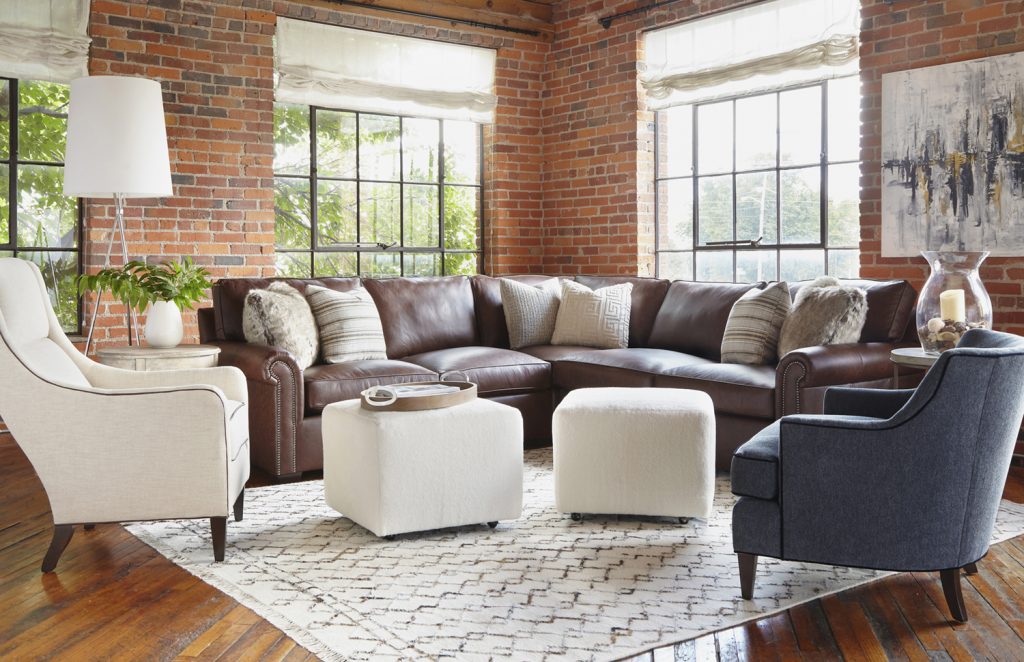
You find the sofa. The fabric is right, the depth is right, and eight weeks later a truck pulls up with the piece you have been picturing in your living room. Then it stops halfway up the stairwell, wedged between the railing and the ceiling, and no amount of angling will free it. Every delivery crew has a version of the story, and every version was preventable with a tape measure and ten minutes.
Fit is not luck. It is a comparison between two sets of numbers: the true shipping dimensions of the piece, including its diagonal depth, and the tightest point of the path it must travel from the truck to the room. Measure both honestly and the answer is arithmetic. Here is how to get both sets right.
What measurements do I need from the furniture?
You need the piece's width, depth, and height as it actually ships, plus its diagonal depth, because the tear sheet describes how a sofa sits in a room, not how it travels through a house.
Start with the manufacturer's overall width, depth, and height, then ask the questions the spec sheet does not answer. Do the legs unscrew? Removable legs can take several inches off the clearance a piece needs. Do the back cushions detach, or are they attached? Is the frame one fixed piece, or does it ship in sections? A benchmade sofa with a solid hardwood frame does not compress, flex, or forgive, so its numbers are its numbers.
Write those down, then add the one that matters most in a tight house: diagonal depth. And keep fit separate from scale. How large a sofa should be for the room is its own question, and our guide to sofa size and seat depth walks through it.
What is diagonal depth and why does it matter?
Diagonal depth is the measurement across a sofa's profile from the top of the back to the front of the arm, and it is the number that predicts whether the piece can make a tight passage on end.
Sofas rarely pass through a doorway sitting flat on their feet. They travel tilted on their side or standing on end, which means the dimension doing the work is not width or depth but the diagonal of the profile. To find it, run a straightedge from the highest point of the back frame to the front edge of the arm, then measure from the bottom back corner of the frame straight across to that line. The result is the smallest opening the sofa can pivot through on end.
Compare it to your narrowest point. If the diagonal depth is smaller than the doorway, the piece can usually be walked through even when the flat dimensions say otherwise. If it is larger, no amount of muscle changes the answer.
How do I measure my doorways and hallways?
Measure every opening at its narrowest point, which is the clear space between the doorstop and the hinges or hardware, not the width of the frame.
Open the door fully and run the tape from the face of the door to the stop on the opposite jamb. Hinges, knobs, and latch hardware all steal width, so measure around them, not past them. Taking a door off its hinges buys back an inch or two, and a good crew does it as a matter of routine.
Then walk the entire path with the tape. Record hallway widths, ceiling heights, and especially the corners: a turn is really two openings meeting at an angle, so note the width of both legs of the hall and the ceiling height at the corner itself. Watch for anything that eats space, including light fixtures, handrails, radiators, and thermostats. The path is only as generous as its stingiest point.
How do I know if a sofa will fit up the stairs?
Treat the staircase as a series of pinch points: the width between the wall and the railing, the ceiling clearance measured from the nose of the steps, and every landing where the piece must turn.
Stairs defeat more deliveries than doorways do, because a sofa climbs them tilted or standing on end while the crew pivots at each landing. The numbers that matter are the clear stair width between railings or banister and wall, the vertical clearance from step nosing to the ceiling above, and the depth and width of each landing. A landing that forces a turn is where diagonal depth earns its keep: the piece has to rotate through that box, on end, without a newel post or light fixture in the arc.
Measure the ceiling at the top of the stairs, too. Plenty of sofas clear the climb and then cannot level out because the ceiling drops or the hall turns immediately.
What about elevators and apartment buildings?
An elevator adds three numbers to the worksheet: the clear door opening, the cab depth, and the diagonal from the door to the back corner of the cab.
Measure the elevator door at its narrowest, then the cab's interior depth and height. A tall cab is a gift, since a piece standing on end needs height rather than floor space, and the real question becomes whether it can pivot in through the door. Ask the building about the rest: service elevator reservations, padding, freight hours, and any certificate of insurance the management requires. Seville Home's white-glove delivery crew delivers to downtown lofts and elevator buildings across the Kansas City metro and handles that coordination as part of the job.
What if it will not fit?
Most apparent misfits are solved by the crew, and for the true ones you have three honest options: a sectional that arrives in pieces, a smaller scale of the same frame, or custom upholstery built to your dimensions.
Before anyone panics, remember what an experienced crew does routinely: legs come off, doors come off their hinges, cushions travel separately, and the piece is wrapped, tilted, and pivoted by people who do it every day. A path that looks impossible with the door on is often comfortable with the door off.
When the arithmetic truly fails, change the piece rather than the house. A sectional ships in components, and each component travels more like a chair than a sofa. Many frames come in a smaller scale or a shallower depth that keeps the design you love. And when the room deserves one specific piece at one specific size, custom upholstery can be built to your exact dimensions, sized for the stairwell as carefully as for the room. Better still, the problem can be caught before the order is placed: bring us your measurements, or invite us to measure the path ourselves, and we will run the numbers and flag any fit concern up front rather than on delivery day.
Where can I get help making sure it fits?
Bring your measurements, or photos of the doorways and stairs, to Seville Home and we will run the fit arithmetic with you before anything is ordered.
Measuring for delivery is a standard part of our design consultation, right alongside fabric, scale, and floor plan. The showroom is at 5205 W 135th Street in Leawood, open Monday through Saturday, 10 a.m. to 5 p.m. Plan a visit, or book a consultation and bring your toughest hallway with you. A tricky path is a design constraint like any other, and we would much rather solve it at the swatch wall than in your stairwell.
Common questions
What is diagonal depth on a sofa?
Diagonal depth is the measurement across a sofa's profile, found by running a straight line from the top of the back frame to the front of the arm and measuring from the bottom back corner to that line. It represents the smallest opening the sofa can pivot through when carried on end. If the diagonal depth is smaller than your narrowest doorway, the piece can usually be walked through even when its flat dimensions cannot.
How do I measure a doorway for furniture delivery?
Open the door fully and measure the clear passage at its narrowest point, from the doorstop to the hinges and hardware, rather than the width of the frame. Removing the door from its hinges gains an inch or two more, and a professional crew does it routinely. Measure the whole path the same way, including hallway widths, ceiling heights, and the tightest point of every turn.
Will my couch fit up the stairs?
It will if the stair width between wall and railing, the ceiling clearance above the step nosing, and every landing are all larger than the sofa's diagonal depth, since sofas climb stairs tilted on end. Measure each landing where the piece must turn, and check the ceiling at the top of the stairs. When the numbers are close, have the delivery crew review them before the order is placed.
What happens if furniture doesn't fit through the door?
An experienced crew resolves most close calls by removing the sofa's legs, taking doors off their hinges, and tilting the piece through on end. When the path truly cannot work, the alternatives are a sectional that arrives in pieces, a smaller scale of the same frame, or custom upholstery built to dimensions that fit both the room and the route. Bring your measurements to Seville Home, or ask the team to measure, and fit gets checked during the design consultation, before an order is ever placed.