Sideboard vs. Buffet vs. Credenza: What's the Difference?
Sideboard, buffet, or credenza? A Kansas City fine furniture showroom explains the real differences and how to choose the right piece for your room.
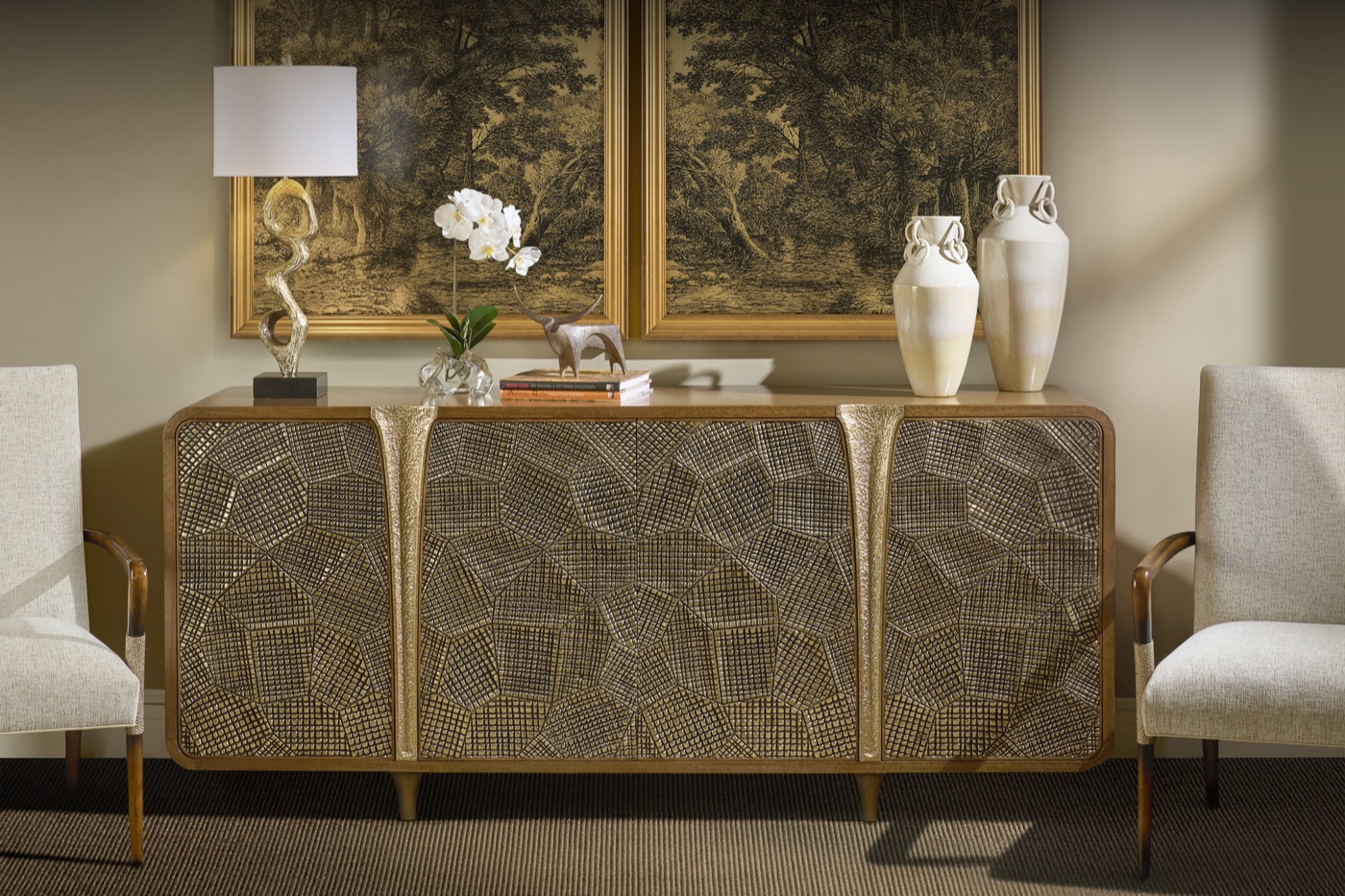
Ask three furniture people to define a sideboard, a buffet, and a credenza, and you will get three overlapping answers, because the three words get applied to nearly identical pieces. Shoppers often assume they are missing some precise rule that separates one from the other. There is a real history behind each term, and it is worth knowing, but the honest answer is simpler and more useful than a set of definitions.
Here it is: history gave the three words different origins. A sideboard was dining-room storage, with leg height and side height varying by era. A buffet was simply a sideboard put to work serving food. A credenza started out lower and leggier, then migrated out of the dining room into living rooms and offices. Modern usage has collapsed all three into near-synonyms, and manufacturers apply the labels loosely. What actually matters when you are buying is not the name on the tag but four practical dimensions: the room the piece will serve, its height relative to how you will use it, the storage configuration inside, and the leg style and visual weight.
What is a sideboard?
A sideboard is a long, low storage cabinet built for the dining room, sized to hold linens, flatware, serving pieces, and dishes behind a mix of drawers and doors. The classic form sits against a wall at roughly waist height, with shallow drawers up top for napkins, table runners, and flatware, and cabinet doors below concealing shelves for dishes, chargers, and serving bowls. Leg style has always varied: Georgian sideboards stood on tall, slender legs, while many current designs run nearly to the floor on a plinth base. Makers Seville Home carries, including John-Richard, Century, Theodore Alexander, Woodbridge, and Bernhardt Interiors, build sideboards in both solid wood and fine veneers, and the difference between those constructions matters more than most shoppers expect. Our guide to solid wood versus veneer furniture explains why a well-made veneer piece is often the more stable choice for a wide, flat case like this.
What is a buffet?
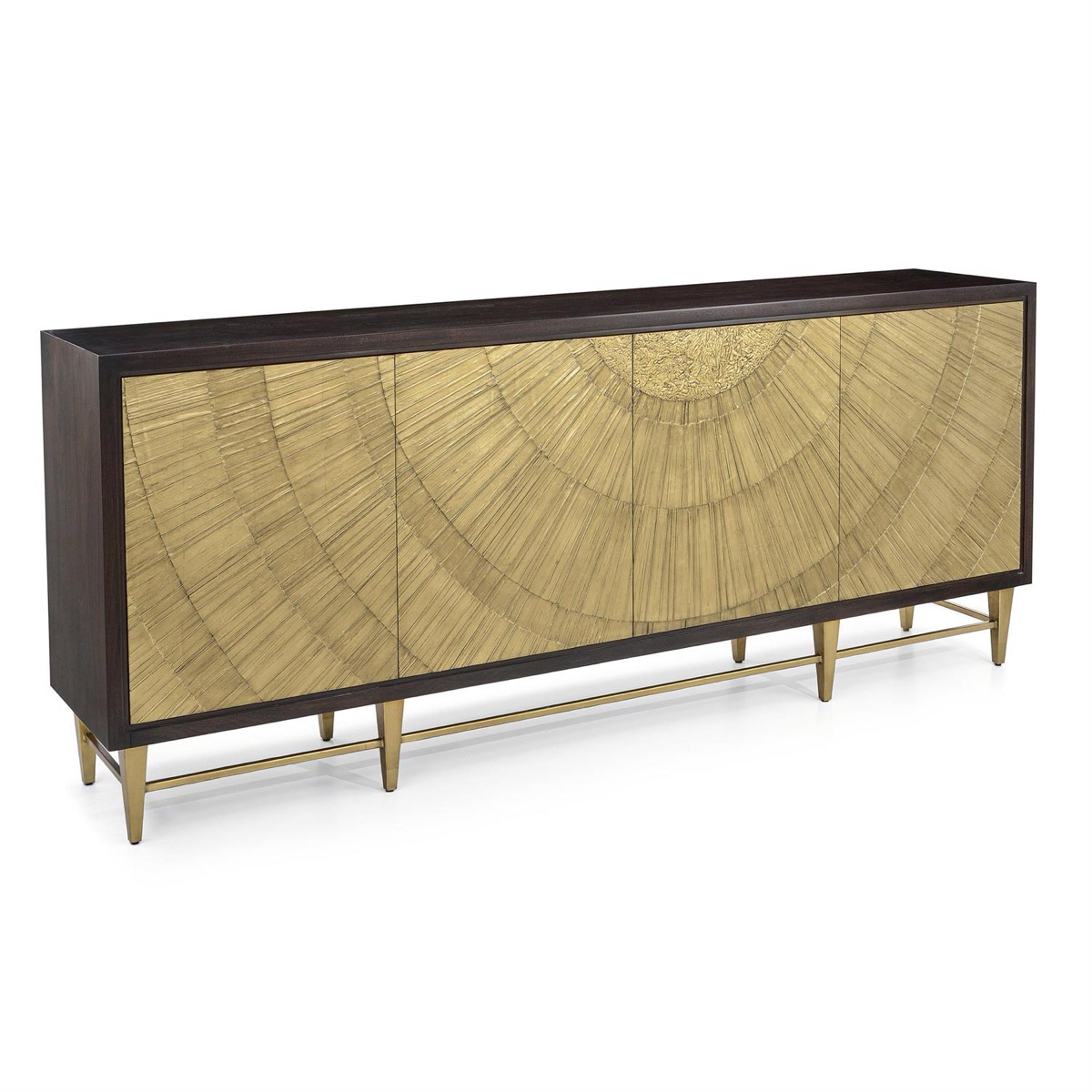
A buffet is a sideboard doing a job: when the top surface is used to serve food, the piece is a buffet. The word describes function rather than form, which is exactly why the two terms blur together. In American usage they are fully interchangeable, though "buffet" tends to imply a piece whose top sits at a comfortable serving height and whose interior leans toward dish and platter storage. If you plan to set out a holiday spread or a Sunday brunch on it, you are shopping for a buffet, whatever the label says.
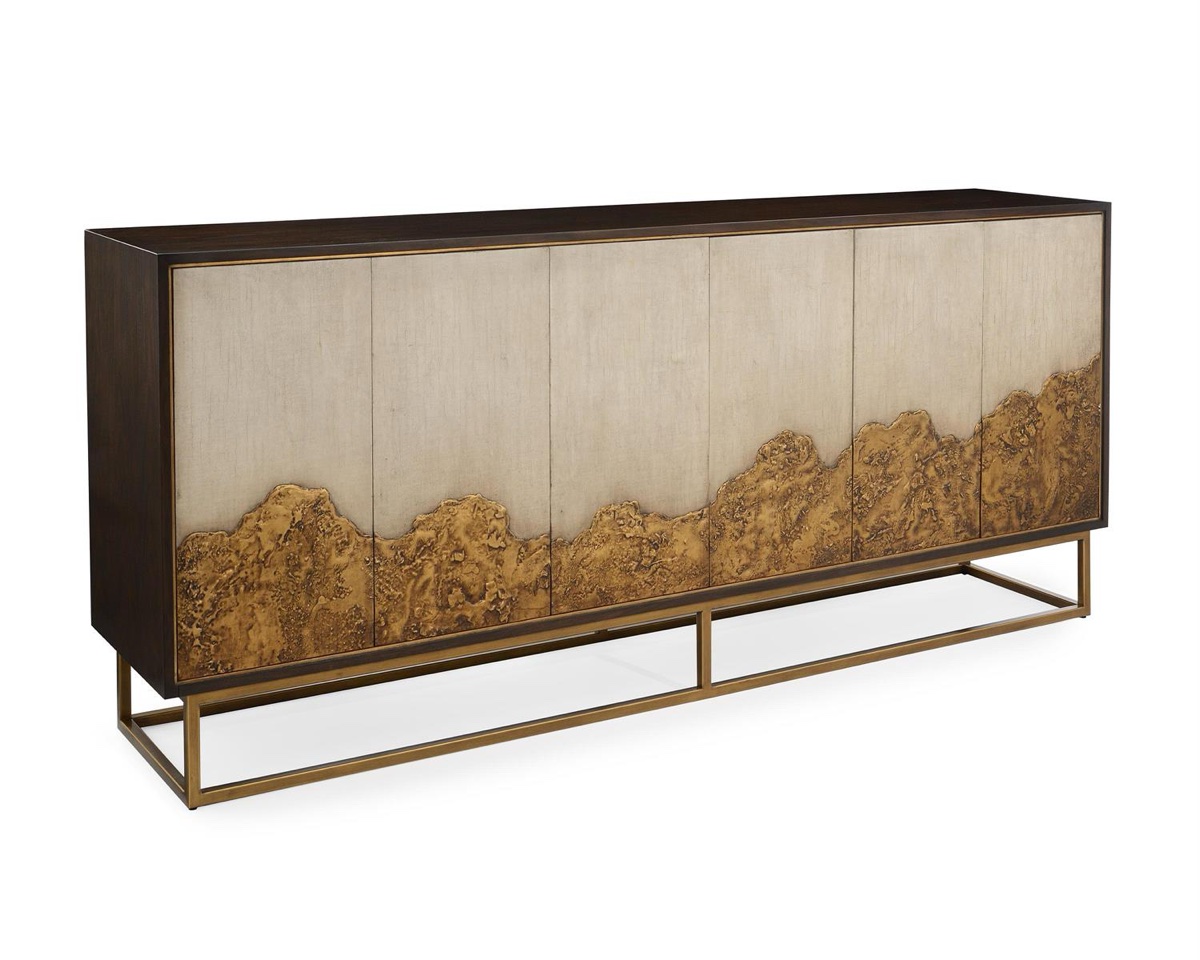
John-Richard names this six-door piece the Highlands sideboard. Set a holiday spread across its top and it becomes the buffet: the word describes the job, not the cabinet.
What is a credenza?
A credenza is the lower, leggier cousin, often legless or raised on slim metal or wood legs, and it left the dining room long ago for living rooms, media walls, and offices. The word comes from Renaissance Italy, where food was placed on a side cabinet to be tasted before serving. Today the term signals a lower profile, frequently sliding doors instead of hinged ones, and a strong association with mid-century and contemporary design. A credenza reads lighter in a room than a traditional sideboard, which is precisely its appeal in spaces where a heavy case piece would crowd the walls.
What is the difference between a buffet and a sideboard?
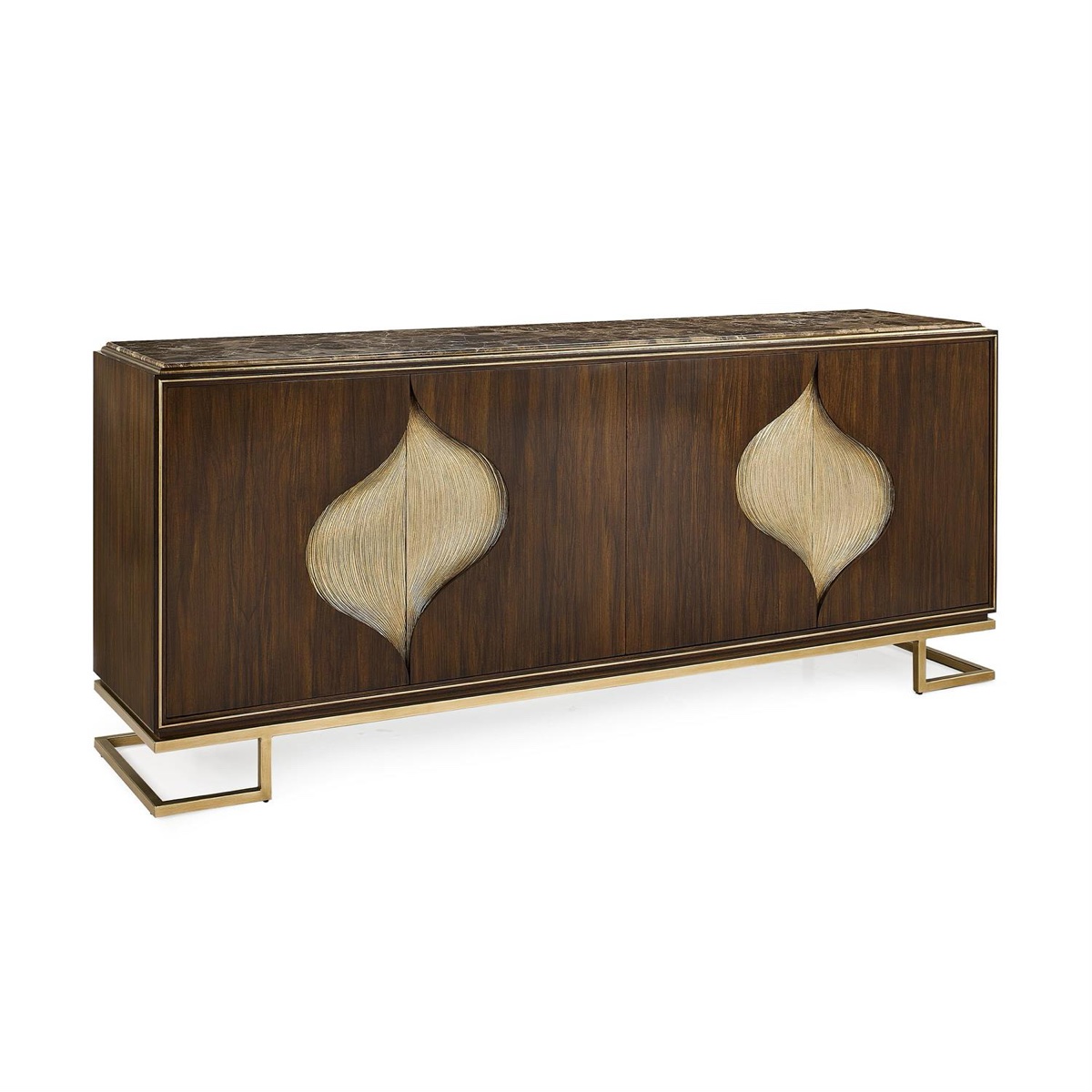
In modern American usage there is no reliable difference: sideboard names the piece, buffet names the use, and the industry treats them as the same item. You will see identical cabinets listed under both words, sometimes by the same maker. Rather than hunting for a distinction that no longer exists, evaluate any candidate on the four dimensions that do exist: room, height, interior storage, and legs. A piece that checks the right boxes for your dining room is correct no matter what the tag calls it.
How tall should a sideboard or buffet be?
For serving, look for a top around 34 to 38 inches, close to kitchen-counter height, so guests can reach platters comfortably while standing. A useful rule: the top should sit at or slightly above your dining table, which typically stands around 30 inches. A serving piece noticeably shorter than the table looks sunken and forces awkward bending. For media or living-room use the logic reverses, and a lower case, often 24 to 30 inches, keeps the television near seated eye level and the room visually calm.
Which one do I need for my dining room?
Choose by storage and clearance, not by name: measure your wall, confirm at least 36 inches between the table edge and the front of the piece, then pick the drawer-and-shelf mix your entertaining actually requires. If you host often, prioritize felt-lined drawers for flatware and wide, adjustable shelves for stacked dishes and platters. Most dining case pieces run 18 to 22 inches deep, so a generous room can absorb one without pinching the walkway; if you serve from it mid-meal, 42 to 48 inches of clearance is more comfortable. You can see how these pieces anchor full dining rooms on our site, styled the way they live in real homes.
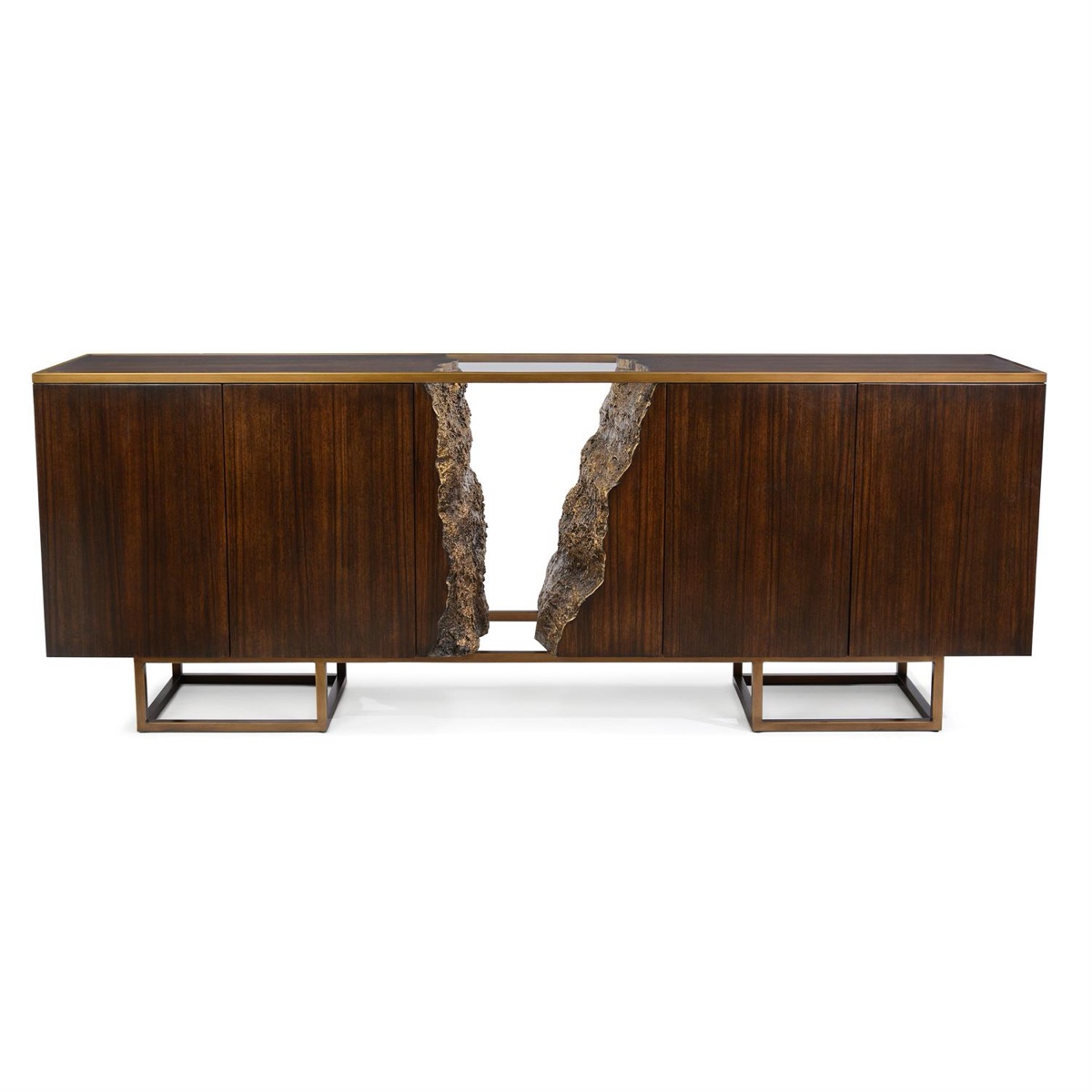
Can I use a credenza in a living room or entryway?
Yes, and it is one of the most versatile moves in furnishing: a credenza works as a media console, an entry landing zone, a console behind a sofa, or closed storage in a home office. In an entry, it swallows the clutter a console table only displays. Under a television, sliding doors hide components without door swing. Wherever it lands, a fine wood case earns simple upkeep habits; our guide to caring for wood furniture covers the few that matter.
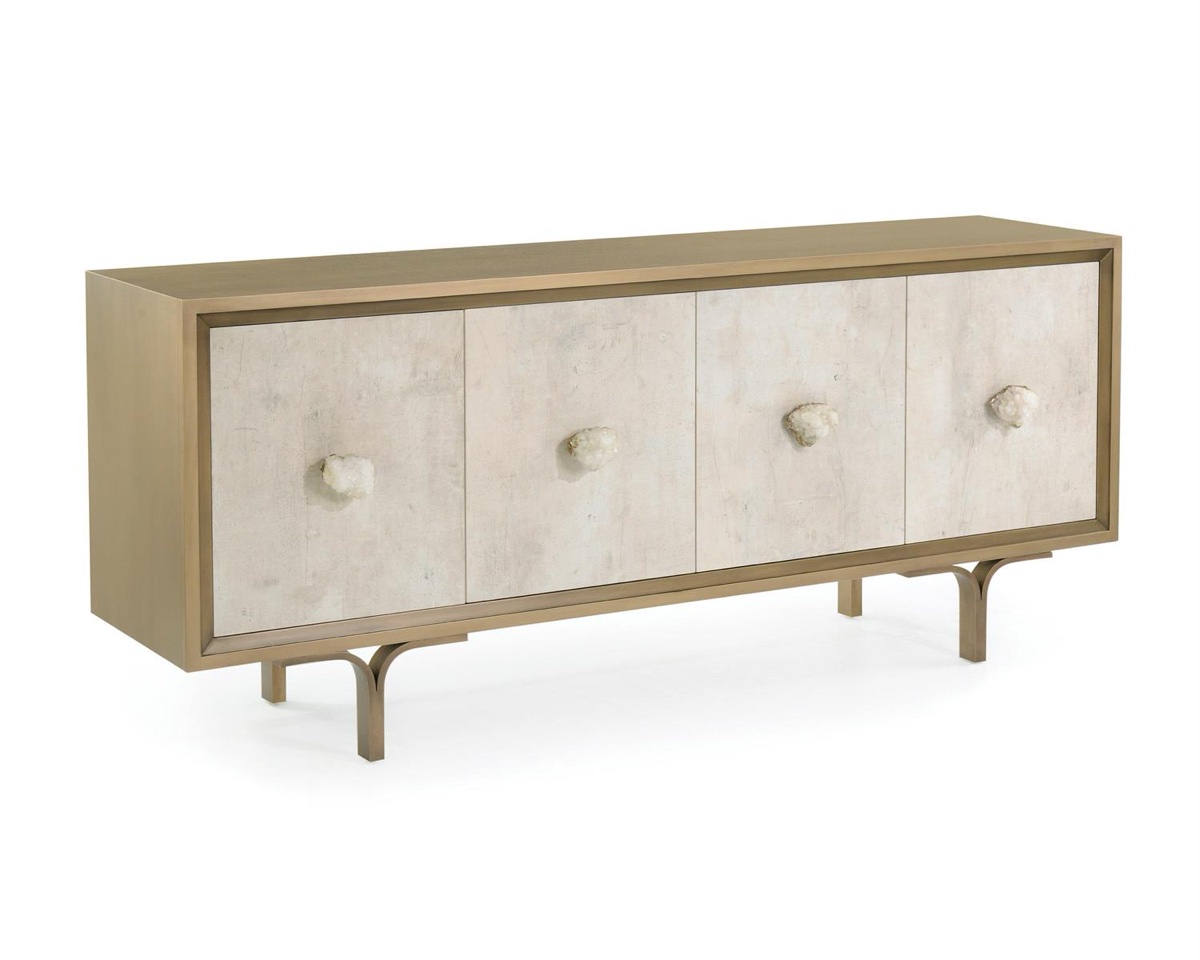
Where can I see sideboards and credenzas in person in Kansas City?
The fastest way to settle the vocabulary question is to stand in front of the pieces, and the Seville Home showroom in Leawood keeps sideboards, buffets, and credenzas from John-Richard, Century, Theodore Alexander, Woodbridge, and Bernhardt Interiors on the floor. Height, drawer feel, and visual weight are exactly the qualities a photograph flattens. Visit us at 5205 W 135th Street in Leawood, Monday through Saturday, 10 a.m. to 5 p.m., and bring your wall measurements. Our designers offer complimentary design consultations to help you match the right piece to your room, and white-glove delivery places it exactly where it belongs. Directions and details are on our visit page.
Common questions
What is the difference between a sideboard and a buffet?
In modern American usage there is no reliable difference. Historically, a sideboard is the piece of furniture and a buffet is a sideboard being used to serve food. Today the two words describe the same long, low dining-room storage cabinet, and manufacturers use them interchangeably.
What is a credenza used for?
A credenza is a low, long cabinet, usually legless or on slim legs, used for storage in living rooms, dining rooms, offices, and entryways. Common uses include media storage under a television, serving and dish storage in a dining room, and file or supply storage in a home office.
How tall should a buffet be for serving?
A buffet used for serving should stand about 34 to 38 inches tall, close to kitchen-counter height, so guests can reach platters comfortably while standing. As a rule, the top should sit at or slightly above the height of your dining table, which is typically around 30 inches.
How much clearance do you need behind dining chairs for a sideboard?
Allow at least 36 inches between the edge of the dining table and the front of the sideboard so a seated guest can push back and someone else can still walk behind them. If you serve from the sideboard during meals, 42 to 48 inches is more comfortable.