How to Choose a Recliner That Doesn't Look Like a Recliner
Tailored frames, hidden handles, manual or power, and how far from the wall it has to sit: how to choose a recliner for a room you care about, from Seville Home in Leawood, KS.
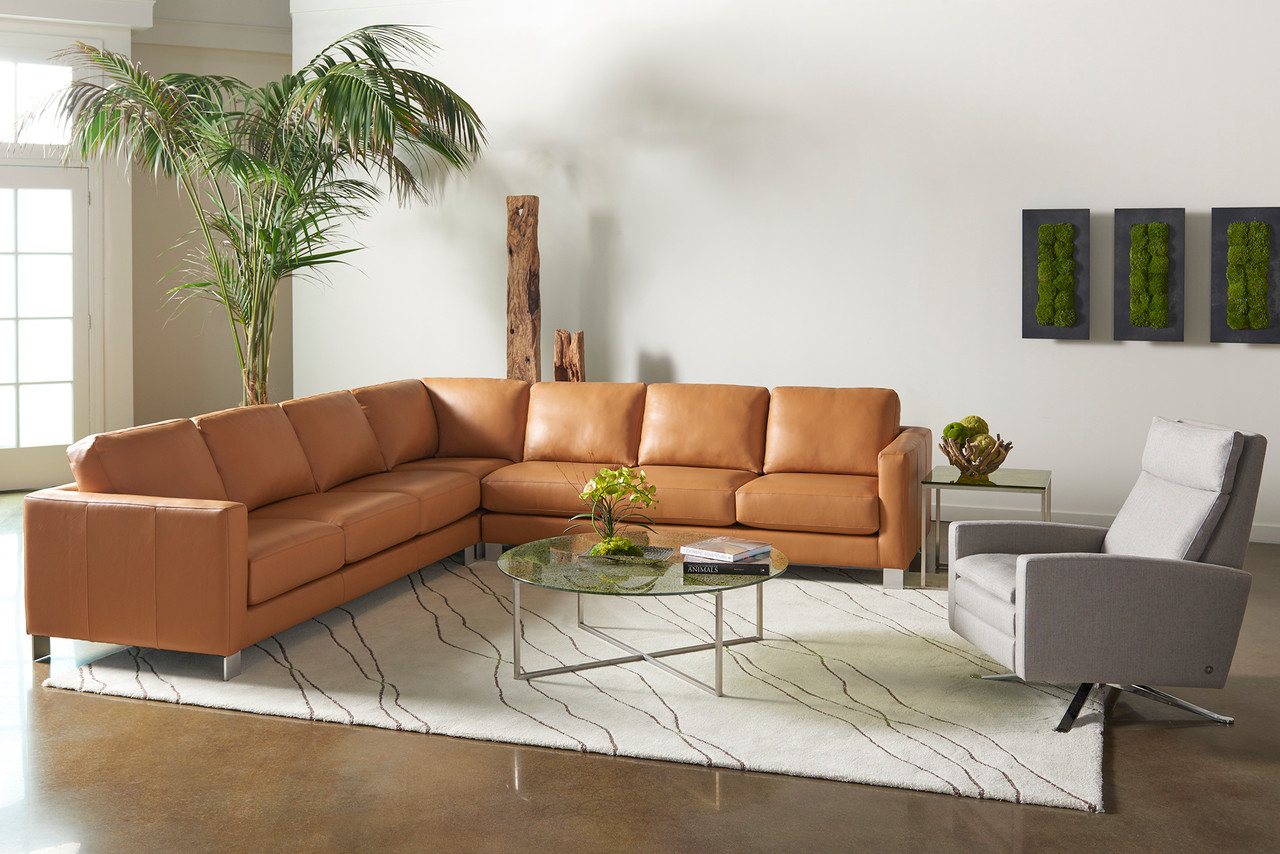
Say the word recliner and most people picture the same chair: overstuffed, skirted to the floor, with a lever on the side. So they either give up the living room to it, or give up the comfort. Neither trade is necessary.
A recliner is really two separate choices that tend to get bundled together. The first is the frame, which decides how the chair looks closed, and closed is how it spends most of the day. The second is the mechanism, which decides how it moves. Choose them one at a time, then check the two numbers that catch people out at home: how far the chair has to sit from the wall, and how high the seat is.
What makes a recliner look like a recliner?
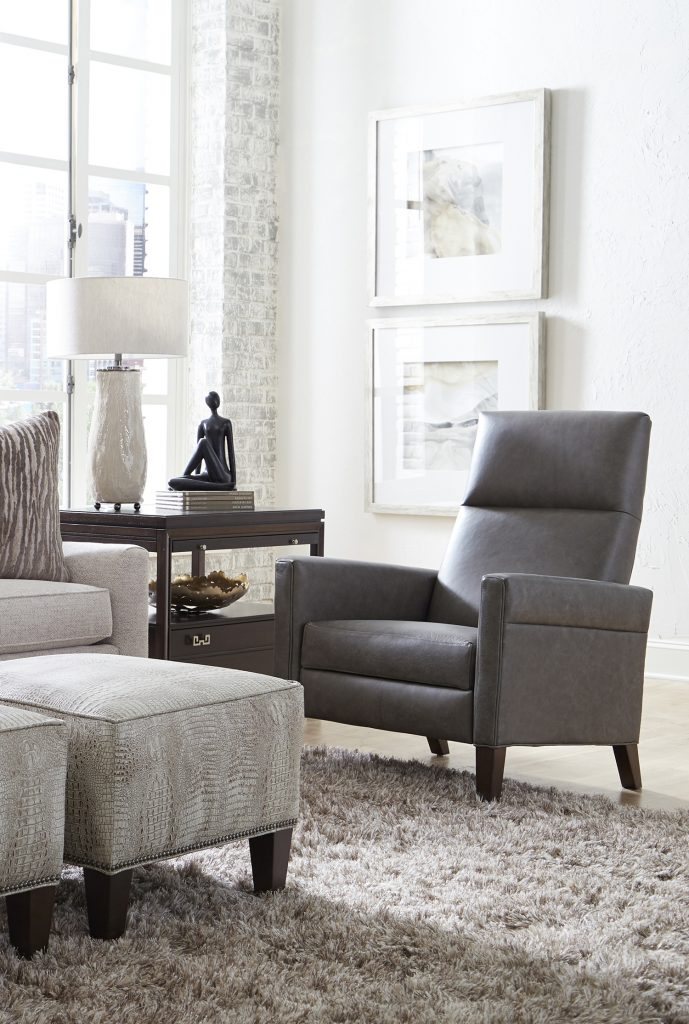
Bulk gives it away: heavy padding, a skirt down to the floor and a lever on the outside of the arm.
Take those away and you are left with a good-looking chair that happens to recline. Four things to look for:
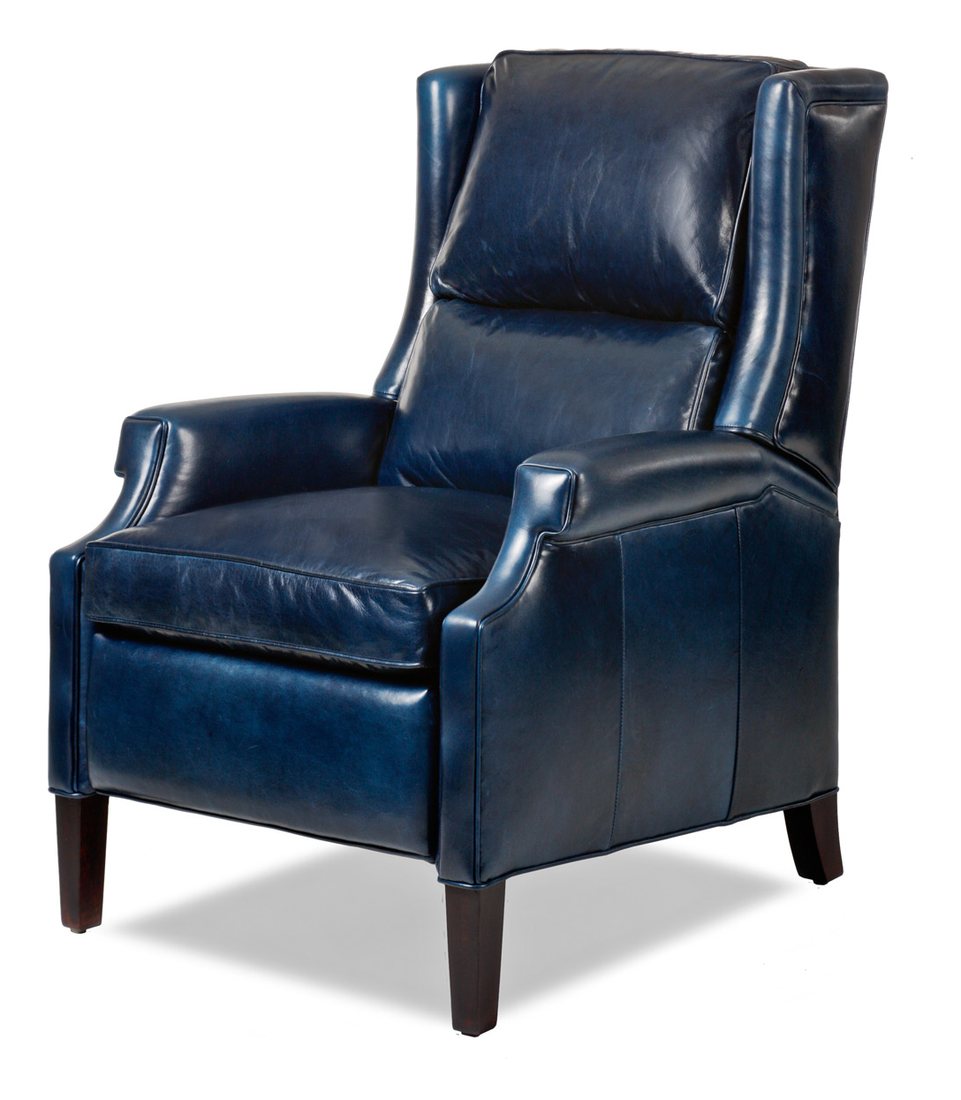
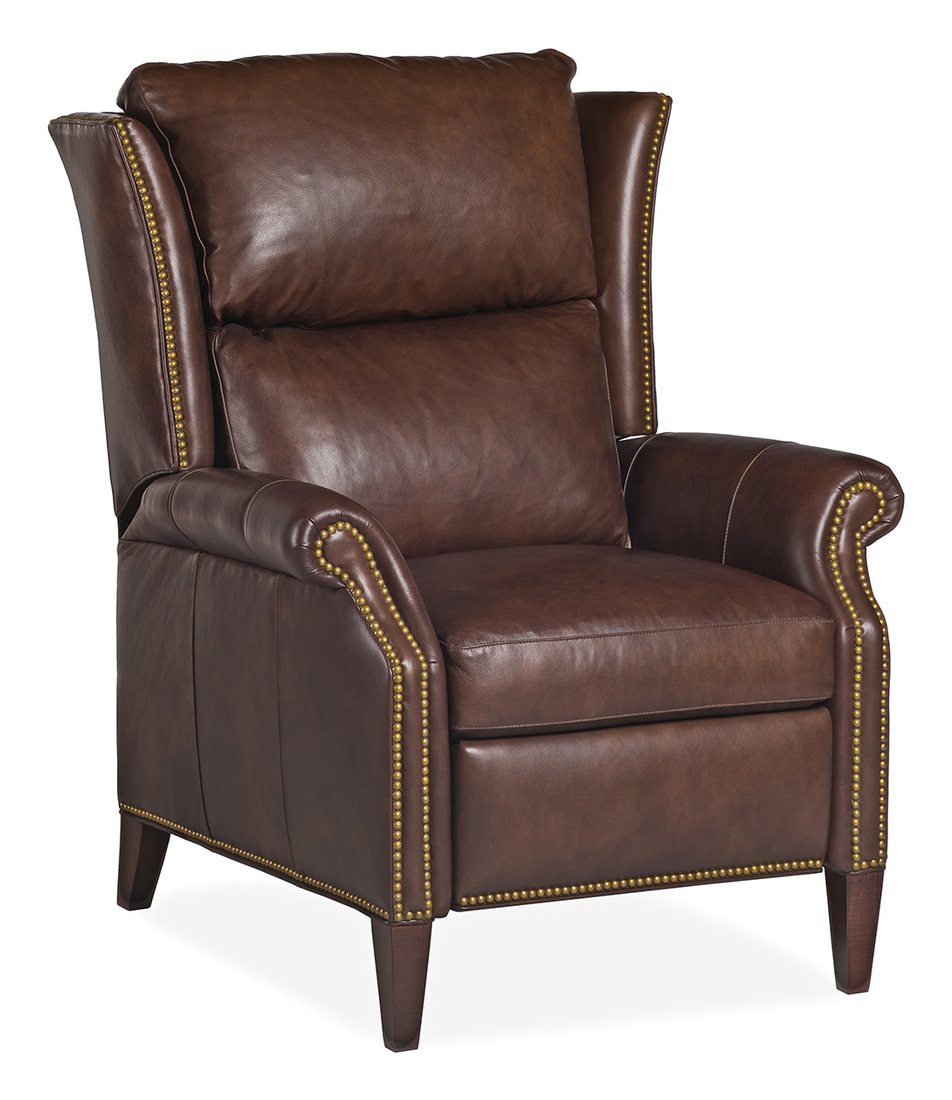
- Legs you can see. Floor showing under the seat makes any chair look lighter. Plenty of tailored recliners stand on tapered legs, the same as a wing chair.
- A tailored back and arms. Look for clean seams and a defined shape, such as a wing back or a slim arm, rather than stacked rolls of padding.
- No lever in sight. Better frames hide the controls. Several Hancock and Moore recliners use a handle tucked between the seat cushion and the arm, or a switch on the inside of the arm.
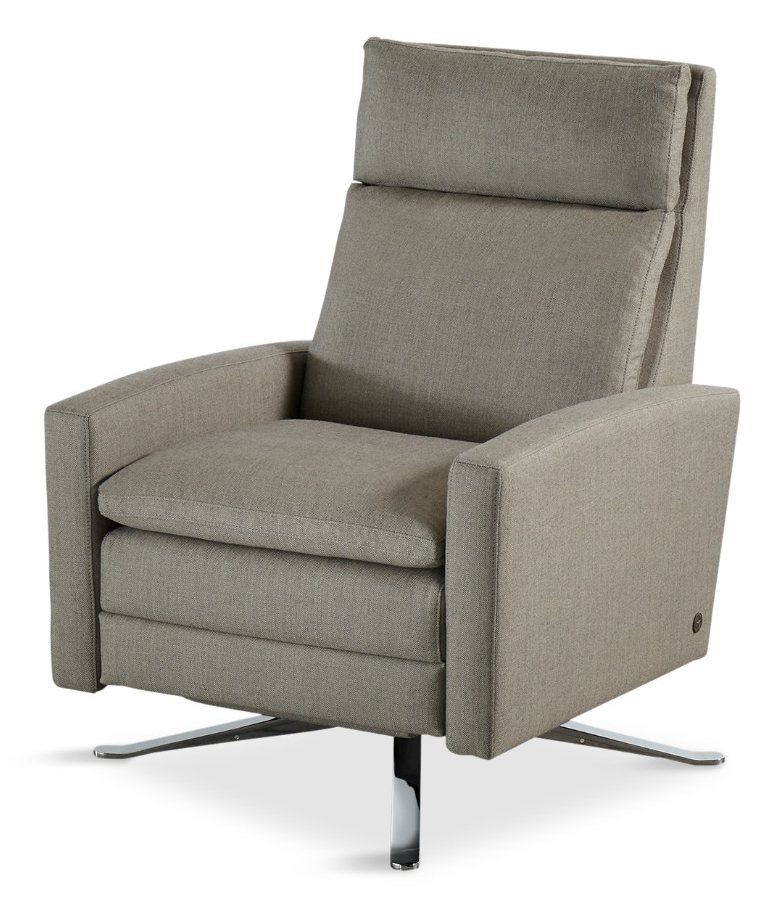
- A chair-size footprint. The American Leather Simon is 28 inches wide and the Hancock and Moore Alvin is 28.75 inches, about what you would expect from an ordinary armchair.
The simplest test is to ask whether you would choose the chair if it did not recline. If it would pass as a club chair or a wing chair, it will not read as a recliner in the room.
Should you choose a manual or a power recliner?
Choose manual for the simplest chair with nothing to plug in, and power if you want to stop at any position without pushing.
Each kind works a little differently:
- Manual push-back. You lean back and the chair follows. With no handle at all, this is the cleanest look. The Hancock and Moore Sami is offered this way.
- Manual with a hidden handle. A handle tucked beside the seat cushion starts the recline.
- Weight-balanced. The American Leather Lanier, from its Comfort Air collection, uses a weight-balanced mechanism, along with a headrest you adjust by hand.
- Plug-in power. A switch moves the chair, and it can stop anywhere along the way. On the American Leather Simon the control panel sits in the arm and includes a USB-C charging port.
- Battery power. The same motion with no cord, for a chair that floats away from the wall and any outlet. Hancock and Moore builds battery models, and American Leather offers a lithium-ion battery pack.
Power is also the easier choice for anyone who finds it hard to push a manual chair back or pull it upright. Some power recliners add an articulating headrest, which moves on its own so you can raise your head to read or watch without changing the recline.
How much room does a recliner need behind it?
Leave the distance the maker specifies, which ran from 14 to 25.5 inches among the recliners we compared.
No single rule covers every chair, because the mechanism, the size and the swivel all change the number. Makers publish it, so look it up for the exact model and measure from the wall, the drapes or anything else behind the chair. You may see some chairs sold as wall-huggers or wall-savers. The labels are helpful, but the number is what counts.
Wall
Plan for the front of the chair too. Fully reclined, the American Leather Lanier runs 52 to 54 inches from end to end depending on size, the standard Simon runs 64 inches, and the Hancock and Moore models above run 69 to 70.5 inches. Check that the footrest will not block a walkway when it is open. Our guide to laying out a living room covers how to keep paths clear.
How do you know a recliner will fit your body?
Sit in it closed and open: your feet should rest flat when it is closed, and your head and calves should both be supported when it is reclined.
Seat heights among the recliners we compared run from 17 inches to 21.5 inches, and inside seat widths on the Hancock and Moore models run from 20.5 inches to 23 inches. Those small differences are easy to feel. A seat that is too high leaves shorter legs dangling, and one that is too low is harder to get out of.
Some makers build the same chair in more than one size. The American Leather Simon comes in a standard size and an extra tall, at 38 and 41 inches high. The Lanier comes in standard, large and extra large, at 36, 38 and 40 inches high. If two people in the house are very different heights, buy for the person who will sit in it most, or choose a pair in two sizes.
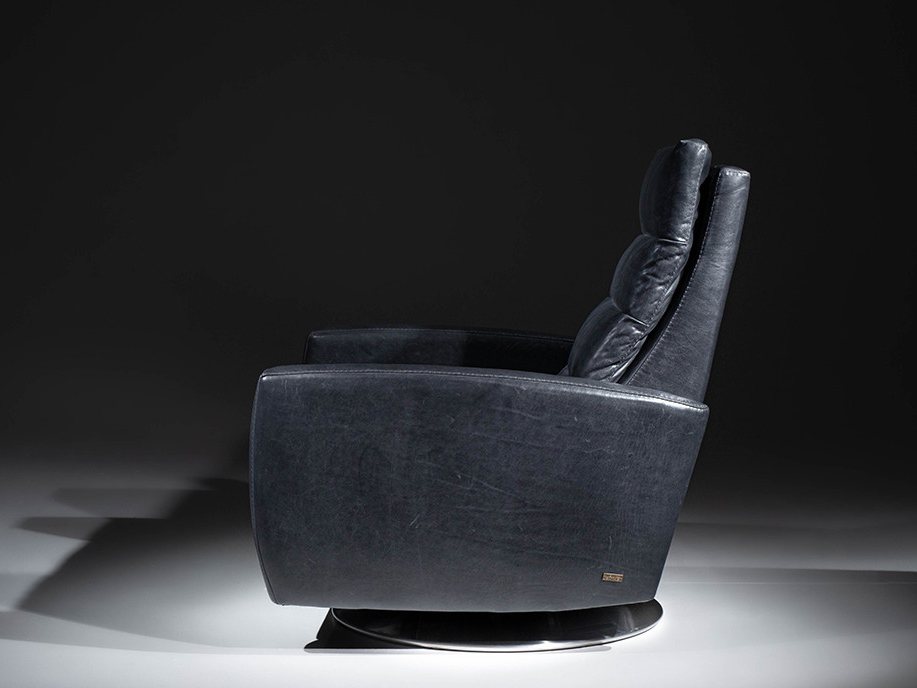
Think about the sofa as well. A recliner across from a sofa looks and feels best when the seat heights are within an inch or two, the same rule we give for swivel chairs.
Can a recliner swivel or glide too?
Yes, and a recliner that swivels can face the conversation, the fireplace or the television from one spot.
The Hancock and Moore Brantley is a swivel recliner, the American Leather Simon offers a swivel base, and the Huntington House 8109 swivels, glides and reclines under power. Our guide to choosing a swivel chair explains how those motions differ.
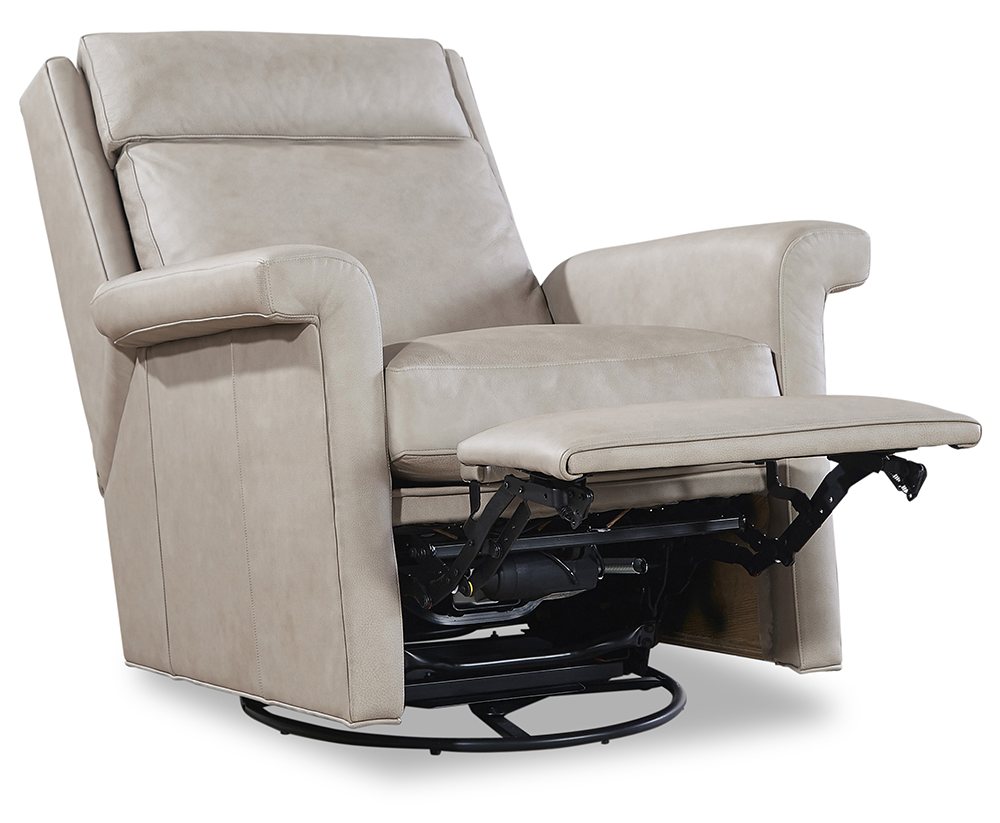
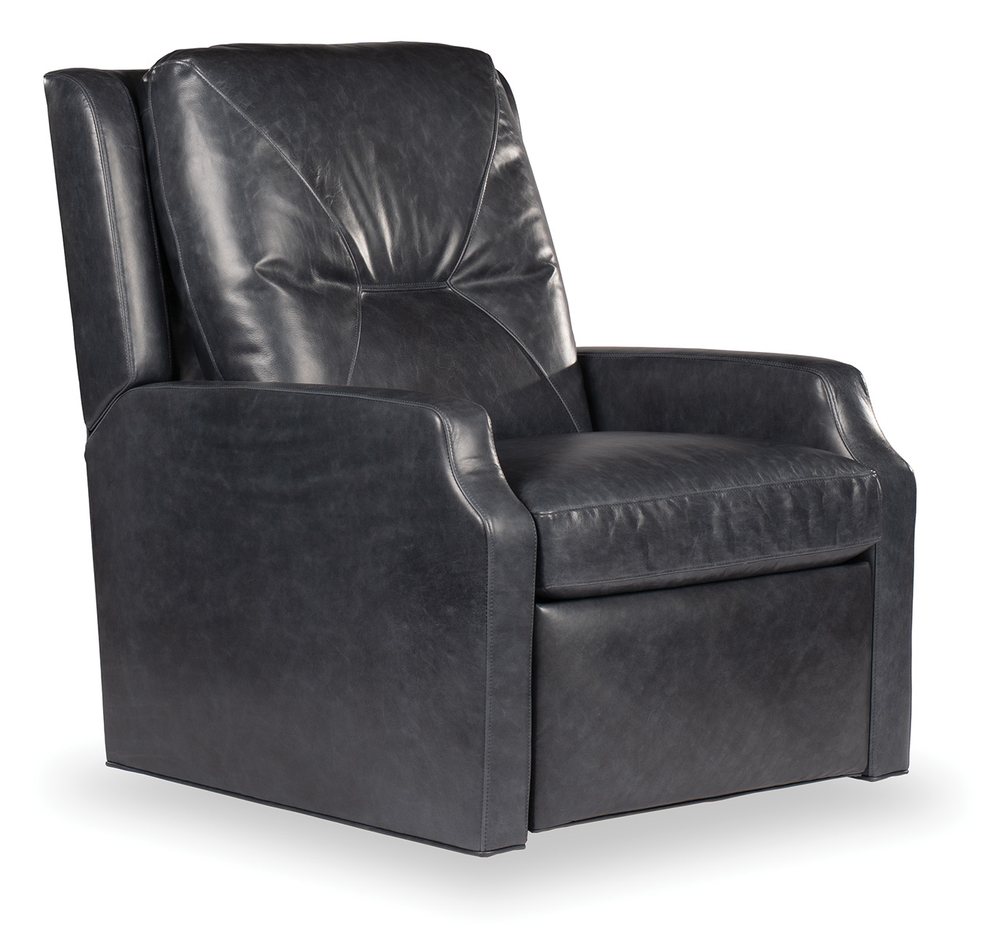
Allow extra room for that motion. The Brantley is a generous chair, at 36 inches wide and 41.5 inches deep, and it needs the most space behind it of any chair in the chart above, at 25.5 inches.
Should a recliner be leather or fabric?
Either works, so choose for how the chair will be used: a protected leather or a performance fabric suits the seat that gets sat in every day.
Hancock and Moore and American Leather both build recliners in leather and in fabric. Leather is the traditional choice, and it wipes clean easily. Fabric can soften the look further, which helps a recliner read as an ordinary chair.
A favorite recliner sees more use than most seats in the house, so the same durability rules apply as for a family sofa. Our guides to leather versus fabric, leather grades and fabric durability ratings go into more detail.
Where should a recliner go in the room?
Treat it as a chair in the conversation, not a seat aimed at the television.
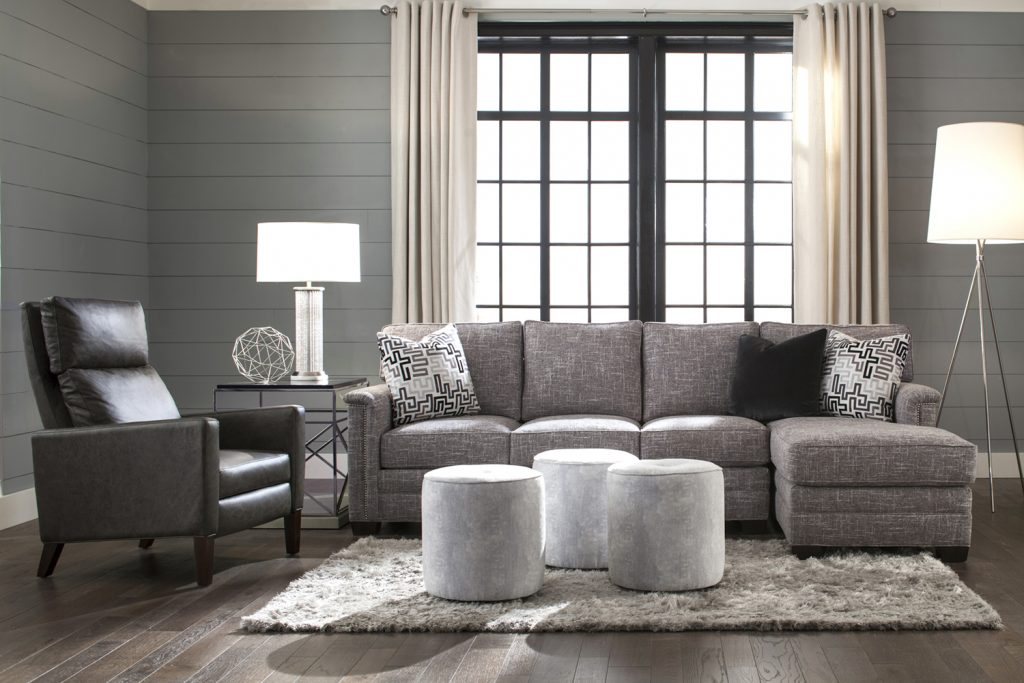
Angle it toward the sofa or the fireplace so that it belongs to the group, and pull it the required distance off the wall. A pair works especially well, with a small table between the two chairs, either across from the sofa or in a quiet corner. Choose a table near arm height, which runs from 22 inches to 25.5 inches on these chairs, and check that you can still reach it when you lean back.
Try recliners in person at Seville Home
Sit in them, recline them and stand back up, and bring your measurements, because comfort and clearance are much easier to judge in person.
The floor carries recliners from Hancock and Moore, American Leather, Huntington House and Paul Robert, and our leather collection is a good place to start. Pieces on the floor can deliver sooner. A recliner ordered in your own fabric or leather takes longer, so see how long custom furniture takes if you have a date in mind.
The showroom is at 5205 W 135th Street in Leawood, open Monday through Saturday from 10 to 5. Plan your visit or book a complimentary design consultation, and a Seville Home designer will help you find the recliner that suits your room and the way you sit.
Common questions
How do you choose a recliner that doesn't look like a recliner?
Judge it closed, the way it will spend most of the day. Look for visible legs, a tailored back and arms, a chair-size footprint, and a handle or switch hidden inside the arm rather than a lever on the outside. If you would choose it as a club or wing chair, it will not read as a recliner in the room.
How far from the wall does a recliner need to be?
It depends on the model, so check the maker's specification. Among the American Leather and Hancock and Moore recliners we compared, the distance needed to recline fully runs from 14 inches to 25.5 inches, and larger sizes of the same chair can need more.
Is a power recliner better than a manual recliner?
Neither is better for everyone. A manual recliner is simpler and needs no cord or battery. A power recliner stops at any position with a touch of a switch and takes no push from the person sitting in it, which helps anyone who finds a manual chair hard to work.
Can you put a power recliner in the middle of a room?
Yes. Choose a battery-powered model or add a battery pack, so no cord has to cross the floor. Hancock and Moore builds battery-powered recliners, and American Leather offers a lithium-ion battery pack on its power recliners.
What seat height should a recliner have?
Your feet should rest flat on the floor with the chair closed. Among the recliners we compared, seat heights run from 17 inches to 21.5 inches, so shorter and taller people can each find a good fit. Sit in the chair before you decide, because seat height is hard to judge from a photo.