How to Decorate a Mantel for Fall and Winter
One mantel from October to January: an everyday base that stays up, a fall layer, Christmas and January layers that swap on top, the right mirror size, and how to decorate safely over a working fireplace.
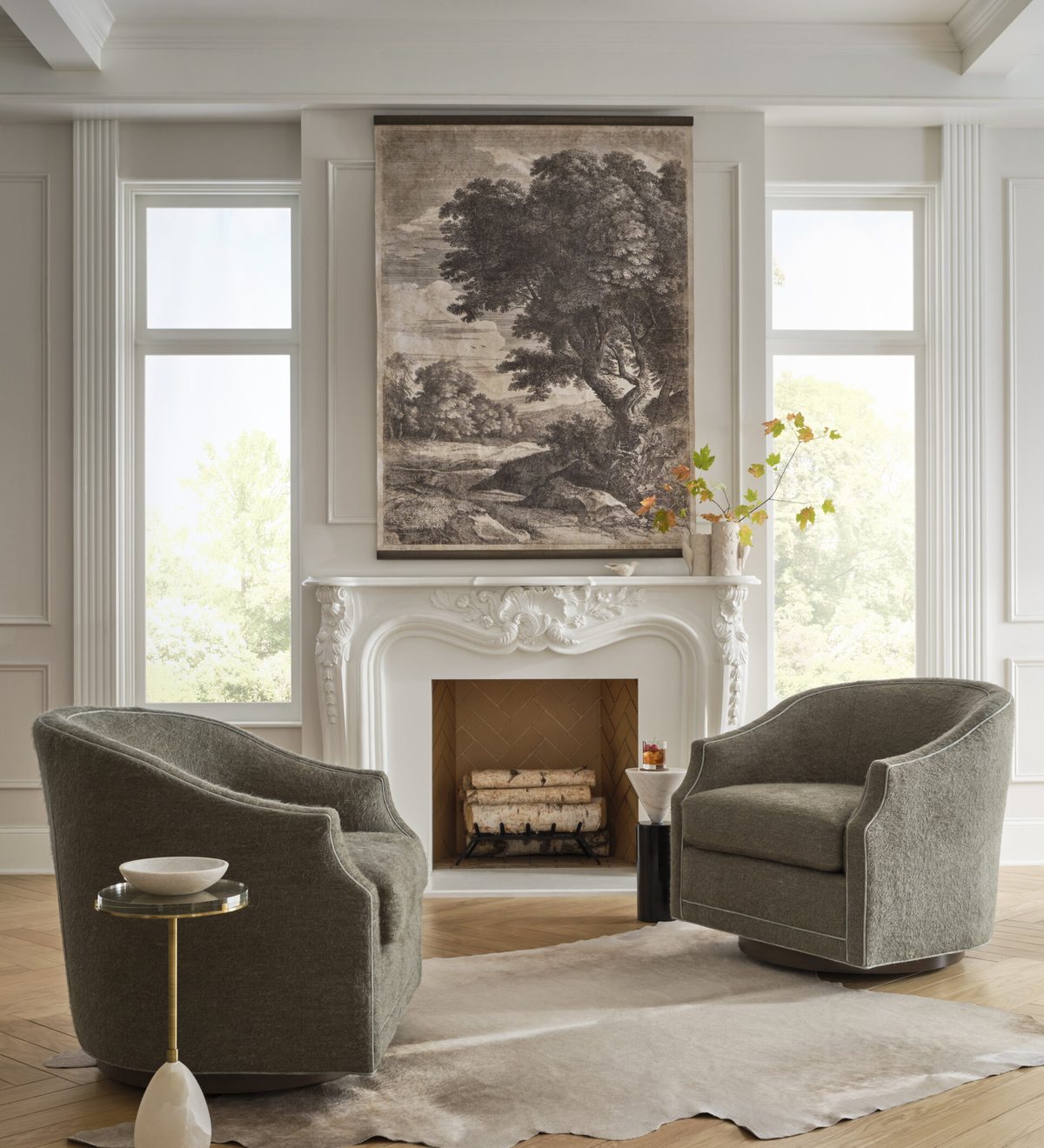
Most mantels get decorated three times between October and January. The pumpkins go up, then come down so the garland can go up, and after Christmas the shelf is stripped bare and looks empty until spring. Each round starts from nothing, so each one takes an afternoon.
The easier way is to think in two layers. The first is an everyday base that stays up all year: something above the shelf to anchor it, height at the ends, and very little in between. The second is a seasonal layer that sits on top of the base, goes on in an hour, and lifts off just as fast. Fall becomes winter by swapping that top layer, not by restyling the mantel. A mantel also comes with one rule a sideboard never has to think about, which is heat, so this guide covers that too. Here is how to build the base, dress it for fall, carry it into winter, and keep it all safely clear of the fire.
What is the simplest way to style a mantel?
Center one anchor above the shelf, put your tallest pieces toward the ends, add a low layer along the front, and leave open space between them.
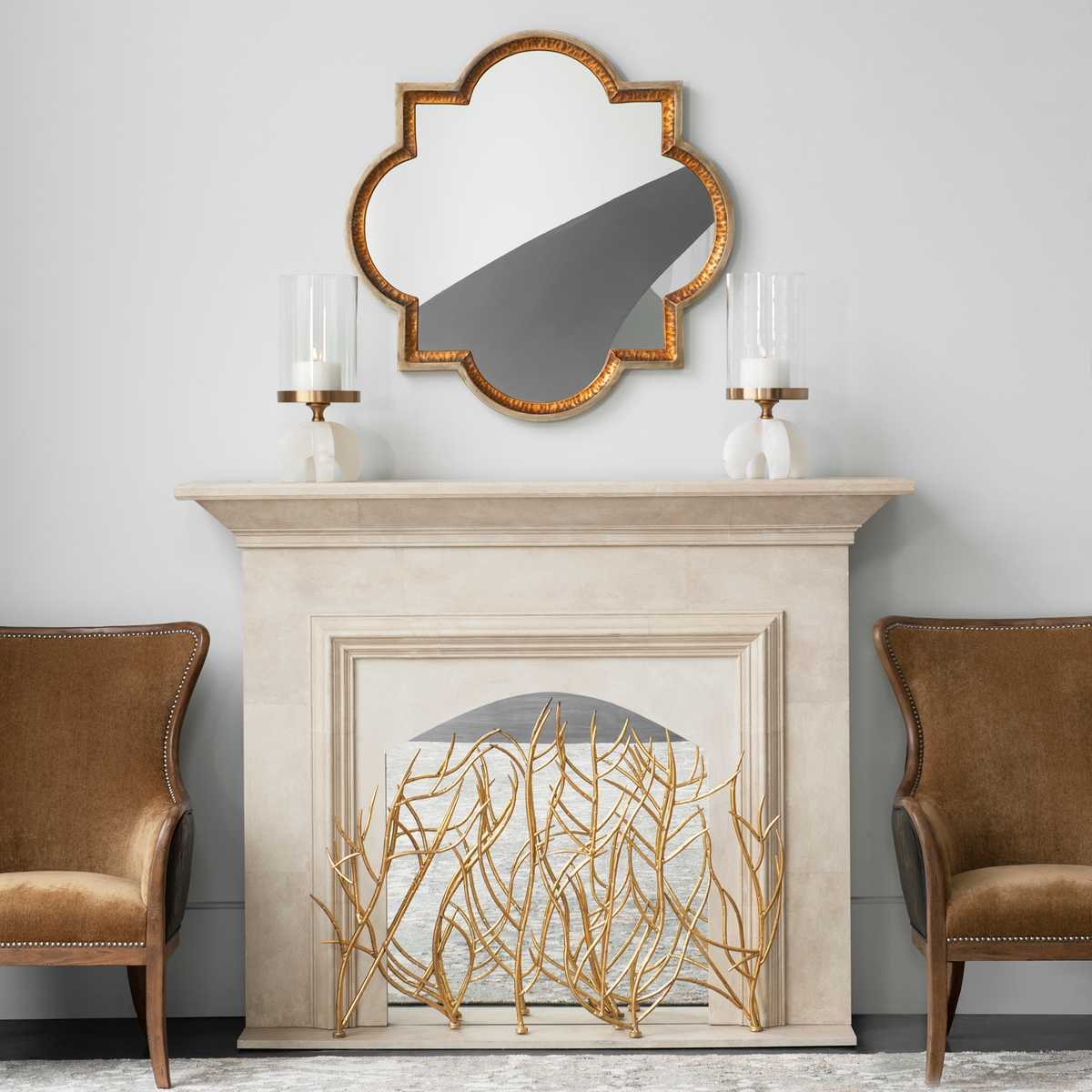
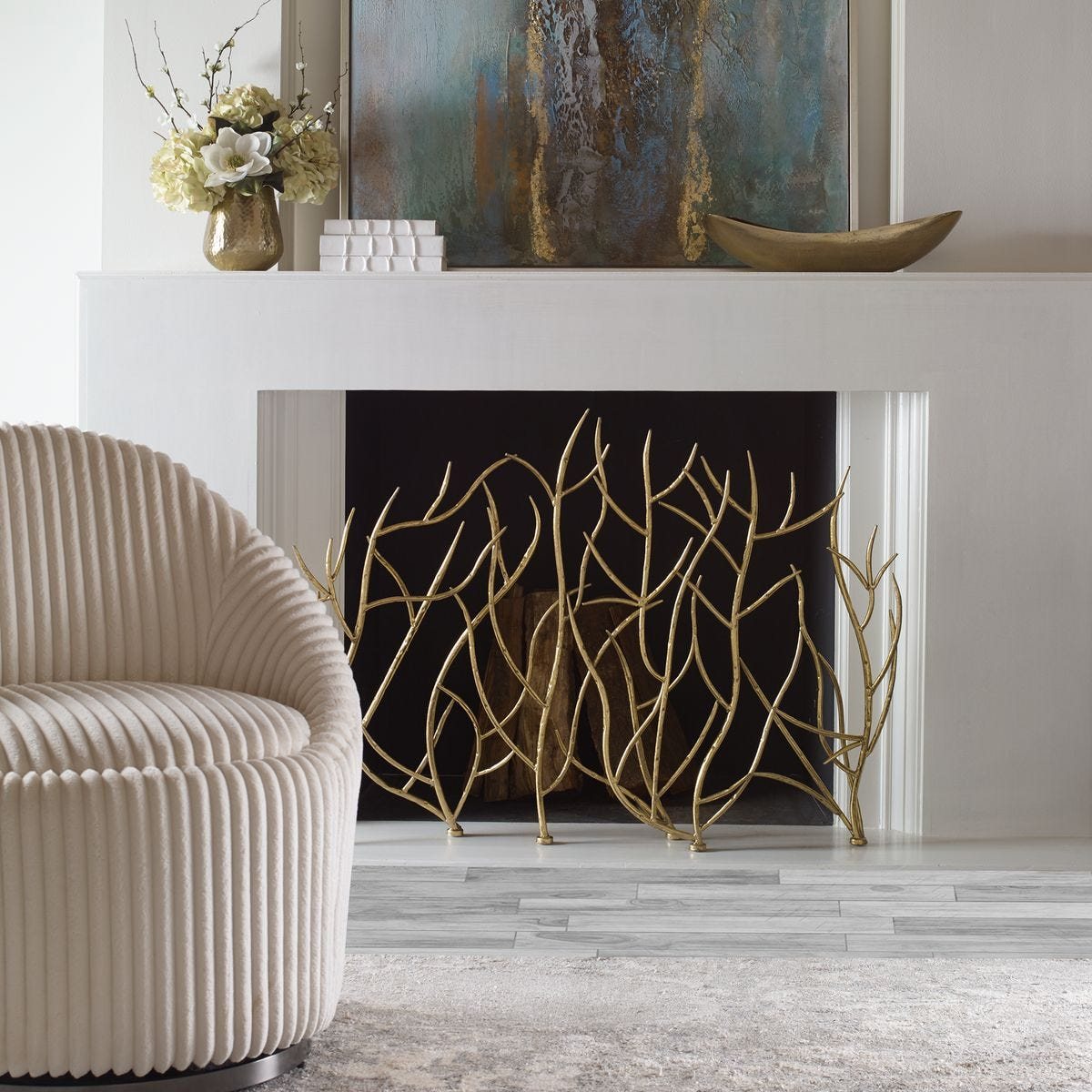
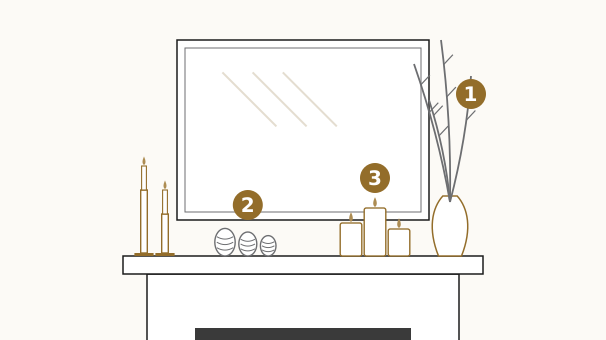
Designers return to the same moves every time. Art or a mirror gives the eye a place to land. Taller pieces, such as candlesticks, a vase of branches, or a lamp on a wide mantel, add height at the ends and frame the anchor. A low layer along the front of the shelf carries the season. Then stop: one of the most common mistakes, designers say, is choosing pieces that are too small and crowding the shelf with them.
Most mantel shelves are 6 to 12 inches deep, and many sit around 9 to 11. A shelf in that range fits two rows: a back row for the anchor and the tall pieces, and a front row for low objects and greenery. On a shelf shallower than about 8 inches, keep to a single row, or lean one piece of art and let it be the whole composition.
What size mirror or art should go over a mantel?
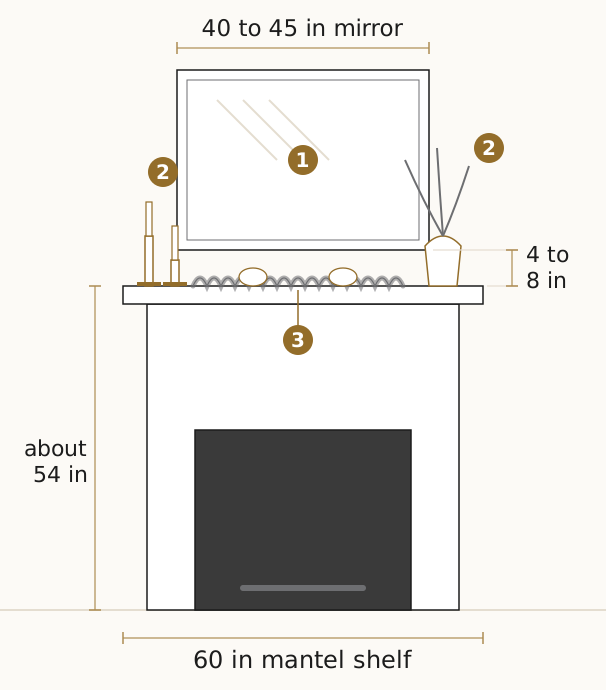
Choose a piece about two-thirds to three-quarters the width of the mantel shelf, and hang its bottom edge about 4 to 8 inches above the shelf.
On a 60-inch mantel, that means a mirror or painting about 40 to 45 inches wide. Go narrower and the piece looks lost; go wider than the mantel itself and it overwhelms the fireplace. Some designers accept a smaller anchor, as long as it fills at least half the width.
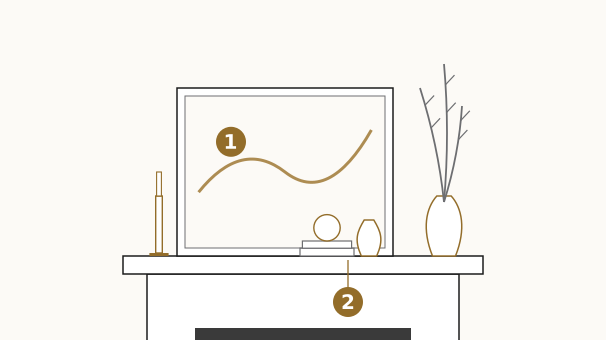
Height matters as much as width. Hung too high, the art floats away from the mantel and the two stop reading as one composition. Most designers keep the gap between 4 and 8 inches, and stretch it toward a foot only under a tall ceiling. Leaning a large piece directly on the shelf is also a classic look, and it makes a seasonal change easy because nothing has to come off the wall.
If a television hangs over the fireplace, treat it as the anchor and keep the shelf below it simple. A low garland or a few pieces at the ends are plenty. Mantel height usually puts a screen higher than the 42 to 48 inches that mount makers recommend for comfortable viewing, which is one more reason to let the shelf stay quiet.
Should mantel decor be symmetrical?
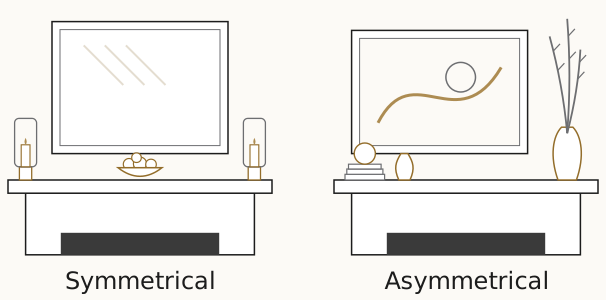
Either works: symmetry reads calm and traditional, and asymmetry reads relaxed, as long as the visual weight balances on both sides of the anchor.
A symmetrical mantel repeats the same piece at each end: a pair of candlesticks, two hurricanes, matching lamps. It suits a traditional room and is the easiest to get right. An asymmetrical mantel sets a tall piece on one side and balances it with two smaller pieces on the other, or shifts the anchor slightly off center. The test is simple: stand back, squint, and check that neither end feels heavier than the other.
How do you decorate a mantel for fall?
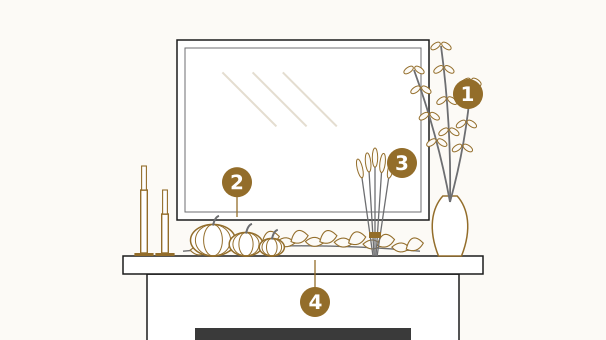
Keep the base, then add a low layer of natural materials in warm colors along the front of the shelf: branches, small pumpkins or gourds, wheat, leaves, and candlelight.
Fall is the easiest season to dress because so much of it is found rather than bought. Good materials include:
- Branches with turning leaves, or bare ones, in a tall vessel at one end. They give height without bulk.
- Small pumpkins and gourds in white, sage, or rust, grouped in threes rather than lined up.
- Dried wheat, grasses, and seed heads, laid low or gathered in a bundle.
- A leaf or eucalyptus garland along the front edge, resting on the shelf rather than hanging from it.
- Warm accents of copper, brass, and aged wood, which carry straight through to winter.
For color, choose rust, ochre, deep red, olive, and cream, or keep to a softer palette of cream, taupe, and brown that sits easily with any room. Real pumpkins keep longest somewhere cool, so expect a few weeks rather than months on a mantel in a warm living room, and check them often.
How do you switch a fall mantel to winter without starting over?
Leave the base and any warm neutral pieces in place, take off what reads as autumn, and add evergreen, candles, and a touch of shine.
The trick is to choose a few pieces in October that will carry through to January. Pinecones, branches, white or cream candles, and gold, brass, or copper accents all work in every season, so they stay put while the rest of the layer changes around them.
| Fall (October to Thanksgiving) | Christmas | January | |
|---|---|---|---|
| Base (stays all year) | Mirror or art, candlesticks, vases | Same | Same |
| Carries through | Pinecones, branches, cream candles, brass and gold | Same | Same |
| Seasonal layer (swaps) | Pumpkins, gourds, wheat, leaves, rust and ochre | Evergreen garland, berries, ribbon, ornaments, stockings | Plain evergreen or bare branches, white, silver, soft blue |
At Thanksgiving, the pumpkins and leaves come off and the evergreen goes on, often in the same afternoon you set the table. If you are hosting, our guide to setting a dinner table covers the other half of the room, and the same two-layer approach works on a holiday sideboard.
How do you decorate a mantel for Christmas?
Lay garland along the back of the shelf, secure it without nails or adhesive on a fine finish, and build the rest of the winter layer on top of your everyday base.
Garland is the backbone of most Christmas mantels. Fresh cedar, pine, and fir bring the scent of the season but dry out indoors, and extension services say fresh greens last several weeks only with care. Near the warmth of a fireplace, plan on refreshing them before Christmas, or use a good faux garland as the base and tuck in fresh sprigs for scent.
How you hang it matters more than people expect:
- On a stained, painted, stone, or antique mantel, use clamp-on or weighted garland hangers, or simply lay the garland on the shelf and hold it in place with candlesticks and vases.
- Skip adhesive hooks on fine surfaces. 3M itself does not recommend Command products on bare wood, porous or unpainted surfaces, or heirlooms, and notes the adhesive can soften above 105°F, a temperature the wall above a gas fireplace can exceed.
- Never nail or tape into a finished mantel. The marks outlast the season.
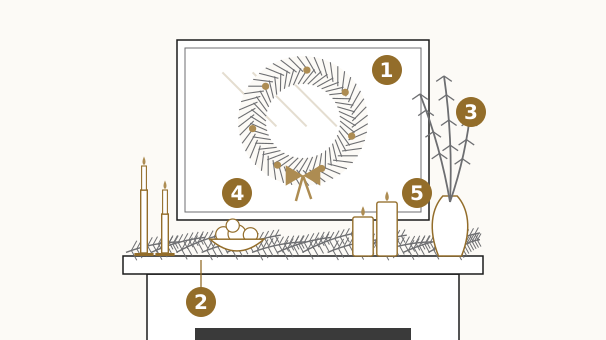
Add the rest of the winter layer in the same spirit: ribbon, a few ornaments in a bowl, candlesticks in metallic finishes, and stockings if you hang them. Prefer a mantel without garland? A row of candlesticks at different heights, a wreath leaned against the mirror, or a low line of greenery in short vases all read as Christmas with far less to hang.
What do you put on a mantel after Christmas?
Keep the evergreen and the candles, take off everything that says Christmas, and let a quiet winter layer carry the mantel through January.
January is a strong month for mantel decor: searches for it stay nearly as high as in November. The move is to subtract. Remove red berries, ornaments, bells, plaid, and stockings, and keep plain greenery or bare branches, pinecones, white and cream candles, and silver or pale blue accents. If the fresh garland has dried out, replace it with branches in a vase rather than a new garland. The result looks deliberate rather than leftover, and it bridges the weeks until spring.
Is it safe to decorate a mantel over a working fireplace?
It can be, with care: keep anything that can burn well away from the fire, never put real candles near greenery, and take seasonal decor down before you light a wood fire.
A mantel is the one surface in the house built directly above an open flame. NFPA, the National Fire Protection Association, advises keeping anything that can burn at least 3 feet from a fireplace, and candles at least 12 inches from anything that can burn. Most mantel shelves sit well inside that 3-foot range, since building codes allow a combustible mantel as close as 12 inches above a fireplace opening. NFPA also reports that more than two of every five home decoration fires happen because decorations sit too close to a heat source.
Those facts lead to a few rules Seville Home follows:
- Before lighting a wood fire, take down greenery, stockings, and anything that hangs below the shelf. Keep a sturdy screen in front of the opening, as NFPA recommends.
- Never burn real candles in or near greenery. The U.S. Consumer Product Safety Commission warns that dry greens burn like tinder. Use flameless candles inside garland and save real flames for holders well clear of anything that can burn.
- Watch fresh greens as they dry. Extension services advise keeping greenery away from fireplaces and other heat, and replacing it when the stems snap or the needles drop.
- On a gas fireplace, check the manual. Each model sets its own clearances, and the wall above can get hot even without sparks; one manufacturer measured 123°F to 147°F on the wall above one of its fireplaces. That heat softens wax candles and dries greenery quickly.
Decor that never goes near a flame, such as art, a mirror, metal candlesticks, ceramics, and flameless candles, can stay up all season without a second thought.
Where can I see mantel styling and accessories in Kansas City?
The Seville Home showroom in Leawood styles its rooms with the mirrors, art, lamps, candlesticks, and vessels that make up a mantel's everyday base.
Proportion is easier to judge in person than in a photograph. Bring the width of your mantel and the height of your ceiling, and a designer can help you size the mirror or art, choose pieces for the ends, and plan a seasonal layer that comes down in one trip. If you are rethinking the whole room around the fireplace, our guide to laying out a living room covers seating and spacing, and the Carlywood swivel chairs in the photo at the top of this guide are from Massoud. Visit us at 5205 W 135th Street in Leawood, Monday through Saturday, 10 a.m. to 5 p.m. Our designers offer complimentary design consultations, and directions are on our visit page.
Common questions
How do you decorate a mantel for fall?
Start from an everyday base that stays up all year: art or a mirror centered above the shelf and a few tall pieces at the ends. Then add a low fall layer along the front of the shelf, such as small pumpkins or gourds, branches with turning leaves, dried wheat, or a leaf garland, in warm rust, gold, and cream. Keep anything that can burn off the shelf edge and away from a working fire.
What size mirror should go over a mantel?
Choose a mirror or artwork about two-thirds to three-quarters the width of the mantel shelf, so a 60-inch mantel takes a piece around 40 to 45 inches wide. Never go wider than the mantel itself.
How high should a mirror be above a mantel?
Hang the bottom of the frame about 4 to 8 inches above the mantel shelf, a little more under a tall ceiling, so the mirror and mantel read as one composition. Leaning a large piece directly on the shelf also works.
What do you put on a mantel after Christmas?
Keep the everyday base and a quiet winter layer: plain evergreen or bare branches, pinecones, white or cream candles, and silver or soft blue accents. Take down anything that reads as Christmas, such as red berries, ornaments, bells, and stockings, and the mantel will carry through January.
Is it safe to put garland on a mantel with a fireplace?
Only with care. NFPA advises keeping anything that can burn at least 3 feet from a fireplace and candles at least 12 inches from anything that can burn, and a mantel shelf usually sits well inside that distance. Seville Home recommends taking down greenery, stockings, and anything that hangs below the shelf before lighting a wood fire, never burning real candles near evergreens, and checking a gas fireplace's manual for its clearances.