How to Choose a Swivel Chair, and Where to Put It
Swivel, swivel glider, or swivel rocker? How to pick the base, size it to your sofa, leave room to turn, and place it for hosting, from Seville Home in Leawood, KS.
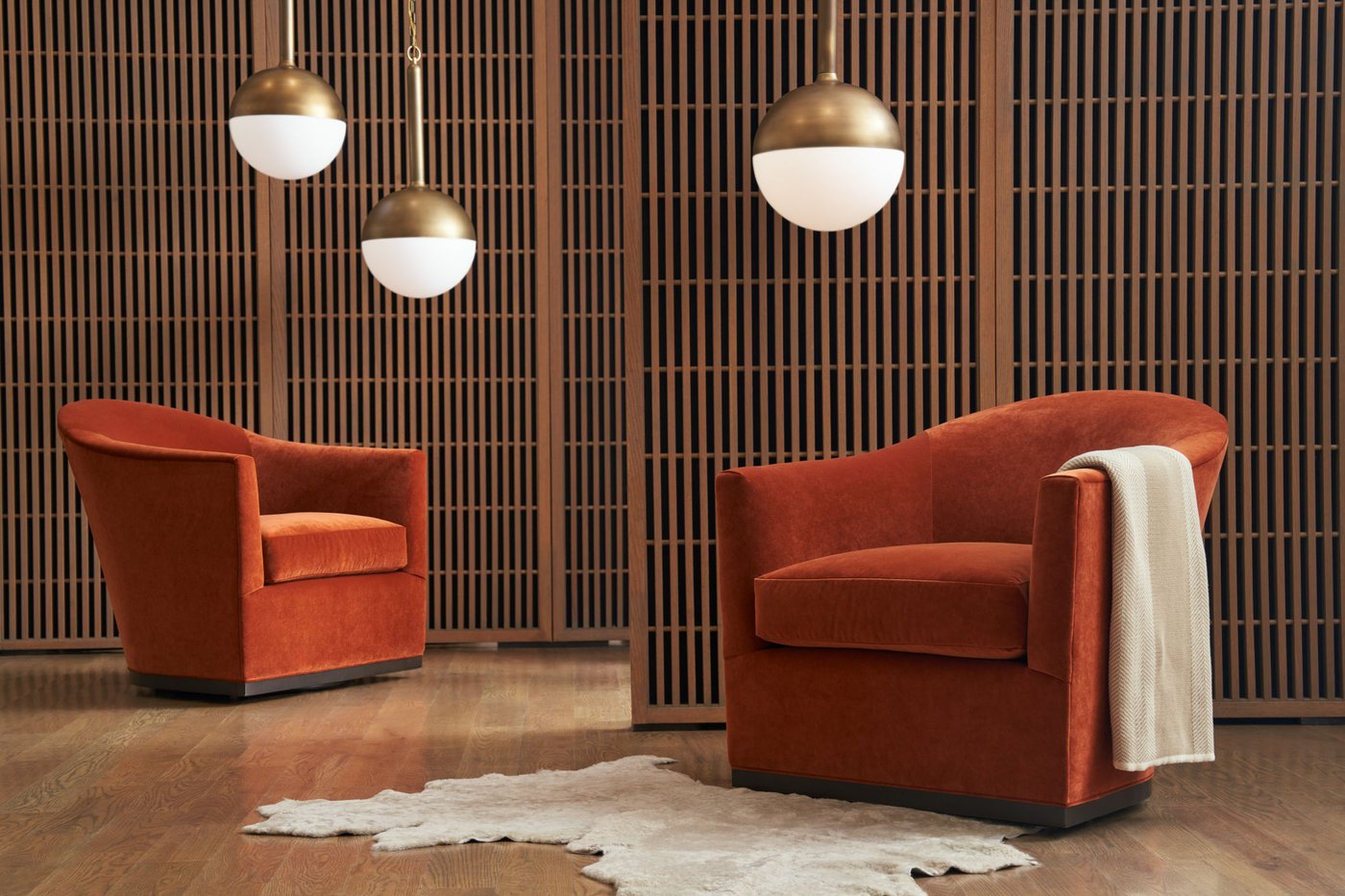
Searches for swivel chairs are running well ahead of last year, and the questions behind them tend to be the same. Is a swivel glider a swivel? Does the base matter? Will it hit the wall when it turns? Where does it go once it is home?
The answers sort into two separate choices. The first is how the chair moves: it turns, it turns and glides, or it turns and rocks. The second is what it stands on: a base you can see, or one tucked out of sight. Settle those two, size the chair to the sofa it will talk to, and leave it room to turn. The rest is placement, and placement is where a swivel earns its keep.
What is the difference between a swivel, a swivel glider and a swivel rocker?
A swivel turns, a swivel glider turns and glides on a level track, and a swivel rocker turns and rocks on a curved base.
A plain swivel rotates a full circle and otherwise sits still. It is the simplest of the three, and it keeps the quiet, settled look of a club chair while letting you face any direction.
A swivel glider adds a smooth forward-and-back motion. The seat travels along a fixed track while the base stays flat on the floor, so nothing lifts and nothing tips. Gliders also travel less than rockers, so they need less room behind them, which makes them the easier fit near a wall or a walkway.
A swivel rocker rocks on an arched, sprung base, the way a traditional rocking chair does. The motion is deeper and the chair swings further back, so give it more open floor.
Many makers build one frame all three ways. Huntington House, for example, offers the same chair as a stationary piece, a swivel, and a swivel glider, which lets you match a look across a room and choose the motion seat by seat.
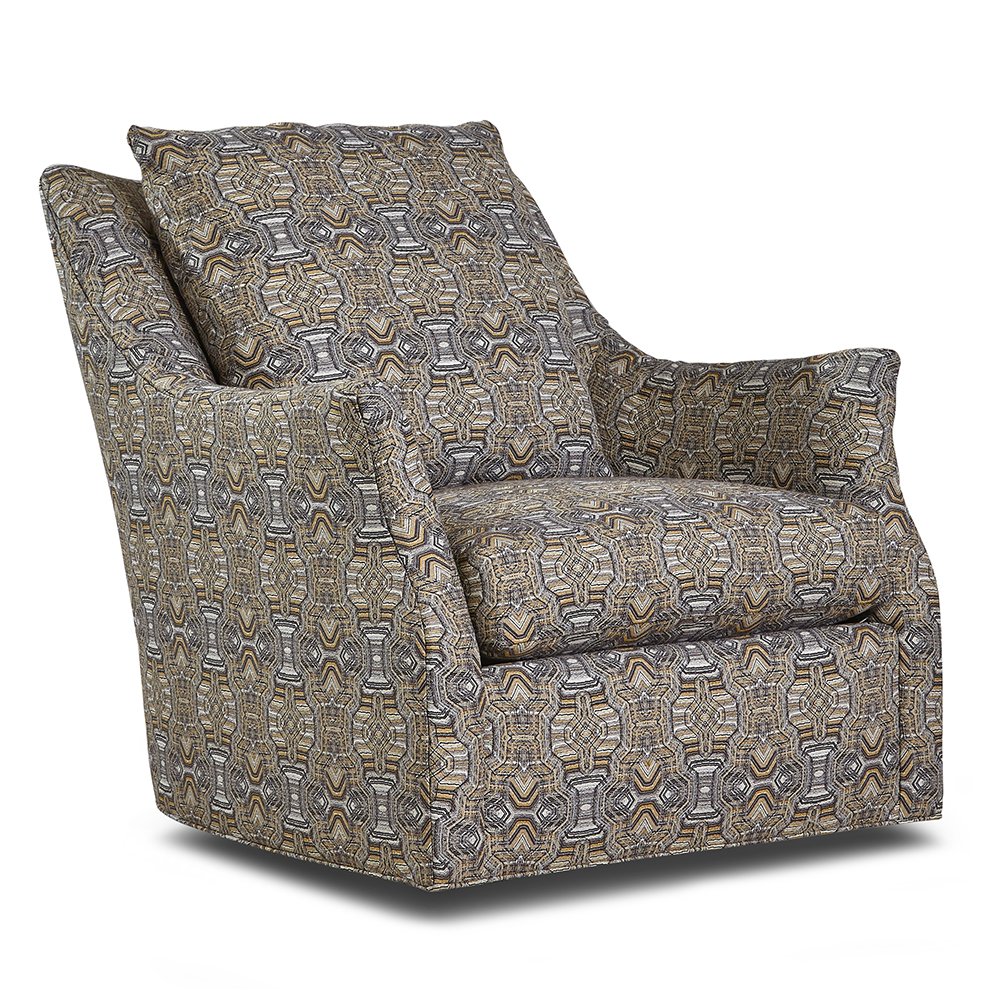
Which swivel base should you choose?
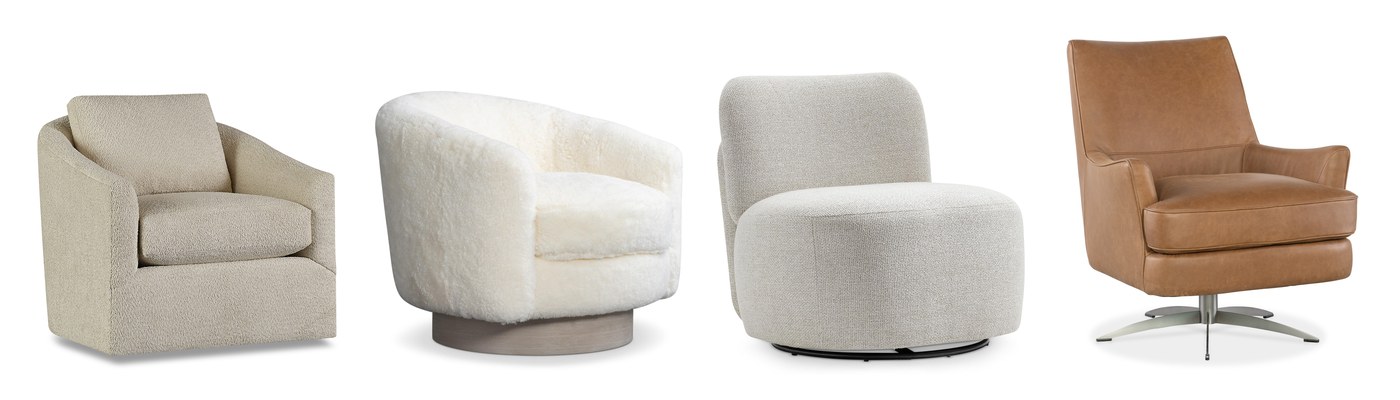
Choose a hidden base for a quiet, upholstered look, and an exposed base when you want the chair to read lighter and more sculptural.
The swivel mechanism itself is usually a ball-bearing plate, often mounted on a metal ring, hidden under the seat. What changes from chair to chair is how much of it you see.
- Upholstered to the floor. The fabric runs all the way down and the mechanism disappears. The chair looks like a club chair until someone turns it. Skirted swivels work the same way.
- Plinth. A low band or round pedestal of wood, metal, or leather lifts the chair a few inches and frames the base as a design detail.
- Disc or ring. A low, flat metal disc, sometimes called a pancake base, sits recessed under the seat so the chair seems to float.
- Exposed metal or wood. A spoked or star-shaped base on view, often with a midcentury feel. It shows more floor, which helps a small room feel open.
Every one of these turns. The real choice is visual weight. A pair of upholstered-to-the-floor swivels anchors a big room, while a pair on slim exposed bases keeps a smaller room from feeling crowded.
How much room does a swivel chair need to turn?
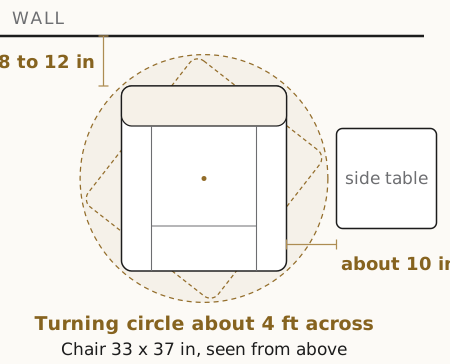
Plan on a circle about 4 feet across, and pull the chair 8 to 12 inches off the wall or anything behind it.
A swivel's listed width and depth describe it facing forward. As it turns, its corners swing wider. We checked the published sizes of ten swivels from three makers we carry, and they run about 30 to 34 inches wide and 32 to 40 inches deep. Turned on its center, a chair that size sweeps a circle roughly 45 to 51 inches across.
In practice that means three things:
- Behind the chair: the back corners swing out about 5 to 7 inches past the back. Pulling the chair 8 to 12 inches off the wall covers it, and the gap matches what we recommend for seating in our guide to laying out a living room.
- Beside the chair: the sides swing out about 7 to 10 inches past the arms. Keep a side table about 10 inches away, or set it slightly forward of the arm so the chair turns behind it.
- Around the chair: keep the 30 to 36 inch walkways outside the turning circle, so nobody walking through catches a knee on a chair mid-turn.
How should a swivel chair compare to your sofa?
Keep the swivel's seat within an inch or two of the sofa's seat height, and let the sofa stay the largest piece in the group.
A sofa seat usually sits around 18 to 20 inches off the floor, the range our sofa guide recommends. Upholstered swivels from the makers we checked range from about 17 to 21 inches, which is wide enough to matter. A guest in a low chair across from a tall sofa ends up looking up at the conversation. Measure your sofa's seat height and shop within that range.
Seat depth works the same way it does on a sofa. Most swivels have an inside seat depth of 20 to 22 inches, the upright range that suits conversation, and it keeps guests from sinking into a chair they then have to climb out of. Our guide to sofa size and seat depth explains how to match depth to the people who will sit in it.
For scale, a pair of swivels should read as partners to the sofa, not rivals. Backs that sit at or below the sofa's back keep sightlines open across the room, which matters most when the chairs float in the middle of the floor with their backs to a doorway.
What fabric holds up on a swivel chair in a busy house?
Choose a performance fabric or a protected leather, in a color or pattern that forgives, with a rub count of at least 15,000 and 30,000 or more for the family's favorite seat.
A swivel tends to become the chair everyone wants, which means it sees more use than a stationary accent chair. The same rules we give for family sofas apply. Performance fabrics resist spills long enough to blot, tight weaves stand up to claws better than loose loops, and darker colors or patterns hide everyday life. Rub counts around 15,000 suit everyday residential use, and 30,000 or more is considered heavy-duty. Our guides to sofa fabrics for kids and pets and what double rubs mean cover the details.
Velvet deserves a second look. Performance velvets are built for hard use and catch the light beautifully as a chair turns, which is part of why velvet swivels look so good in a pair.
Where should you put a swivel chair?
Put a swivel anywhere a seat has to serve two directions at once.
- Across from the sofa. The classic conversation group is a sofa facing a pair of chairs over a cocktail table. Make those chairs swivels, and the guests in them can turn to the fireplace, the television, or the rest of the room without breaking up the group. Keep every seat within about 8 to 10 feet of the others so nobody has to raise their voice.
- Beside a fireplace or a view. A swivel set at an angle near the hearth or a window can face the room for conversation and turn outward for the fire or the yard.
- The pivot spot in an open plan. Where the living room meets the kitchen or dining area, a swivel lets the person in it face the cooks at the island or the conversation by the sofa. It is the chair that connects the two zones.
- In a pair. Two swivels facing each other, with a small drink table between them, make a complete seating spot on their own: by a window, at the end of a long room, or in a corner that otherwise goes unused.
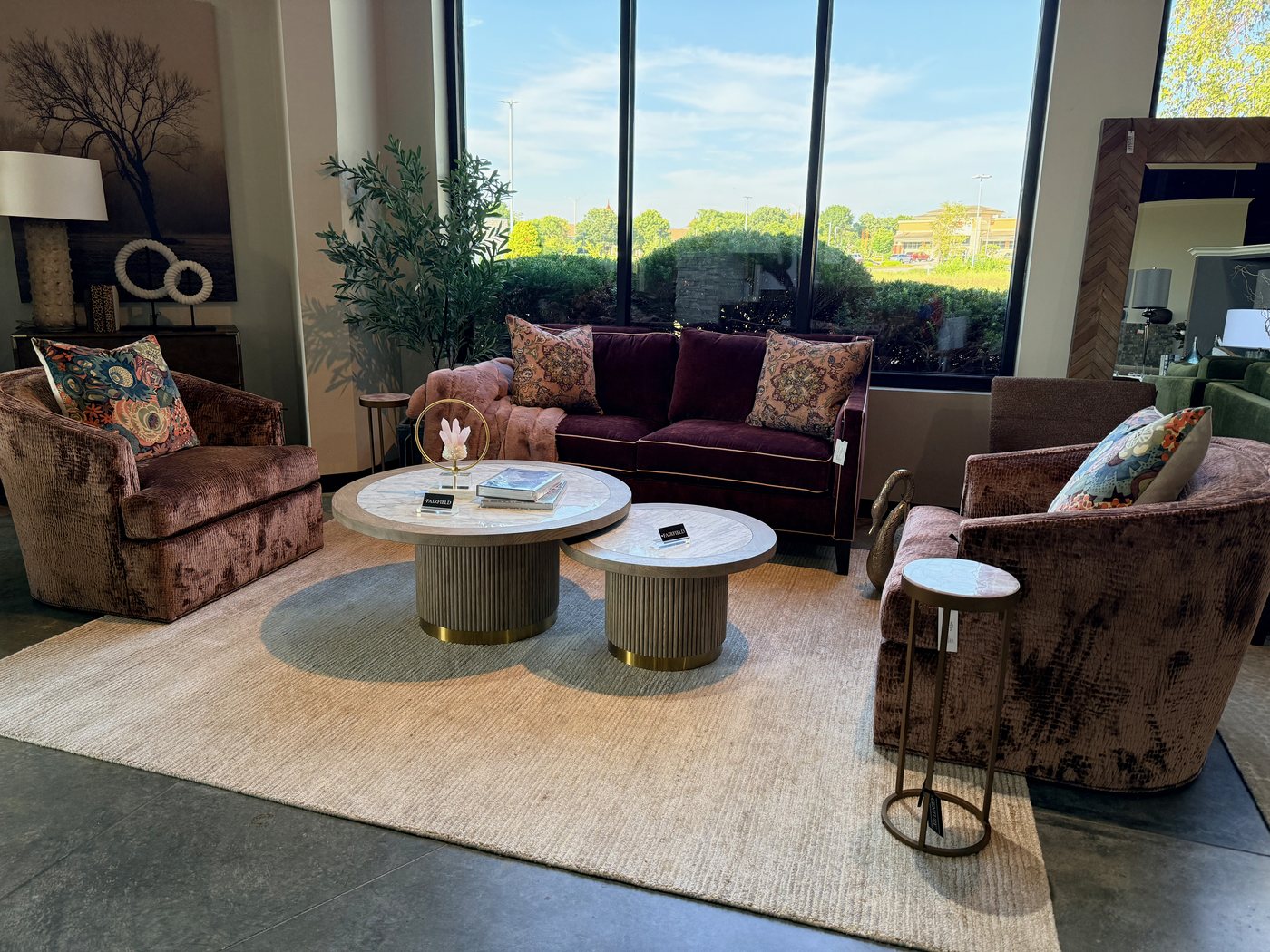
Why do swivel chairs work so well for hosting?
A swivel lets guests follow the conversation instead of the furniture.
On a holiday evening the action moves. Someone is telling a story by the fireplace, the game is on, and half the party is standing at the kitchen island. A stationary chair faces one of those, and its guest either cranes around or drags the chair across the rug. A swivel simply turns.
Swivels also make a room feel more generous with the same number of seats. A pair of swivel chairs can face each other for a quiet talk, turn outward to join the larger group, or swing toward the sofa when everyone gathers for dessert. In a family room that hosts often, two good swivels cover more of the room than two fixed chairs ever could.
Try swivel chairs in person at Seville Home
Sit in them, turn them, and bring your sofa's measurements, because the motion and the seat height are much easier to judge in person than in a photo.
Swivel chairs are the most reordered category in our Bernhardt gallery, and the floor carries them from Bernhardt, Huntington House, Wesley Hall, Vanguard, and Massoud, along with the custom upholstery programs that let you choose the base, the motion, and the fabric. Try a plain swivel against a glider, compare seat heights side by side, and see which base suits your room.
The showroom is at 5205 W 135th Street in Leawood, open Monday through Saturday from 10 to 5. Plan your visit or book a complimentary design consultation, and a Seville Home designer will help you find the swivel that fits your room and the way you host.
Common questions
What is the difference between a swivel chair and a swivel glider?
A swivel chair turns in a full circle and otherwise sits still. A swivel glider turns the same way and also glides forward and back on a level track, with its base flat on the floor the whole time. A swivel rocker turns and rocks on a curved, sprung base, so it tips back further and needs a little more room behind it.
How much space does a swivel chair need to turn?
Typical upholstered swivels run about 30 to 34 inches wide and 32 to 40 inches deep, so their corners sweep a circle roughly 4 feet across. Pull the chair 8 to 12 inches off the wall, and keep a side table about 10 inches from the arm or set it just in front of the arm.
Should a swivel chair be the same height as the sofa?
Keep the seat heights close. A sofa seat usually sits around 18 to 20 inches off the floor, and upholstered swivels run about 17 to 21 inches, so pick one within an inch or two of the sofa it faces. Matched heights keep everyone at eye level in conversation.
Where should you put a swivel chair in a living room?
Put swivels where a seat has to serve two directions: across from the sofa in a conversation group, beside a fireplace or a window with a view, or at the edge of an open plan where the living room meets the kitchen. A pair facing each other works almost anywhere.
Are swivel chairs good for entertaining?
Yes. A swivel lets a guest turn toward whoever is talking, toward the fireplace, or toward the kitchen without dragging the chair across the rug. One chair can serve the conversation, the television, and the room next door in a single evening.