How to Choose Dining Chairs: Height, Width, Arms and Seats
How high a dining chair should sit, how much table edge it needs, when armchairs fit under the table and how to mix chairs well, from Seville Home in Leawood, KS.
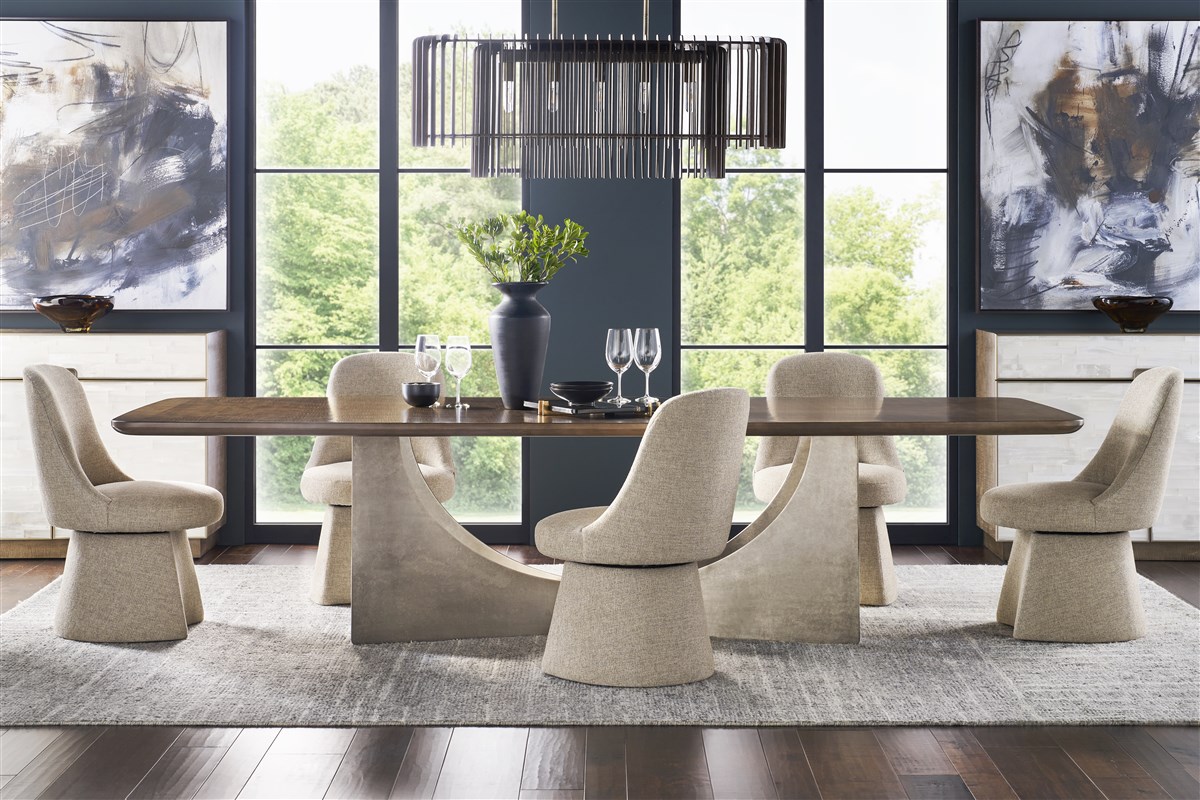
Most people choose dining chairs by looking at them, and the trouble turns up later, at the table. A chair that sits too high leaves knees pressed against the apron. An armchair that looked handsome on its own stops short of tucking in and spends every day out in the walkway. Eight chairs that are each a little too wide turn a table for eight into a table for six.
Choosing dining chairs runs along two separate axes. The first is fit, and fit is measured: the seat against the height of the table, the chair against the length of the table edge, and the arms against the apron. The second is feel: what the seat is made of, and whether the chairs match. Settle fit first, because no fabric makes up for a chair that sits wrong. Then choose for feel, where there is far more freedom than most people expect.
What height dining chair do you need for your table?
Choose a seat that sits 10 to 12 inches below the tabletop, which for most dining tables means a seat 17 to 19 inches off the floor.
Dining tables usually stand 28 to 30 inches high. Subtract 10 to 12 inches and you have the seat height that fits: 18 to 20 inches at a 30-inch table, and 16 to 18 inches at a 28-inch one. Inside that window you sit close enough to eat without reaching, and your legs still fit underneath.
Measure from the floor to the top of your table, then find the seat height in the chair's specifications, where most makers publish it. Upholstered seats give a little when you sit, so try the chair at a table of your own height when you can.
Look at the apron as well. The apron is the band of frame just under the top, and your thighs have to clear its underside, not the tabletop. A table with a deep apron calls for a seat from the low end of the range. Seats at a kitchen island follow the same subtraction at a taller height, and our counter stool versus bar stool guide has those numbers.
Will dining chairs with arms fit under the table?
Only if the arms sit lower than the underside of the table's apron, so measure that height before you choose armchairs.
Measure from the floor to the bottom edge of the apron, where the arms would meet it. Then find the arm height in the chair's specifications. If the arms are lower, the chair slides in and the seat tucks under the edge of the table. If they are higher, the arms stop against the apron, and the chair stays out in the room every day of the year, crowding the walkway behind it.
Check the base too. A stretcher between the legs, or the wide foot of a pedestal, can stop a chair as surely as an apron can. The simplest test is to push the chair all the way in and sit, and our dining table size guide covers how legs and pedestals change the seating.
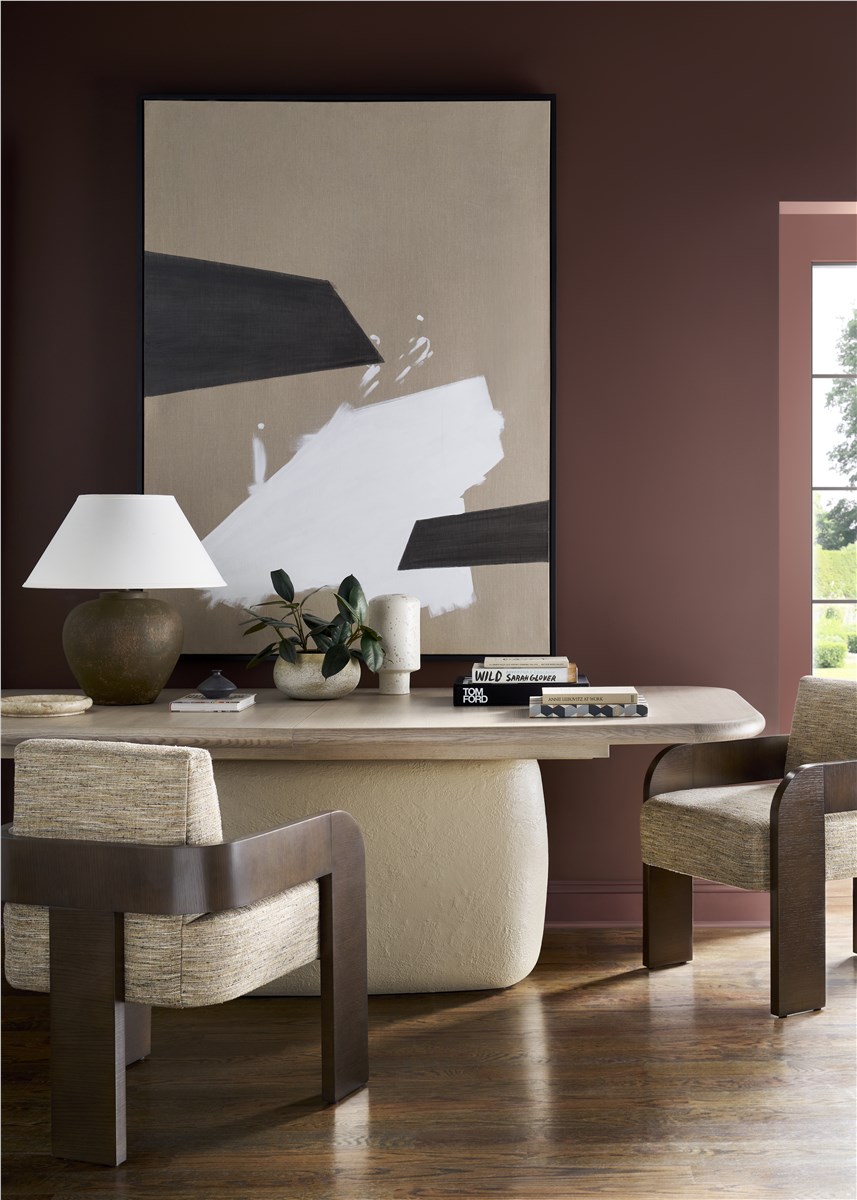
Where should armchairs go at a dining table?
At the two ends, as host chairs, with armless side chairs along the length.
Arms add width, and the ends of a table have width to give. Side chairs along the sides keep the count up and sit close to their neighbors. An armchair at each end marks the head of the table and gives the host somewhere comfortable to linger once the plates are cleared.
Lining the whole table with armchairs looks handsome and usually costs a seat or two on a mid-size table. The host chairs also do not have to match the side chairs. A fully upholstered chair at each end, in a fabric that ties back to the side chairs, is one of the easiest ways to make a dining set look chosen rather than ordered by the dozen.
How wide should dining chairs be?
Allow about 24 inches of table edge for each armless side chair and about 30 inches for each armchair, then check each chair's published width against that.
Twenty-four inches is the working minimum for a place setting and two elbows that do not collide, and 28 to 30 inches feels generous. Armchairs typically run 22 to 26 inches wide and need the full 30. A chair that fills its whole allowance leaves no room to pull it out without bumping the chair beside it, so give the narrower design the edge when two chairs tie on looks.
Count the legs as well. Legs at the corners of a rectangular table take space from the chairs nearest them, so measure the clear span between the legs rather than the full length of the top. Behind the chairs, leave at least 36 inches from the table edge to the wall so a guest can push back and stand, and 42 to 48 inches wherever people walk behind seated guests. A deep chair, or one with a raked back, uses more of that space.
Should dining chairs be upholstered or wood?
Choose upholstered seats for long dinners and wood seats for the easiest everyday care, or split the difference with an upholstered seat on a wood frame.
An upholstered seat is the more comfortable place to spend a long holiday dinner, and a row of upholstered chairs softens a room full of hard surfaces: a wood floor, a wood table, glass and plaster. For a table that sees daily meals, choose a performance fabric or leather. Leather wipes clean easily. For fabric, the rule from our double rubs guide applies: around 15,000 is generally considered fine for home use, and 30,000 or more is treated as heavy duty. Our guide to upholstery cleaning codes explains the letter on the tag.
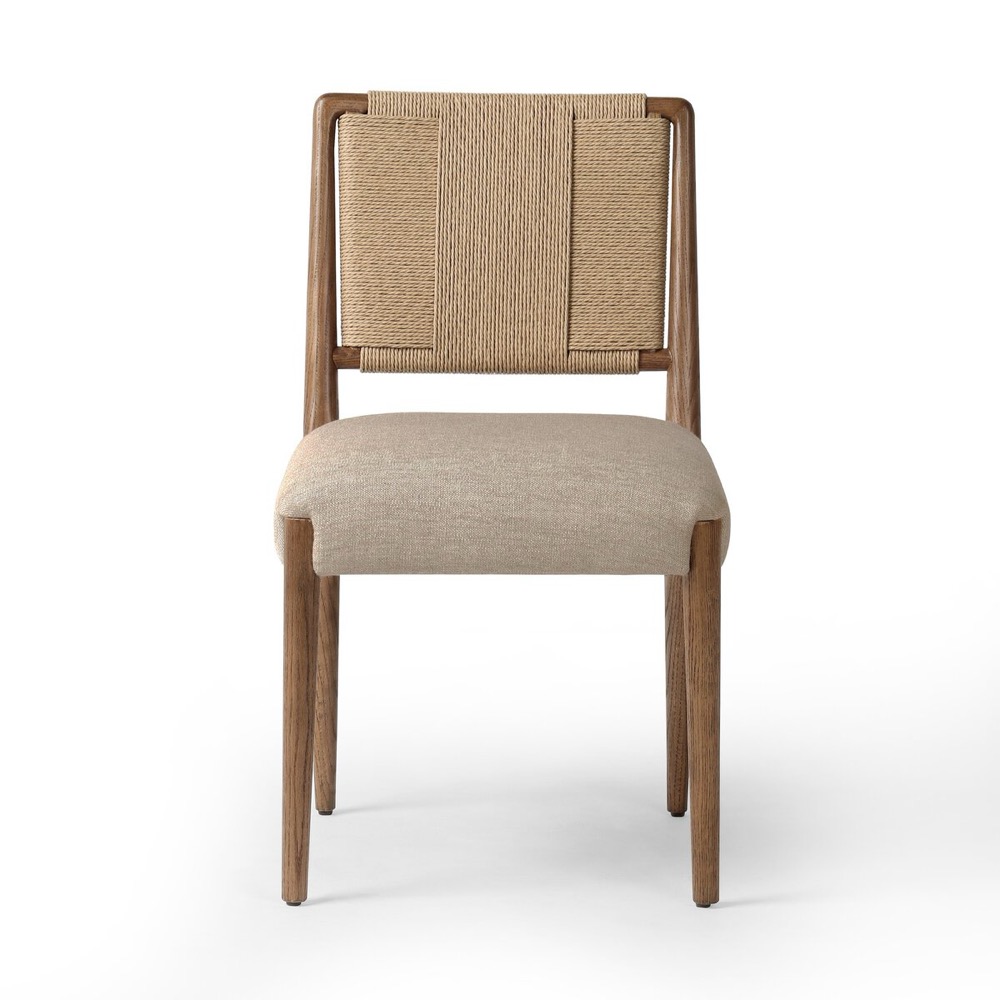
A wood seat wipes clean in a moment and never needs reupholstering. It is firmer, so a tie-on cushion is the usual answer for long evenings. Many chairs split the difference with an upholstered seat on an exposed wood frame, or a woven back over a padded seat, like the Rothler above.
Think about the back, too. The back of a dining chair is the side the rest of the house sees, so in an open plan, choose the back as carefully as the seat.
Should dining chairs match, or can you mix them?
You can mix them, as long as the chairs share a seat height and at least one other thread, such as wood tone, fabric or silhouette.
A matched set is the calm choice, and it suits a long table where the repetition is the point. The easiest mix starts from one: a matched set of side chairs along the length, with different host chairs at the two ends.
A fully mixed table works when something holds it together. Keep the seat heights the same, or as close as the specifications allow, so no guest sits lower than the person beside them. Then repeat one element: the same wood on different shapes, the same fabric on different frames, or one shape in two finishes.
Mixing also solves the holiday problem. Buy chairs for the number you seat most nights, then add a pair that lives at a desk or in the entry the rest of the year and joins the table when the leaves go in. Our guide to extendable versus fixed dining tables covers the table side of that plan.
Can you get new dining chairs before the holidays?
Start with what is ready now, because chairs made to order in your own fabric or finish take longer.
Browse what is in stock for the holidays, where dining chairs have their own section, and bring your table height and length when you come in. If you would rather have chairs built in your own fabric, our guide to how long custom furniture takes explains what sets the timeline.
Where can you try dining chairs in Kansas City?
At the Seville Home showroom in Leawood, where you can sit in side chairs and armchairs at a real table before you decide.
Bring your table's height, its length and a photo of its base, and a designer will help you check the seat height, the arms and the count. Visit us at 5205 W 135th Street in Leawood, Monday through Saturday, 10 a.m. to 5 p.m., or browse our dining collection before you come. Help choosing furniture in the showroom is always free, your first in-home design consultation is complimentary, and directions are on our visit page.
Common questions
What height should dining chairs be?
Dining chair seats usually sit 17 to 19 inches off the floor, which leaves 10 to 12 inches between the seat and the top of a dining table 28 to 30 inches high. To check a pairing, subtract the chair's seat height from the table height and look for a gap of 10 to 12 inches.
Will dining chairs with arms fit under the table?
Only if the arms are lower than the underside of the table's apron, the frame band beneath the top. Measure from the floor to the bottom of the apron and compare it with the arm height in the chair's specifications. If the arms are higher, the chair stops at the table edge and cannot tuck in.
How wide should dining chairs be?
Allow about 24 inches of table edge for each armless side chair and about 30 inches for each armchair. Armchairs typically run 22 to 26 inches wide, which is why many dining rooms put armchairs at the two ends and armless side chairs along the length.
Should dining chairs be upholstered or wood?
Upholstered seats are the more comfortable choice for long dinners, and a performance fabric or leather keeps them practical for everyday meals. Wood seats wipe clean in a moment and never need reupholstering, and a tie-on cushion makes them comfortable through a long evening. An upholstered seat on an exposed wood frame splits the difference.
Can you mix and match dining chairs?
Yes. Keep the seat heights the same so no guest sits lower than the next, and repeat at least one element, such as the wood tone, the fabric or the silhouette. The easiest mix is a matched set of side chairs along the length with different host chairs at the two ends.