How Big a Dining Table Do You Need to Seat 6, 8, 10, or 12?
The table lengths, round diameters, chair widths, and walkway clearances that seat 6, 8, 10, or 12 comfortably, from a Kansas City fine furniture showroom.
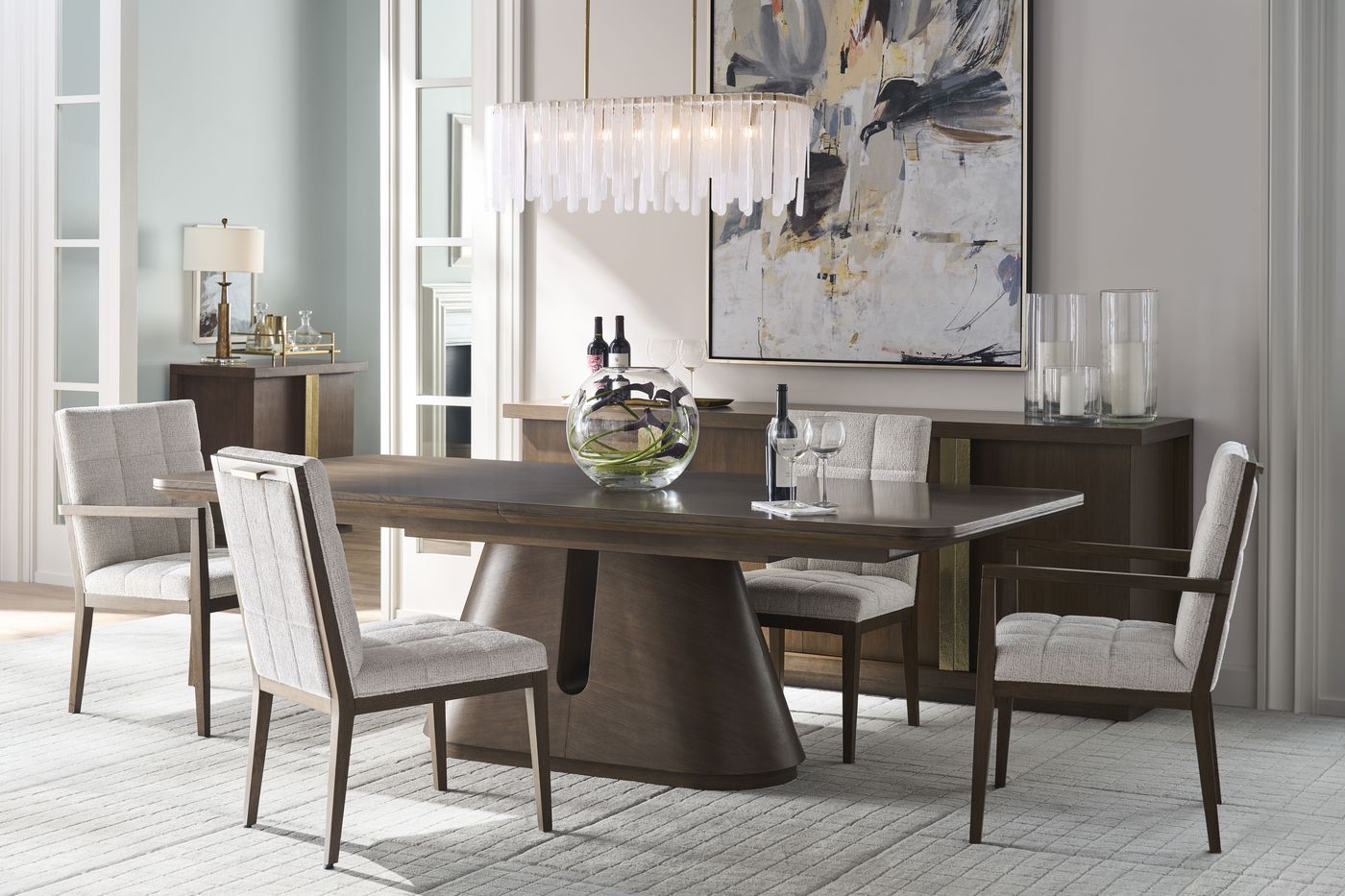
Most people size a dining table by the number on the tag: "seats 8." The trouble is that two tables can make the same promise and feel completely different by the time dessert arrives, because the tag counts chairs and not elbows. Shoppers also tend to measure the table and forget the room, then discover at the first dinner party that no one can get behind the chairs to refill a glass.
Sizing a dining table runs along two separate axes. The first is the table itself, measured in inches of edge per guest. The second is the room around it, measured in walkway. Get both right and the table seats its number with ease. Get only the first right and you have a table that fits your guests but not your house. Here is how to work out each, along with the details that change the math: chair style, the base under the top, the rug, and the light above.
How much table space does each person need?
Plan on about 24 inches of table edge per guest as the working minimum, and 28 to 30 inches when you want real comfort or are using armchairs.
Twenty-four inches is enough for a place setting and two elbows that do not collide. It is the figure behind many "seats 8" claims on a spec sheet, which is why those counts can feel tight in practice. If your gatherings run long, with courses and conversation, size toward 30 inches and the table will feel generous rather than full.
Width matters as much as length. A table 36 inches wide holds place settings on both sides and little else. At 38 to 42 inches there is room down the center for serving dishes, candles, and a low arrangement. Tables seating ten or more read best at 42 to 48 inches wide, which keeps the proportion right and leaves space for platters on a long holiday spread.
How big a dining table do you need for 6, 8, 10, or 12 guests?
For a rectangular or oval table, plan on roughly 60 to 72 inches for six, 84 to 96 inches for eight, 108 to 120 inches for ten, and 120 to 144 inches for twelve.
Those ranges assume one guest at each end and the rest along the sides:
- Six guests: 60 to 72 inches long, 36 to 40 inches wide. Two per side with one at each end, or, at 72 inches, three per side with the ends open.
- Eight guests: 84 to 96 inches long, 38 to 42 inches wide. Three per side with one at each end.
- Ten guests: 108 to 120 inches long, 42 to 48 inches wide. Four per side with one at each end.
- Twelve guests: 120 to 144 inches long, 42 to 48 inches wide. Five per side with one at each end.
The low end of each range seats the number snugly. The high end seats it comfortably or lets you add armchairs. If you host twelve twice a year and six the rest of the time, a table that seats twelve every day will dominate the room on all the other nights. An extendable table earns its place in exactly that situation, and our guide to extendable versus fixed dining tables walks through how leaves work and when a fixed top is still the better call.
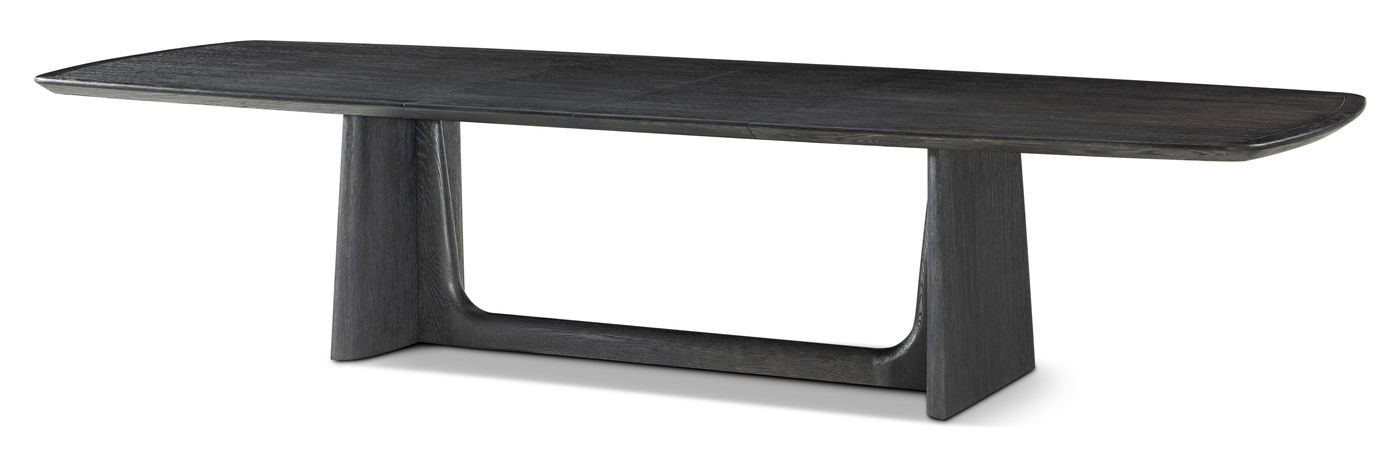
What size round dining table seats 6?
A 54-inch round seats six, a 60-inch round seats six with generous room, and a 48-inch round is the right size for four.
Round tables are the friendliest shape for conversation because everyone can see everyone, and no one is stranded at the far end. The common sizes break down this way:
- 36 to 44 inches: two to four guests, best for a breakfast nook or a small dining room.
- 48 inches: four comfortably, five if you are close friends.
- 54 inches: five to six.
- 60 inches: six comfortably, eight snugly.
- 72 inches: eight, sometimes nine.
- 84 inches: about ten.
Past about 72 inches, a round table starts to work against itself. The center sits too far away to reach a shared dish, and talking across the table means raising your voice. Large rounds often carry a lazy Susan for that reason. For more than eight, an oval or rectangle usually serves the room better.
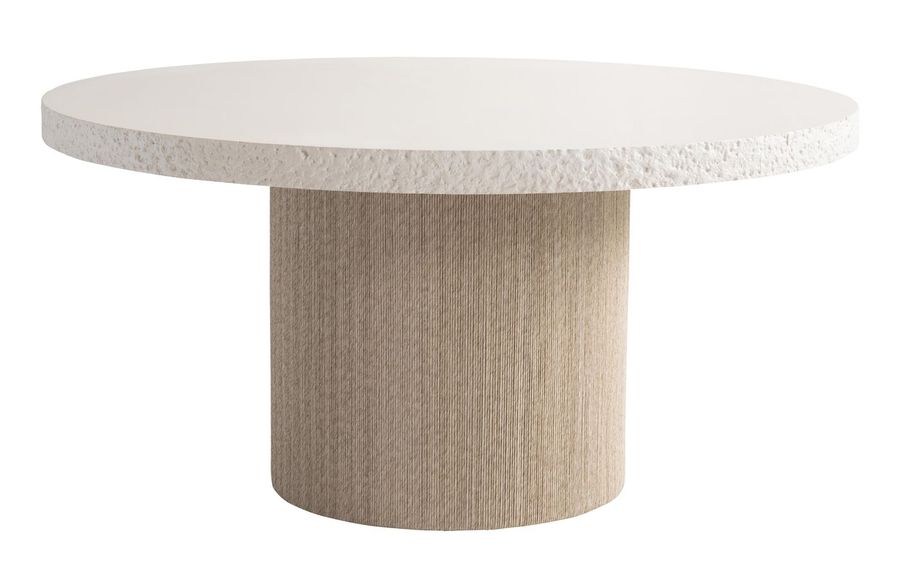
Is an oval or rectangular table better for hosting?
A rectangle seats the most people for its length, while an oval seats nearly as many and makes the room easier to move through, because there are no corners to catch a hip.
An oval of the same length as a rectangle typically seats the same number along the sides and gives up a little room at the rounded ends. In return, it softens a narrow room, keeps traffic flowing around the ends, and lets an extra chair squeeze in at an angle when the guest list grows. A rectangle suits a long, formal room and makes the most of every inch when you are seating ten or twelve.
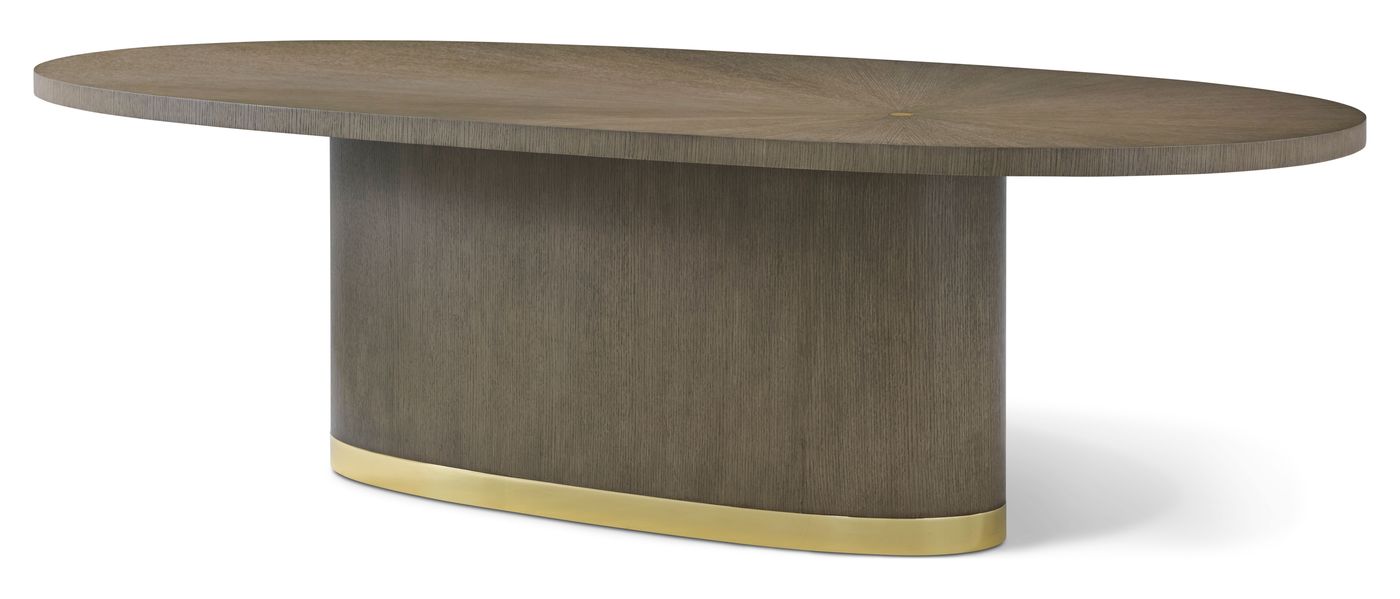
How much space do you need around a dining table?
Leave at least 36 inches from the table edge to the wall or nearest furniture, and 42 to 48 inches anywhere people need to walk behind seated guests.
Thirty-six inches lets a guest push back, stand, and step away. It does not leave room for someone else to pass behind them. If one side of the table backs onto a walkway, a sideboard you serve from, or a doorway, plan on 42 to 48 inches there. Our guide to sideboards, buffets, and credenzas covers the serving-piece side of that clearance.
A quick room check: add 6 to 8 feet to both the length and the width of the table. A 96-by-42-inch table seating eight needs a room at least 14 feet by 10 feet, and closer to 16 by 12 feet if guests will be walking behind the chairs. Size the table to the room first and the guest count second, and the room will never feel like it was built around the furniture.
Do armchairs or side chairs change how many people fit?
Yes. Armchairs typically run 22 to 26 inches wide and need about 30 inches of table edge each, while armless side chairs fit comfortably in 24.
The usual arrangement puts armchairs at the two ends, where the host and a guest of honor sit, and side chairs along the length. Lining a whole table with armchairs looks handsome and reduces the count by one or two seats on a mid-size table. Upholstered side chairs offer most of the comfort with none of the width.
Check two heights before you commit. Chair seats usually sit 17 to 19 inches off the floor, and a dining table stands 28 to 30 inches tall, which leaves the 10 to 12 inches of gap that most people find comfortable. Then measure the arm height of any armchair against the underside of the table apron. If the arms do not clear it, the chairs cannot tuck in, and they will crowd the walkway every day of the year.
Do table legs or a pedestal base affect seating?
They do. Four legs at the corners keep the long sides clear but block a seat at each corner, while a pedestal or trestle base frees the edge so chairs can slide in wherever they fit.
A four-legged table seats exactly what its leg spacing allows, so look for legs set at the corners rather than pulled in toward the middle, where a guest would end up straddling one. A single pedestal is the most flexible base for a round table, since there are no legs at all around the edge, which makes it the easiest shape to add a chair to when the guest list grows. On a long table, a double pedestal or a trestle frees the sides, though guests at the ends may find their feet near the base. Sit at every position before you decide, especially the ends.
What size rug goes under a dining table?
Choose a rug that extends about 24 inches beyond the table on every side, so the back legs of each chair stay on the rug when someone pushes out to stand.
For most tables seating six to eight, that lands on an 8-by-10 or a 9-by-12. Longer tables need a longer rug, and a round table looks best on a round rug sized the same way. Our rug size guide has the full measurements room by room.
How big should a chandelier be over a dining table?
A chandelier generally looks right at one-half to two-thirds the width of the table, hung so its bottom sits about 30 to 36 inches above the tabletop.
A 42-inch-wide table pairs with a fixture of roughly 21 to 28 inches across. Keeping it at least 6 inches inside the table edge on each side means no one stands up into it. Those heights assume an 8-foot ceiling, and a common adjustment is to raise the fixture about 3 inches for each additional foot of ceiling height. Over a long rectangle or oval, a linear fixture or a row of two or three pendants spreads the light along the whole table instead of pooling it in the middle.
Can I get a new dining table in time for the holidays?
Yes, if you choose from what is in stock: pieces on the Seville Home floor can typically be delivered within a day or two, while custom tables take about 8 to 16 weeks.
If the holidays are your deadline, start with the floor. Seeing a table in person also settles every question above at once: you can pull out a chair, sit at the end, and judge the width with your own elbows. Our in-house team handles white-glove delivery, which matters for a long table that needs to come through a doorway and land square in the room.
A custom table, sized to the inch for your room and finished to your choosing, follows a longer timeline. Ordered in the fall, it typically arrives for the new year and well ahead of spring entertaining. Our guide to how long custom furniture takes explains what drives that window.
Where can I see dining tables in person in Kansas City?
The surest way to size a dining table is to sit at one, and the Seville Home showroom in Leawood keeps dining tables and chairs on the floor to try.
Bring your room measurements and your largest guest list, and a designer will help you translate both into a table length, a chair plan, and the rug and lighting that go with them. Visit us at 5205 W 135th Street in Leawood, Monday through Saturday, 10 a.m. to 5 p.m., or browse our dining collection before you come. Our designers offer complimentary design consultations, in the showroom or in your home, and directions are on our visit page.
Common questions
How big of a dining table do you need to seat 8?
A rectangular table about 84 to 96 inches long and 38 to 42 inches wide seats eight comfortably, with three chairs along each side and one at each end. A 72-inch round also seats eight. Allow about 24 inches of table edge per guest, and closer to 30 inches for anyone in an armchair.
What size round dining table seats 6?
A round table 54 inches in diameter seats six, and a 60-inch round seats six with generous elbow room. A 48-inch round is comfortable for four and can squeeze in a fifth. Past about 72 inches, a round table gets hard to talk across and the center becomes out of reach.
How long does a dining table need to be to seat 10 or 12?
Ten guests need a rectangular or oval table roughly 108 to 120 inches long, and twelve need about 120 to 144 inches, at a width of 42 to 48 inches. An extendable table that reaches those lengths only for holidays is often the better fit for a room that seats six most nights.
How much space do you need around a dining table?
Leave at least 36 inches between the table edge and any wall or furniture so a guest can push back and stand. Where people need to walk behind seated diners, 42 to 48 inches is more comfortable. A practical room-size check is the table length plus 6 to 8 feet, and the table width plus 6 to 8 feet.
How much table space does each person need?
Plan on about 24 inches of table edge per person as a minimum and 28 to 30 inches for comfort. Armchairs usually need the full 30 inches because the arms add width, so many dining rooms place armchairs at the ends and armless side chairs along the length.