Extendable vs. Fixed Dining Tables: Which Is Right for How You Host?
How dining table leaves work, from butterfly leaves to end extensions and round tables that open to ovals, and when a fixed table is the better choice.
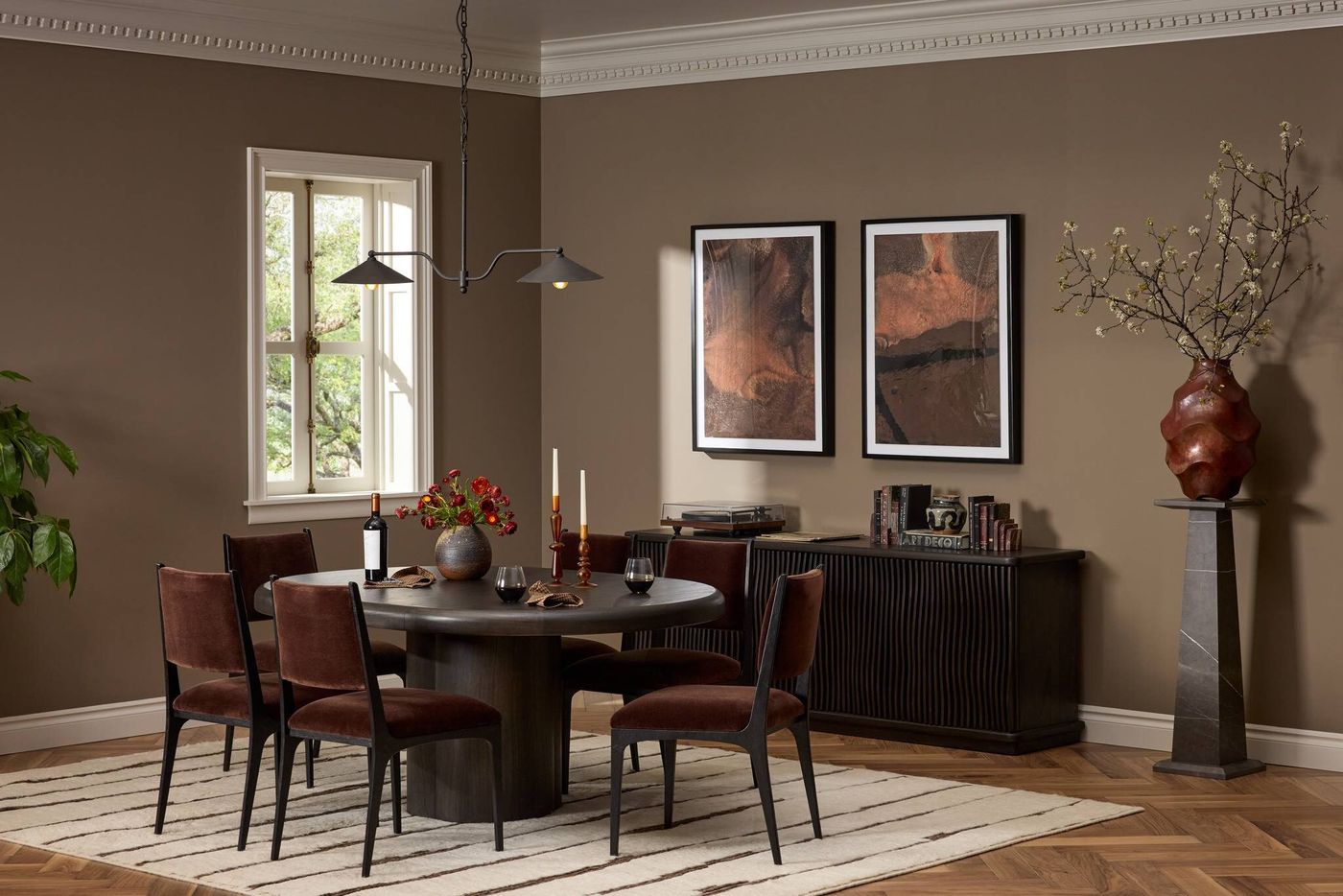
An extendable dining table promises two tables in one: a right-sized table for a Tuesday and a long one for Thanksgiving. Shoppers who go looking for one quickly run into a vocabulary of butterfly leaves, draw leaves, gatelegs, and split pedestals, and it is hard to tell which differences matter at the dinner table and which only matter on a spec sheet. Some also wonder whether the leaves are a compromise, and whether a fixed table would have been the sturdier, simpler choice.
The way through is to ask two separate questions of any extendable table. First, where does the extra length live when the table is closed: inside the table, in a closet, or hanging at its sides? Second, how does the table hold itself up once it opens: do the legs travel with the ends, or does a single base carry more and more overhang? Every leaf design answers both questions differently, and the answers decide how easy the table is to live with. Here is how each type works, how much length it adds, and when a fixed table is still the better call.
How do extendable dining tables work?
An extendable table opens to accept extra sections of top, called leaves, which either store inside the table, store separately, or fold down from its sides.
The five common designs break down like this:
- Removable leaves. The table pulls apart at the center on slides, and loose leaves drop into the gap. The most traditional design, and the one that allows the most total length, since a long table may take two or three leaves.
- Self-storing, or butterfly, leaves. The leaf is hinged and folds into a cavity under the top. Pull the ends apart, unfold the leaf, and close the table around it. Nothing to carry from a closet.
- End extensions, also called draw leaves. Leaves tuck beneath the top at one or both ends and pull out on runners, rising level with the top. The center of the table stays seamless.
- Pedestal split. The top separates over a pedestal base, and on some designs the base itself splits in two and travels with the ends. Common on round tables that open to ovals.
- Drop leaves. Hinged leaves hang down at the sides and lift up, held by swing-out legs or pull-out brackets. A gateleg table is the classic example, and the format suits a breakfast room or a small dining space.
A rarer design, the jupe table, opens a round top outward from the center so it stays round as it grows, and our guide to jupe tables explains how it works.
How much does a dining table leaf add?
Most leaves run 12 to 24 inches each, and a leaf of about 24 inches adds a full place setting to each side, so two seats.
The math follows the standard of about 24 inches of table edge per guest. An 18- to 20-inch leaf, the most common size, adds two seats if the guests do not mind sitting close, and a generous margin of elbow room if they do. A 12-inch leaf rarely adds a seat. Instead, it turns a snug table into a comfortable one. Our guide to how big a dining table you need has the full lengths for six, eight, ten, and twelve.
End extensions usually add 12 to 20 inches at each end, so a table with two draw leaves can gain a seat at both ends at once. Drop-leaf tables vary the most, from a small breakfast table that seats two with the leaves down and four with them up, to longer gateleg designs.
Where do the leaves go when the table is closed?
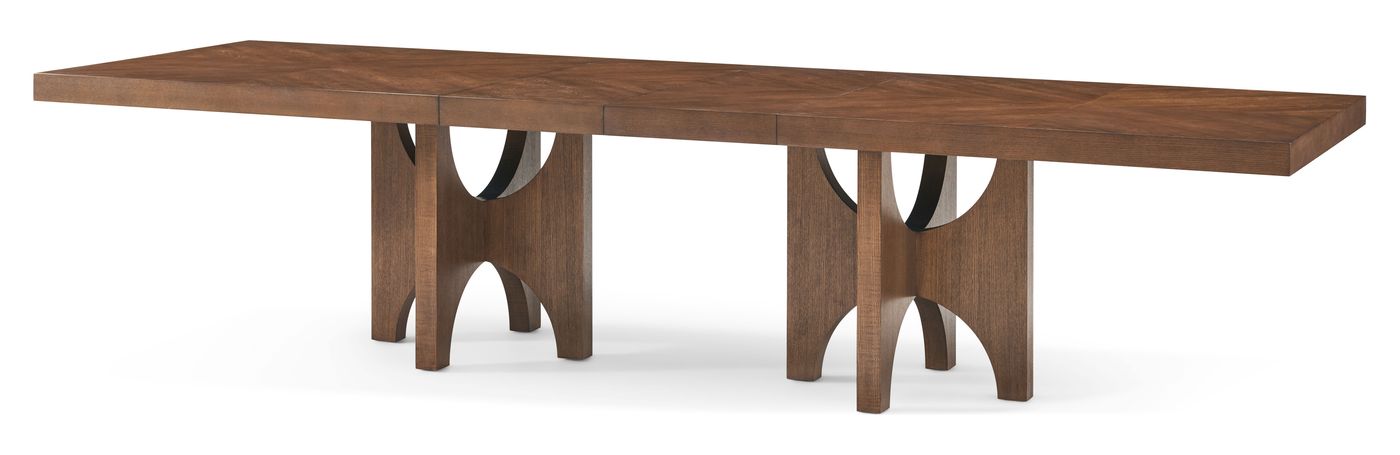
Self-storing and end-extension leaves live inside the table, while removable leaves need a closet, and the storage question is often what decides between them.
A self-storing leaf is always on hand, never gets lost in a move, and spends its downtime protected under the top. The tradeoff is a deeper apron or a mechanism under the table, so sit at it and check knee room before you buy. Removable leaves keep the closed table simpler underneath, and they allow more total length, but they need a home. Store them flat or on edge in a padded leaf bag, inside the house, at the same temperature and humidity as the table. Attics, garages, and damp basements can warp a leaf until it no longer lies flush.
What happens to the legs and apron when the table extends?
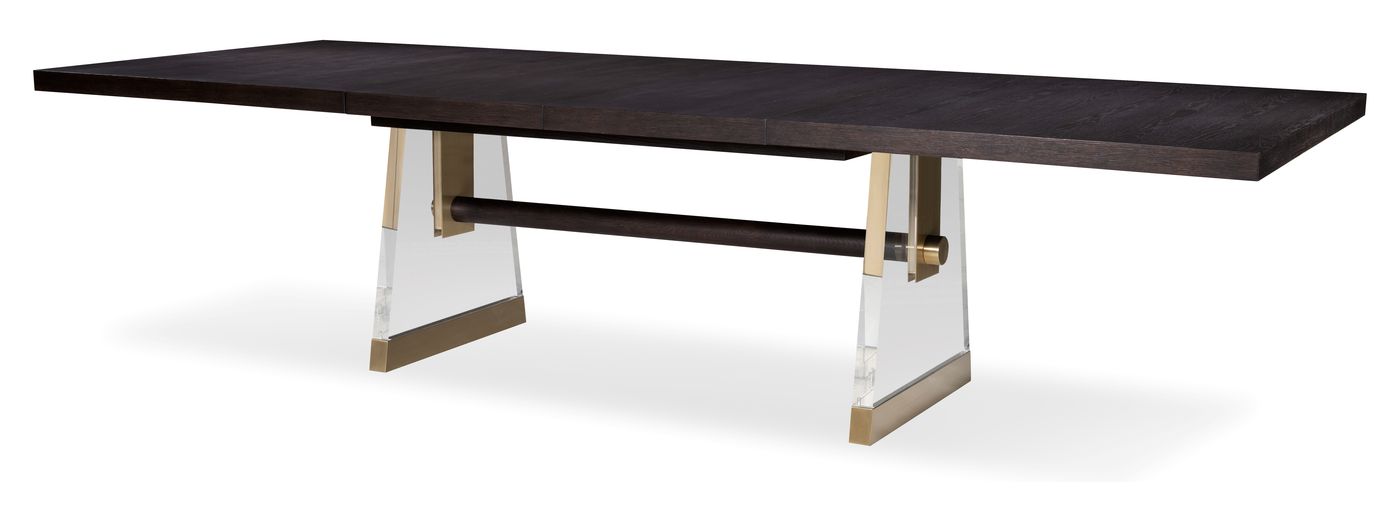
On a four-legged table, the legs travel outward with the ends and stay at the corners, while on a pedestal table the base stays put and the ends overhang farther with each leaf.
A center-split table on four legs keeps every seat clear of a leg, open or closed. The weak point on a long span is the middle, so look for a drop-down center leg or a center support that carries the leaves once the table reaches its full length. On a table with an apron, each leaf should carry its own apron section, so the line under the top stays continuous when the table is open.
Pedestal tables work differently. A single pedestal under a round top handles one leaf with ease. Add a large leaf, or a second one, and the ends reach far past the base, which is why many pedestal designs either split the base so it travels with the top or fold down an extra leg. Ask how the table supports itself at full length, and lean on the ends in the showroom. A well-made table stays steady.
Do extendable tables hold up over time?
A well-made extendable table lasts as long as a fixed one, provided the slides, alignment pins, and table locks are built to the same standard as the top.
Open and close the table in person. Quality slides, whether traditional wood or metal, glide without forcing and without lifting one end off the floor. Alignment pins on the edge of each leaf should seat into matching holes so the joints line up flush. Table locks or leaf clips then draw the seams tight, so a dropped spoon does not find a gap. If two people have to wrestle the table open in the showroom, it will not get any easier at home.
The other durability question is finish matching. Leaves are finished alongside the top at the factory, but a leaf that spends most of the year in a closet or under the top sees far less light than the surface around it. Many woods darken or lighten with light exposure, and over time a stored leaf can read a shade different. The simple remedy is to put the leaves in for a few days now and then, especially in the first year, so they age at the same pace. A well-made veneer top also matches the grain of its leaves to the top, a detail our guide to solid wood versus veneer furniture explains. For everyday upkeep, see how to care for wood furniture.
Can a round dining table extend into an oval?
Yes. Many round tables split down the middle and take a leaf, turning the round into an oval that seats two or more extra guests.
A round-to-oval table may be the most useful extendable design for a smaller dining room. Closed, the round seats four or six with the easy conversation a round table is known for. Open, it becomes an oval that seats six or eight and still flows well around the ends. As a rough guide, a 48-inch round that seats four opens to an oval of about 66 to 72 inches for six, and a 60-inch round that seats six opens to an oval of about 80 to 84 inches for eight.
Check the base as closely as the top. A split pedestal or a four-legged base handles the change in shape well. A single fixed pedestal works with one leaf, but the ends of a long oval will overhang it.
When is a fixed dining table the better choice?
Choose a fixed table when you seat the same number most of the time, when the room cannot fit the extended length anyway, or when the top is a material a seam would interrupt.
Start with the room. An extended table still needs at least 36 inches of clearance on every side, and 42 to 48 inches where people walk behind chairs. If the room cannot give that at full length, the leaves will never go in, and the mechanism is cost and complexity with no return.
Then consider the top. Stone, a single wood slab, glass, and veneer patterns such as a sunburst or an inlaid border all read best without a seam through the middle, and many are simply not made to extend. A fixed table also has fewer moving parts, and its frame can be built as one rigid piece. For the host who seats eight every Sunday and twelve once a year, a fixed table for eight, with a second table set nearby for the overflow, can suit the room better than a mechanism used once a year.
Can I get a dining table before the holidays?
Yes, by choosing an in-stock table: pieces on the Seville Home floor can typically be delivered within a day or two, while custom tables take about 8 to 16 weeks.
If a holiday gathering is the deadline, start on the showroom floor, where you can open the table, set the leaves, and sit at the ends before you decide. Our in-house team handles white-glove delivery, setting the table in place and leveled in your room.
A custom table, with the length, leaf system, and finish chosen for your room, follows a longer timeline. Ordered in the fall, it typically arrives for the new year and well ahead of spring entertaining. Our guide to how long custom furniture takes explains what shapes that window.
Where can I try extendable dining tables in Kansas City?
The only real test of a leaf mechanism is opening it yourself, and the Seville Home showroom in Leawood keeps dining tables on the floor to open, extend, and sit at.
Bring your room measurements and your largest guest list, and a designer will help you weigh an extendable table against a fixed one for the way you host. Visit us at 5205 W 135th Street in Leawood, Monday through Saturday, 10 a.m. to 5 p.m., or explore our dining collection first. Our designers offer complimentary design consultations, in the showroom or in your home, and directions are on our visit page.
Common questions
Are extendable dining tables worth it?
An extendable table is worth it when your guest count swings, for example six on most nights and ten or twelve for holidays. It lets the table fit the room every day and still seat the crowd a few times a year. If you seat the same number nearly every time, or want an uninterrupted top in stone, an inlaid veneer, or a single slab, a fixed table is usually the better choice.
How much length does a dining table leaf add?
Most dining table leaves run 12 to 24 inches each, with 18 to 20 inches the most common. A leaf of about 24 inches adds a full place setting to each side, so two seats. A 12-inch leaf mostly adds elbow room rather than a new seat.
What is a self-storing or butterfly leaf?
A self-storing leaf stays inside the table when it is not in use. On a butterfly leaf, the leaf is hinged down the middle and folds into a cavity under the top. You pull the table ends apart, unfold the leaf into the gap, and push the ends back together, with no separate leaf to carry or store.
Can a round dining table extend?
Yes. Many round tables split down the middle and take a leaf, which turns the round into an oval. A 48-inch round that seats four commonly opens to an oval of roughly 66 to 72 inches, enough for six. Check how the base handles the extra length, since a single pedestal may need a support leg when the top opens wide.
How should you store dining table leaves?
Store removable leaves flat or on edge inside the house, in a padded leaf bag, at the same temperature and humidity as the table. Avoid attics, garages, and damp basements, which can warp wood. Putting the leaves in the table for a few days now and then helps their finish age at the same pace as the top.