Counter Stool vs. Bar Stool: How to Choose the Right Height
A counter stool and a bar stool are named for the surface they serve. How to measure, how much knee room to leave and how many stools fit an island, from Seville Home in Leawood, KS.
Nearly everyone calls the tall seats at a kitchen island bar stools, and most of the time that is the wrong word. Order by that name for a 36-inch counter and a stool with a 30-inch seat arrives, leaving about 6 inches for your legs.
The mix-up comes from treating two measurements as one. The first is the surface: how high your counter or bar stands off the floor. The second is the seat: how high you sit. Stools are named for the surface they serve, so measure the surface first and the seat follows. It is worth getting right before the holidays, because that is when everyone ends up at the island whether you planned for it or not.
What is the difference between a counter stool and a bar stool?
A counter stool is built for a surface about 36 inches high and a bar stool for one about 42 inches high, and the seats follow from there.
We read the published specifications for 37 stools from six makers: Massoud, Vanguard, Four Hands, Lee Industries, Fairfield and Amisco. The 21 counter stools have seats from 24 to about 27.5 inches off the floor. The 16 bar stools have seats from 30 to about 31.5 inches.
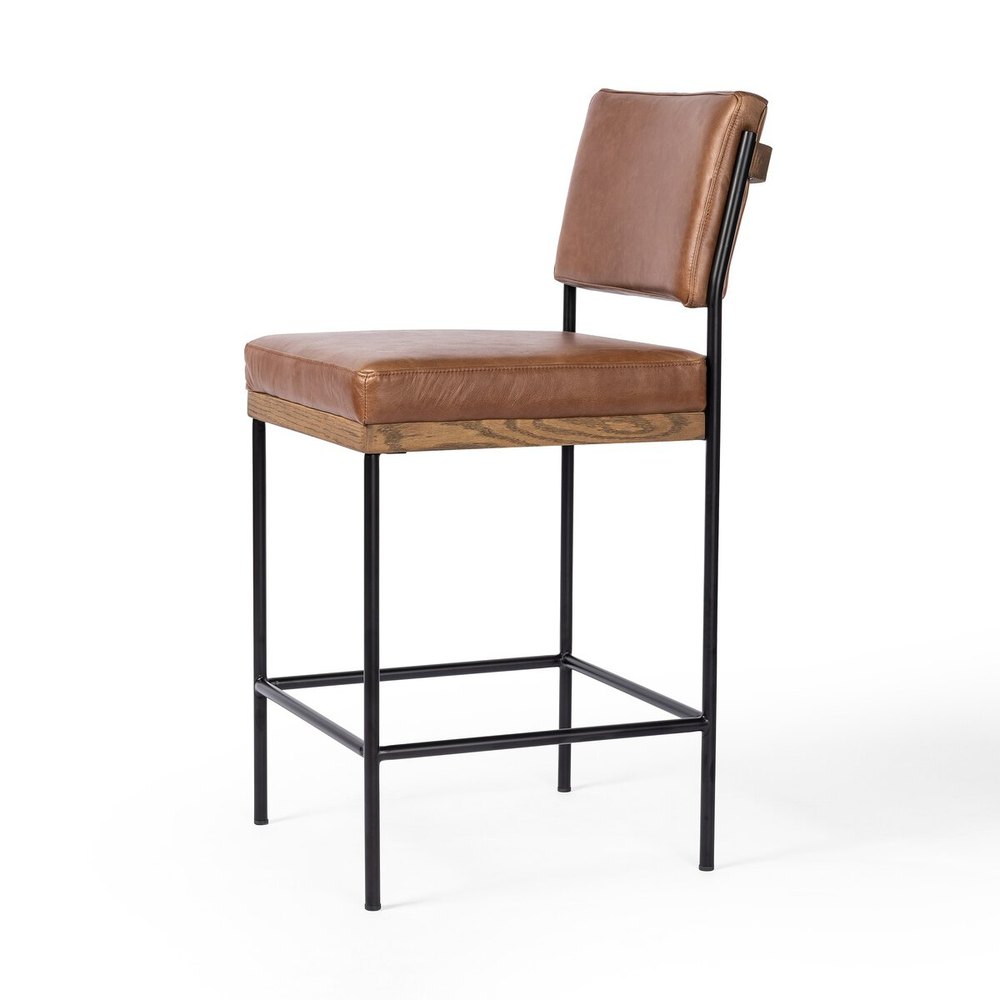
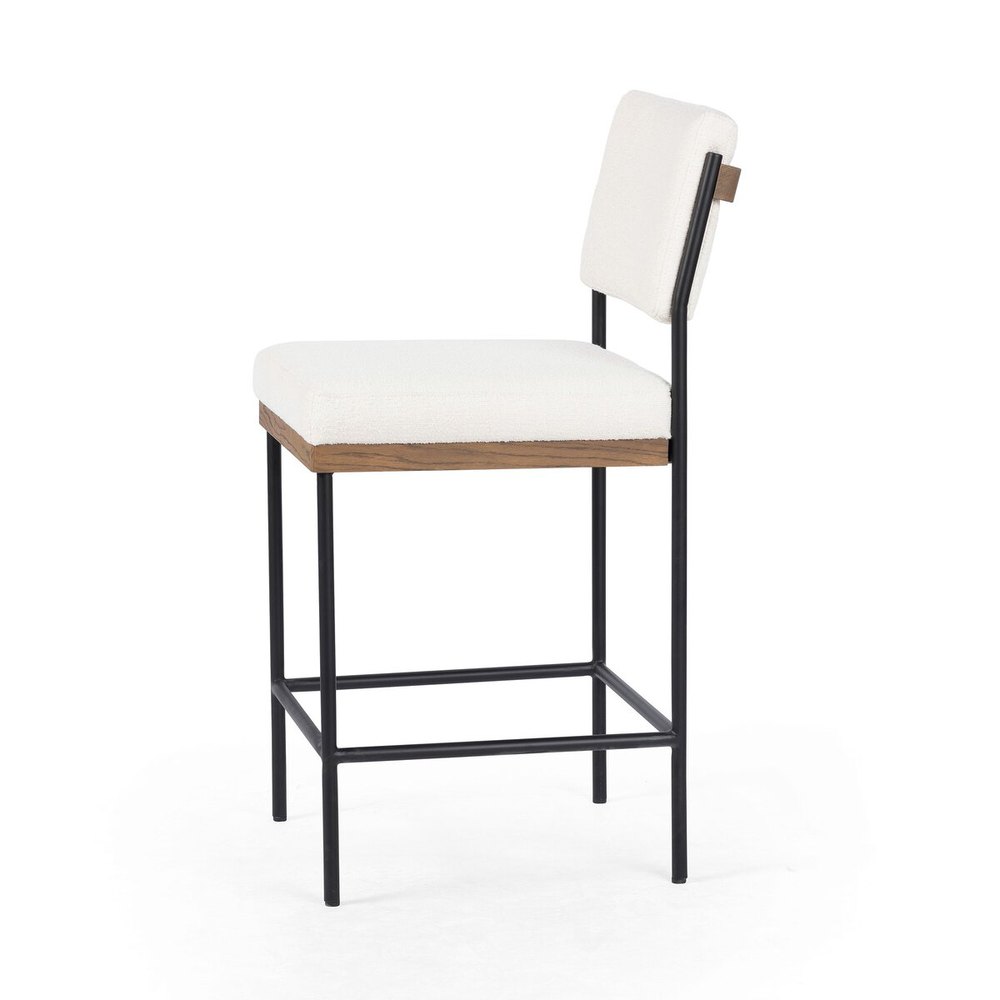
Many frames come in both heights, so you can love a stool and still get it wrong. The Vanguard Wright has a 24.5-inch seat as a counter stool and a 30.5-inch seat as a bar stool. On the Massoud Ines the same two numbers are 24 and 31, and on the Four Hands Benton they are 26.4 and 30.3.
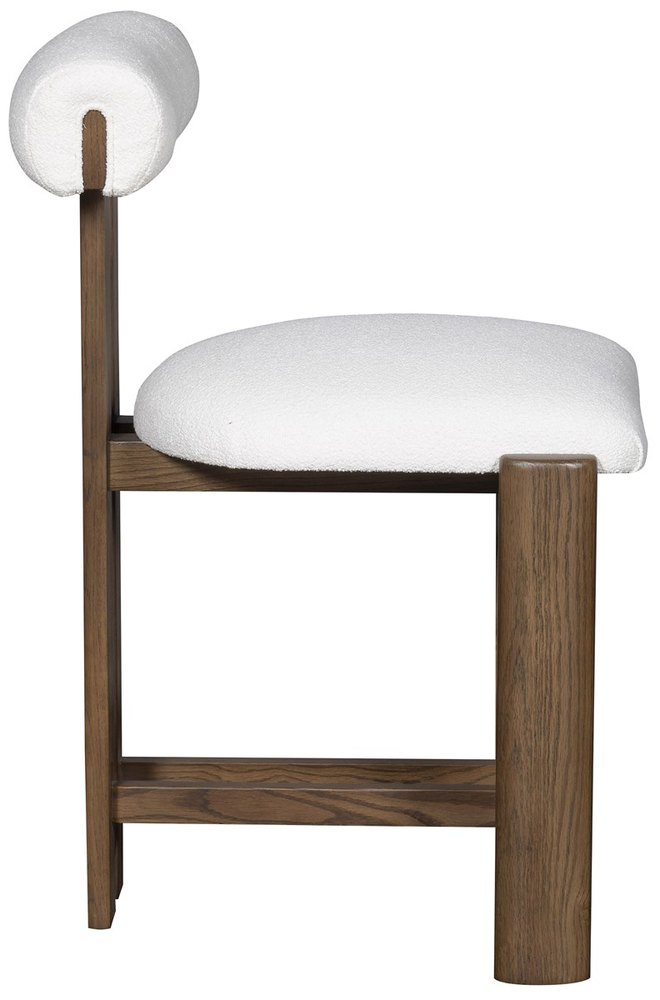
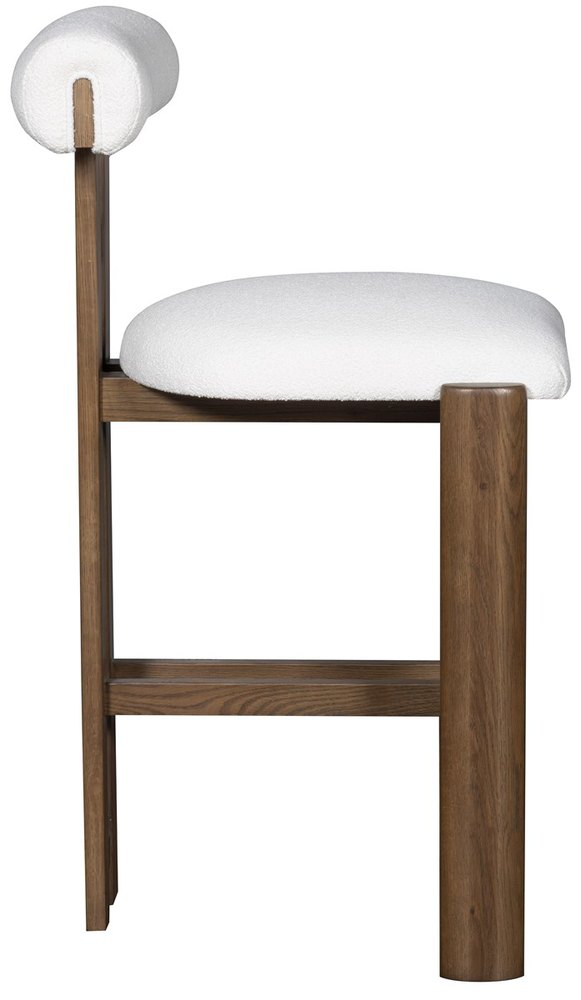
A third size exists for very tall surfaces. Amisco builds its Ronny with a 34.5-inch seat for what it calls spectator height, for counters 46 to 48 inches high.
How do you measure for the right stool height?
Measure from the floor to the top of the surface, then choose a seat that leaves about 8.5 to 12 inches below that top.
Three steps settle it:
- Measure where someone will sit. Go from the floor the stool will stand on to the top of the counter. Amisco counts anything from 36 to 38 inches as counter height and 40 to 42 inches as bar height. A stepped island is two measurements.
- Subtract the seat. Among the stools we compared, a counter stool leaves about 8.5 to 12 inches below a 36-inch top. A bar stool leaves about 10.5 to 12 inches below a 42-inch top.
- Look under the edge. Your legs stop at the underside of the counter, not the surface you measured. A 3-centimeter stone slab is about 1.25 inches thick, so those same counter stools leave about 7.25 to 10.75 inches of real room. With a thick mitered edge or an apron, choose from the low end of the seat range.
Now the wrong-height stool makes sense. A 30-inch seat at a 36-inch counter leaves 6 inches, less the thickness of the top, and most legs will not fit under it. A 26-inch seat at a 42-inch bar leaves 16 inches, and you reach up to your plate.
How much overhang does a counter need for stools?
The National Kitchen and Bath Association recommends knee space 15 inches deep at a 36-inch counter and 12 inches deep at a 42-inch counter.
The higher you sit, the less your knees reach forward, which is why the number shrinks as the surface rises. The association's kitchen planning guidelines also call for 24 inches of width for each person. Measure the overhang on your island before you fall for a deep seat. With a shallow overhang, guests end up sitting slightly sideways.
Check behind the stools too. The same guidelines ask for 32 inches from the counter edge to a wall when no one passes behind, 36 inches for someone to edge past, and 44 inches to walk past. A kitchen on a holiday evening has plenty of walking past.
How many stools fit along a kitchen island?
Divide the length of the island by 24 inches for a tight fit, or by 28 to 30 inches for comfort, then round down.
Twenty-four inches matches the kitchen guideline and the figure in our dining table guide. The stool itself may change the answer, since the widths we read run from 16 inches on the backless Massoud Quinn to 25 inches on the Vanguard Rendition. A good test is the width of the stool plus about 6 inches between neighbors, and never less than 24 inches in all.
An 8-foot island, 96 inches long
| Island | 24 in each | 28 in each | 30 in each |
|---|---|---|---|
| 5 feet | 2 | 2 | 2 |
| 6 feet | 3 | 2 | 2 |
| 7 feet | 3 | 3 | 2 |
| 8 feet | 4 | 3 | 3 |
| 10 feet | 5 | 4 | 4 |
Hosting changes the math a little. Two or three stools with backs are lovely every day, and a slim backless stool or two can tuck in for the holidays, as long as everyone has the 24 inches.
Should a counter stool have a back?
Choose a back if people will linger, and go backless if the stools need to disappear under the counter or you want more seats.
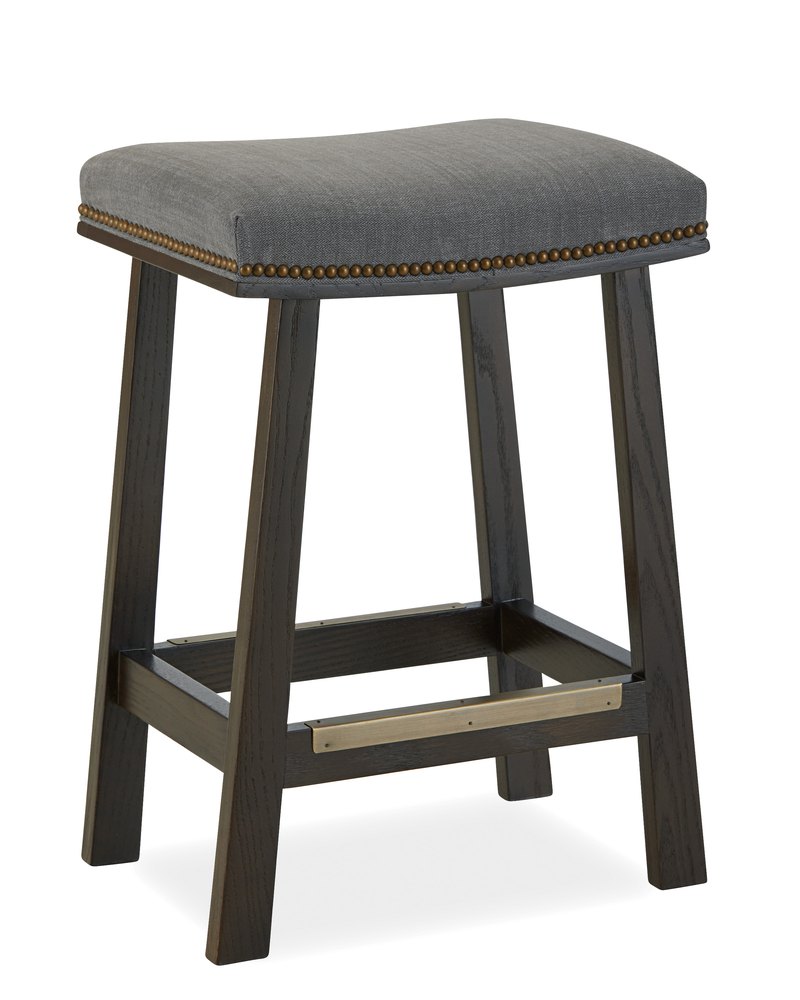
Backless stools are the most compact. The Lee Industries 9000 counter stool is 27 inches high overall and 18 inches wide, so it slides under most overhangs and vanishes from view. The Fairfield Bond is another, with a 26.75-inch seat.
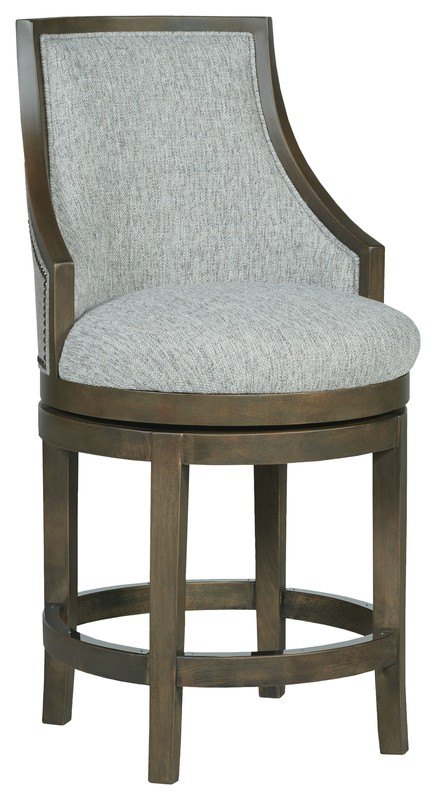
Backs vary more than the word suggests. The Amisco Ronny and the Vanguard Rendition rise about 10 inches above the seat, while the Fairfield Robroy rises 16.5 inches. In an open kitchen, the back of the stool is what you see from the living room, so a tall back counts as furniture in that room. A Rendition counter stool stands 36 inches overall, level with a 36-inch counter. A Robroy stands 42.5 inches, well above it.
Will a stool with arms fit under the counter?
Only if the arm is lower than the underside of the counter, so check the arm height before you buy.
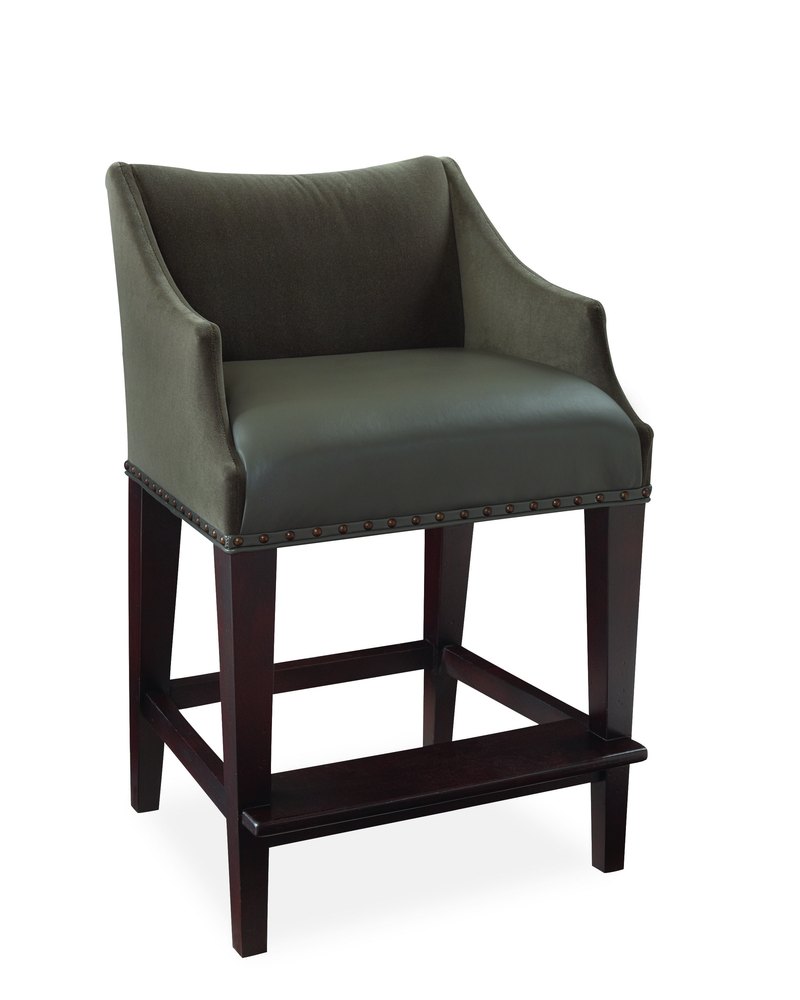
On a 36-inch counter with a 3-centimeter stone top, the underside sits about 34.75 inches off the floor. The Lee Industries 5206 counter stool has arms at 29 inches, the same as the Fairfield Robroy. The Lee Industries 5543 sits at 31, and the Vanguard Rendition at 32.5. All of them slide under.
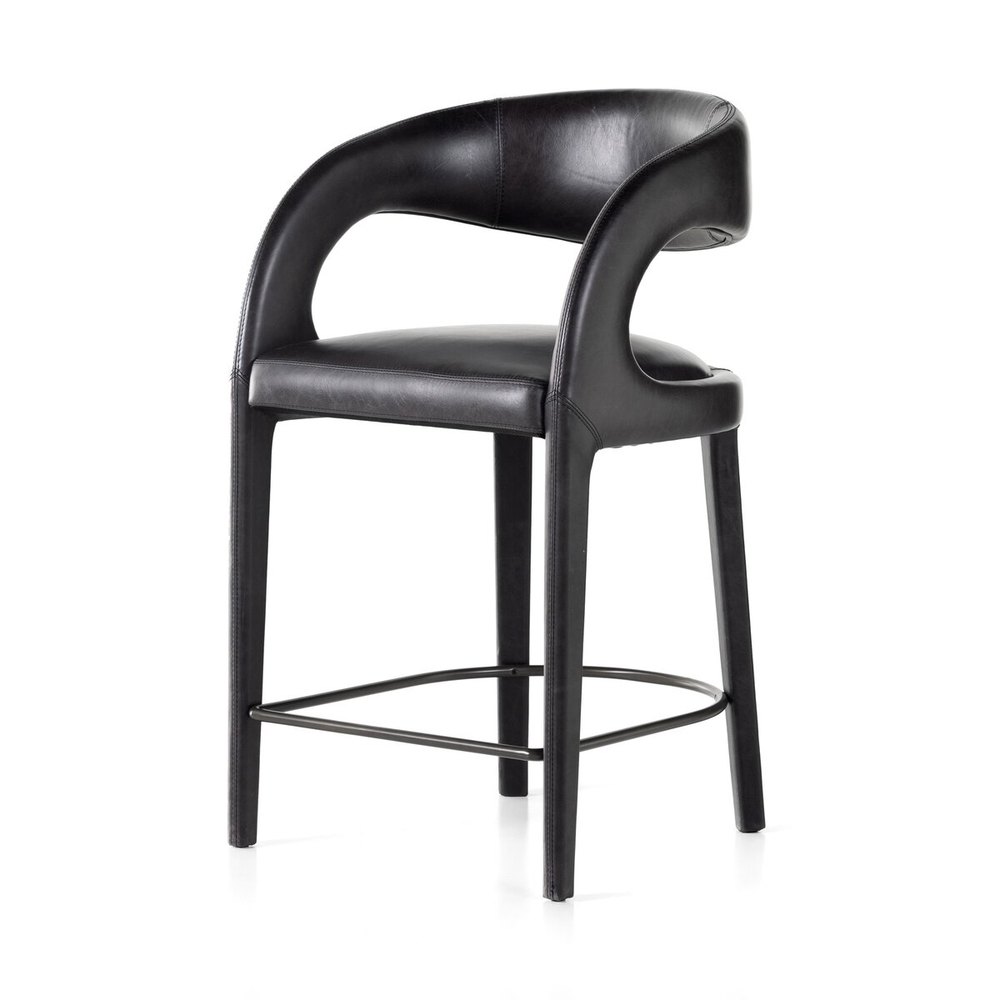
The Four Hands Hawkins counter stool has arms at about 36 inches, so it stops at the edge. It suits a kitchen where the stool stays out in the room as a sculptural piece, so plan for the floor space it will keep. Arms also add width, so allow the full 28 to 30 inches per stool.
Is a swivel counter stool worth it?
Yes, if guests talk in two directions or the stool is hard to pull out, and a return swivel keeps the row looking tidy.
A swivel lets someone turn to the room without scraping the floor, which helps at an island that faces a living room. Our swivel chair guide makes the same case for the pivot spot in an open plan.
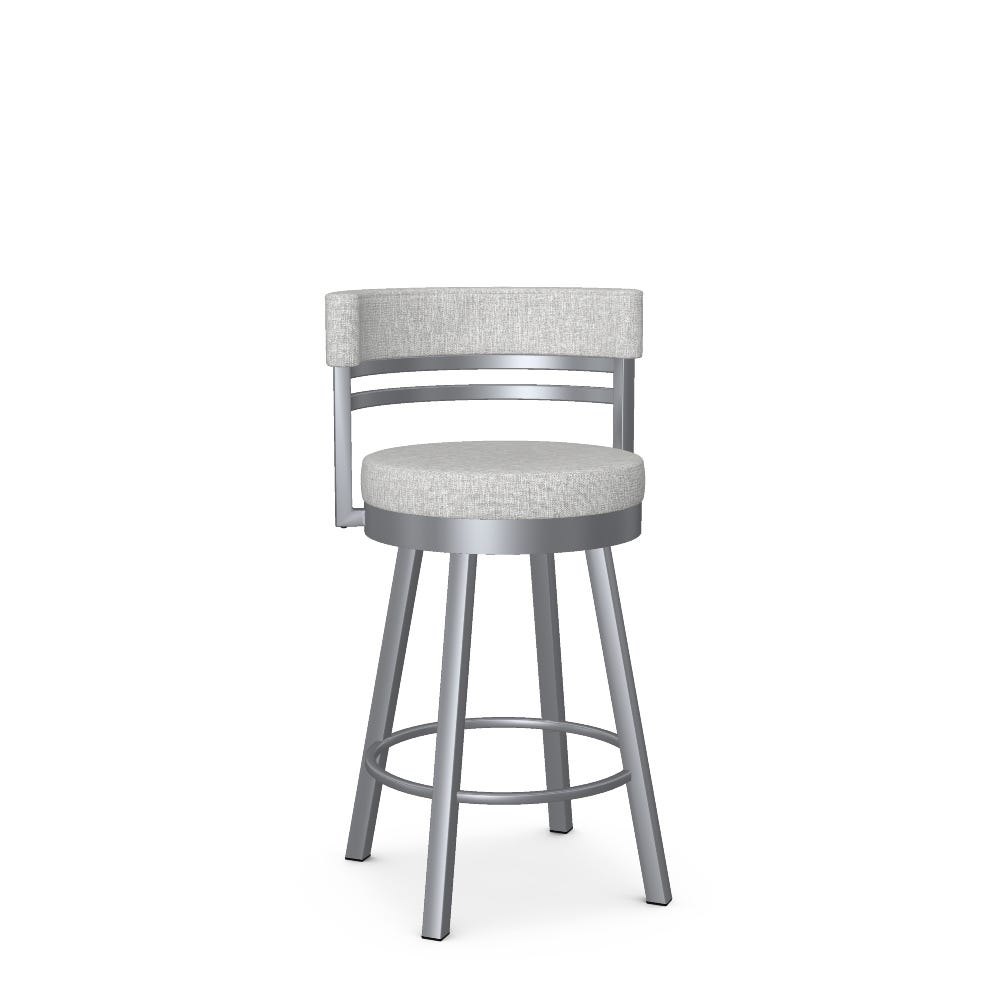
The detail to ask about is what happens when you stand up. A return swivel swings back to face front, as on the Vanguard Ace and Avery, and Fairfield calls its version a memory swivel on the Robroy. The Amisco Ronny turns a full 360 degrees with no return, so it stays wherever the last guest left it. Massoud builds its Piro with a swivel as standard.
Does a counter or bar stool need a footrest?
Yes, because most feet will not reach the floor, and a metal footrest or kickplate takes the wear from shoes.
The Amisco Ronny shows how makers think about it. Its footrest sits 8 1/8 inches off the floor at counter height, 12 1/8 at bar height and 16 1/8 at spectator height, so the drop from seat to footrest stays 18 3/8 inches on all three. Your legs get the same position whichever you choose.
Look at what the footrest is made of. Massoud finishes the footrests on its Quinn, Lyric and Piro stools in brushed brass, and Vanguard fits a metal kickplate on its Wright, Rendition and Avery. Wood rails work too, but shoes will mark them over time.
What upholstery holds up on a stool used every day?
Leather or a performance fabric, because a kitchen stool meets more food, drink and denim than almost any other seat in the house.
Many frames give you the choice. The Four Hands Benton comes in top-grain leather or in a performance fabric, and Lee Industries, Vanguard and Fairfield offer stools in fabric or leather on the same design. Leather wipes clean easily. For fabric, the rule from our double rubs guide applies: around 15,000 is generally considered fine for home use, and 30,000 or more is treated as heavy duty. Our guide to the best sofa fabric for kids and pets goes further.
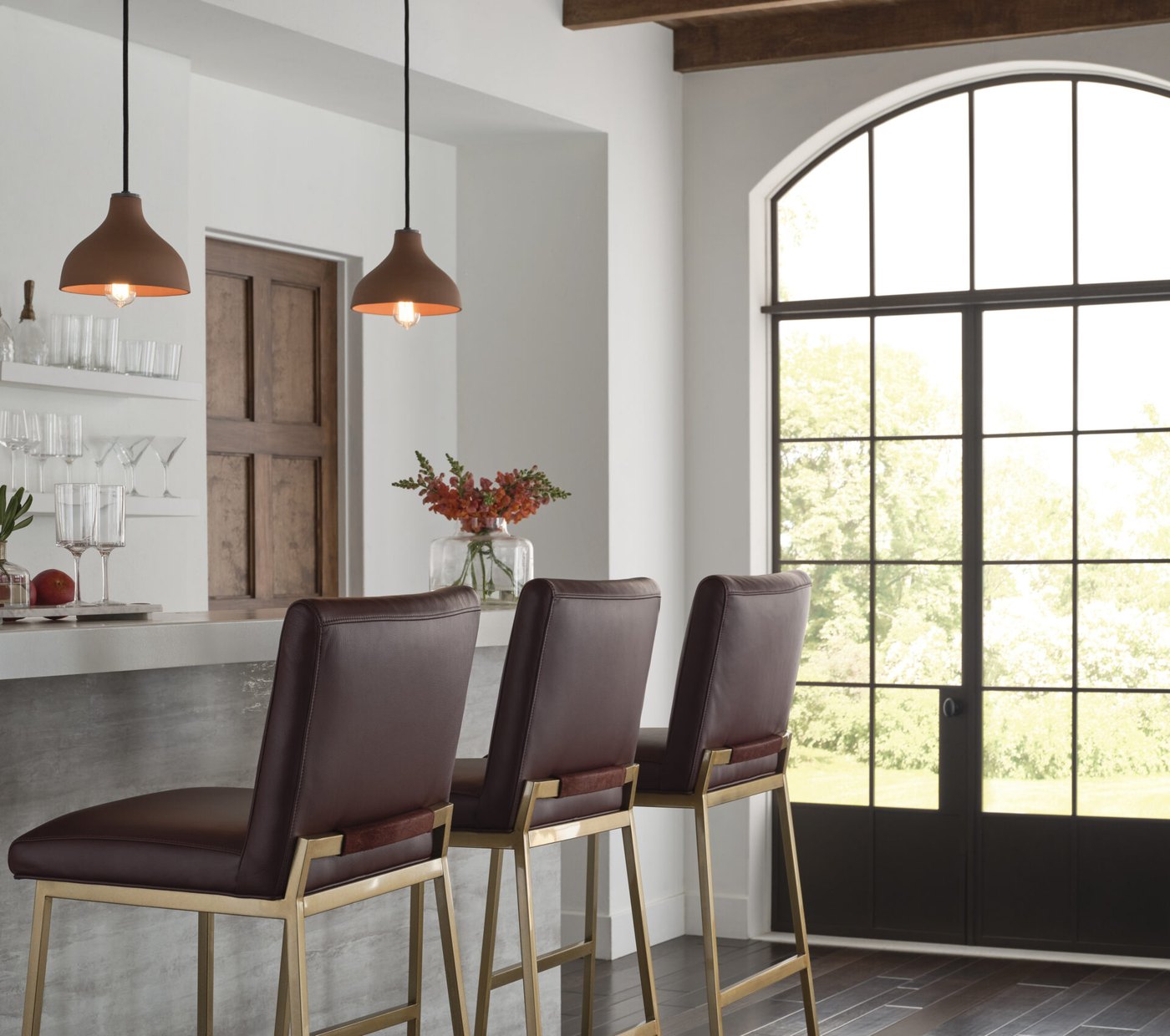
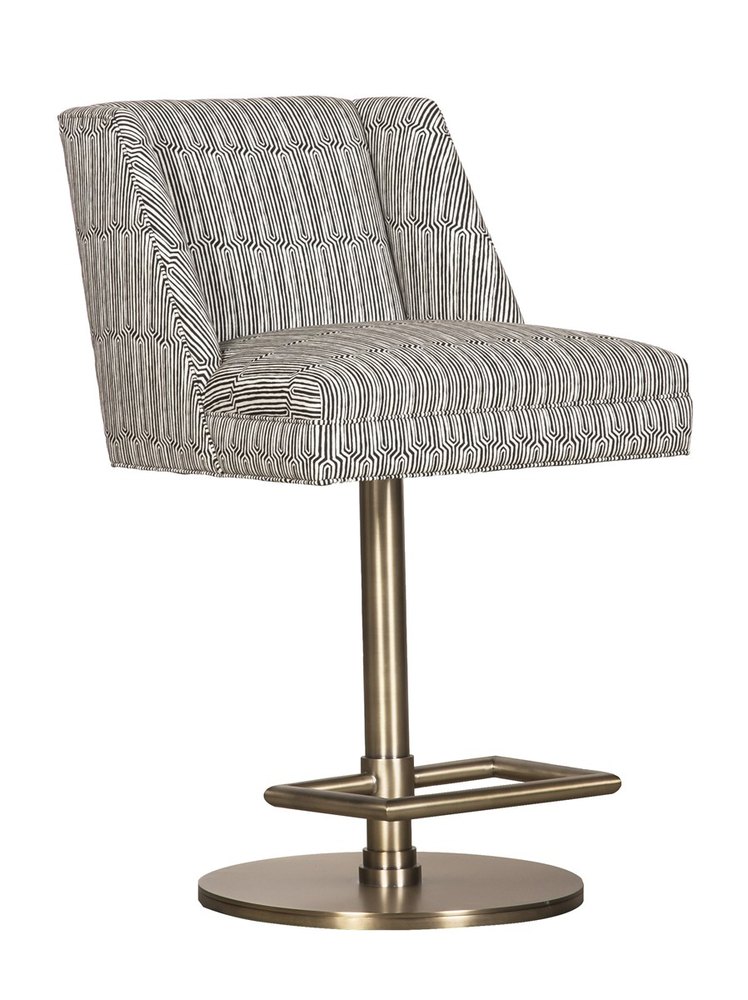
Think about the back as well, since it is the side of the stool that faces the room. Massoud offers the Ines with a contrasting leather tab across the back, which you can see on the stools at the top of this page.
Where can you try counter and bar stools in Kansas City?
At Seville Home in Leawood, where you can sit on both heights and bring your counter measurements with you.
The floor carries stools from Massoud, Vanguard, Four Hands, Lee Industries, Amisco and Fairfield, and our dining collection and best sellers are good places to look around while you are here. Pieces on the floor can deliver sooner. A stool ordered in your own fabric or leather takes longer, so see how long custom furniture takes if you have a date in mind.
The showroom is at 5205 W 135th Street in Leawood, open Monday through Saturday from 10 to 5. Plan your visit or book a complimentary design consultation, and a Seville Home designer will help you find the stool that suits your counter and the way your family gathers.
Common questions
What is the difference between a counter stool and a bar stool?
The surface each one serves. A counter stool is built for a surface about 36 inches high, and a bar stool for one about 42 inches high. Among the 37 stools we compared, counter stool seats run from 24 to about 27.5 inches, and bar stool seats run from 30 to about 31.5 inches.
What height stool do I need for a 36-inch counter?
A counter stool, with a seat from 24 to about 27.5 inches off the floor, which leaves about 8.5 to 12 inches between the seat and the top of the counter. If your counter has a thick edge or an apron, choose from the low end of that range.
What height stool do I need for a 42-inch bar?
A bar stool, with a seat from 30 to about 31.5 inches off the floor, which leaves about 10.5 to 12 inches between the seat and the top of the bar.
How many stools fit at a kitchen island?
Divide the length of the island by 24 inches for a tight fit, or by 28 to 30 inches for comfort, and round down. A 6-foot island takes 3 stools at 24 inches each or 2 at 28 to 30. An 8-foot island takes 4 at 24 inches each or 3 at 28 to 30.
How much overhang does a counter need for stools?
The National Kitchen and Bath Association recommends knee space 15 inches deep at a 36-inch counter and 12 inches deep at a 42-inch counter, with 24 inches of width for each person.