Round vs. Rectangular Dining Tables: How to Choose
Round or rectangular dining table? How your room's shape, your guest count, and the way you like to talk at dinner decide it, with the sizes that seat four to twelve.
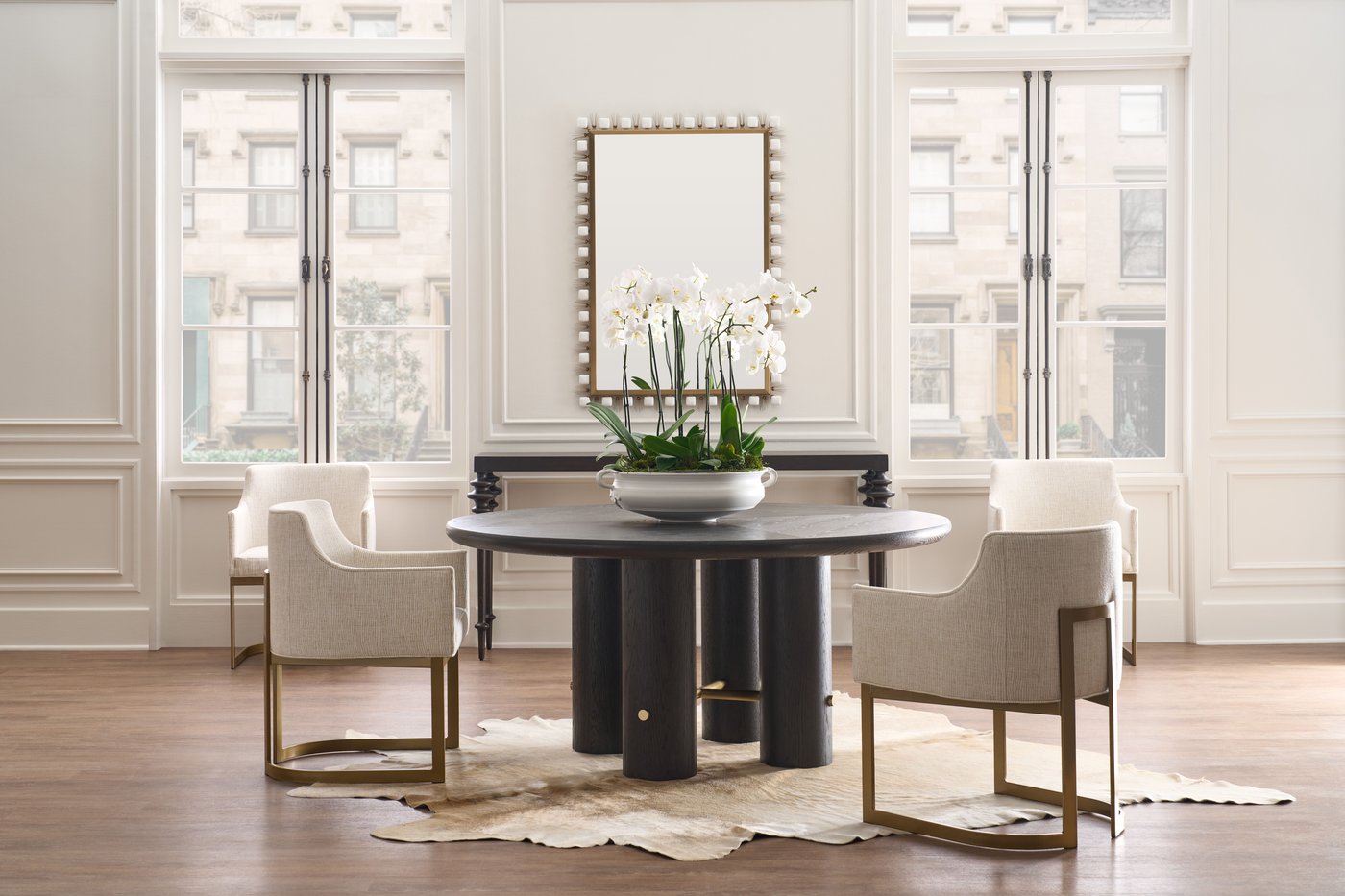
Most people choose a dining table shape by eye: a round table looks relaxed, a rectangle looks formal, and the decision gets made in the first few seconds in the showroom. The look matters, but it is the last thing that should decide. A round table in the wrong room crowds the walkway on two sides and wastes space on the other two. A rectangle chosen for a crowd that only gathers twice a year can turn a Tuesday dinner for four into a conversation shouted down the table.
The shape question runs along two separate axes. The first is the room: its proportions, and where people need to walk. The second is the gathering: how many people you seat most nights, how many you seat at the holidays, and whether you want one conversation or several. Settle both and the shape usually chooses itself. Here is how to work through each one, along with the oval, the base, and the rug and lighting that follow from your choice.
Is a round or rectangular dining table better?
Neither wins in every room: a round table suits square rooms and groups of up to about six, and a rectangle suits long rooms and gatherings of eight or more.
Start with the shape of the room and the number you seat most often, then consider the holiday count. If the room is close to square and you usually seat four to six, a round table will feel natural. If the room is long, or your table regularly fills with eight or more, a rectangle or an oval will serve you better.
Once the shape is settled, the look is easier to choose than many people expect, because a number of collections make the same design in both shapes. The Century Cadence table shown at the top of this guide, for example, comes as a 64-inch round on four oak columns and as a rectangle, so a family can keep one look and pick the footprint that fits.
Does a round table take up less space?
Not usually less floor, but a different shape of floor: a round table needs a square of space, while a rectangle needs a long one.
Every dining table needs at least 36 inches between its edge and the nearest wall or furniture, so a guest can push back and stand. A quick room check is to add 6 feet to both the length and the width of the table. Run that check on two tables that each seat six and the difference is plain:
- A 60-inch round: needs a room about 11 by 11 feet.
- A 72-by-40-inch rectangle: needs a room about 12 feet by 9 feet 4 inches.
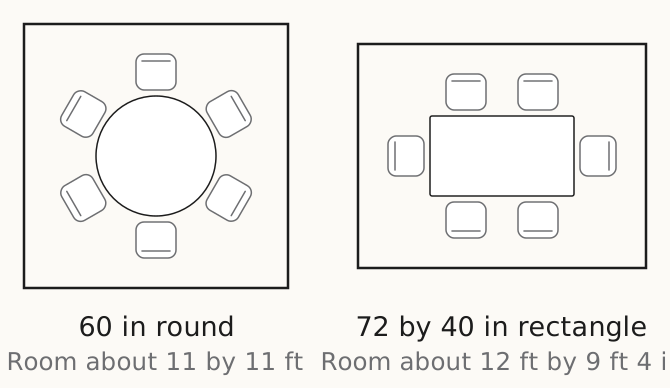
The total floor area comes out close. What changes is the outline, which is why the room's proportions matter more than its size. Our guide to how big a dining table you need has the full clearance plan, including the wider walkway to allow beside a sideboard.
Which shape fits a square room, and which fits a long one?
Match the table to the room: a round or square table in a square room, and a rectangle or oval in a long one.
A round table centered in a square room leaves an even walkway on every side, and its curve softens a room full of right angles. Put the same table in a long, narrow room and it leaves empty floor at both ends while pinching the walkway along the sides. A rectangle or oval follows the line of a long room and keeps the passage beside it clear.
Traffic is the other half of the room question. A dining area that opens to a kitchen or family room gets walked past all day, and a round table has no corners to catch a hip or a chair back. In a formal dining room with walls on all four sides, corners matter less, and the rectangle's extra seating usually wins.
How many people does each shape seat?
Round tables comfortably top out around eight to ten guests, while rectangles run to twelve and beyond.
The common round sizes break down this way:
- 48 inches: four comfortably.
- 54 inches: five to six.
- 60 inches: six comfortably, eight snugly.
- 72 inches: eight, sometimes nine.
- 84 inches: about ten.
Rectangles and ovals scale by length: roughly 60 to 72 inches for six, 84 to 96 inches for eight, 108 to 120 inches for ten, and 120 to 144 inches for twelve.
A simple way to check a round table's count is its circumference. A 60-inch round has about 188 inches of edge. Divided among six guests, that is about 31 inches each, which is generous. Divided among eight, it is about 23 and a half inches each, just under the 24-inch working minimum, which is why eight at a 60-inch round feels snug. The same math works on any round you are considering.
Which shape is better for conversation?
A round table, up to about 60 inches: everyone can see and hear everyone, and no one is stranded at the far end.
A round table has no head and no foot, so a group of four to six tends to share one conversation. The advantage fades as the table grows. Past about 72 inches, guests sit far apart across the middle and the center of the table is out of reach, which is why large rounds often get a lazy Susan for passing dishes.
A long rectangle works differently. Conversation naturally breaks into two or three groups along its length, which suits a big holiday table where you want the room to feel lively rather than formal. For a group of ten or twelve, that is often exactly the right feeling.
Is an oval dining table a good compromise?
Often, yes: an oval seats about as many guests as a rectangle of the same length, while its rounded ends ease traffic and keep more of a round table's sightlines.
An oval is the shape to consider for a long room that also gets a lot of foot traffic, or for a family with small children who run past the table. The rounded ends take away the corners where people tend to bump, and the curve brings the guests at the ends a little closer into the conversation.
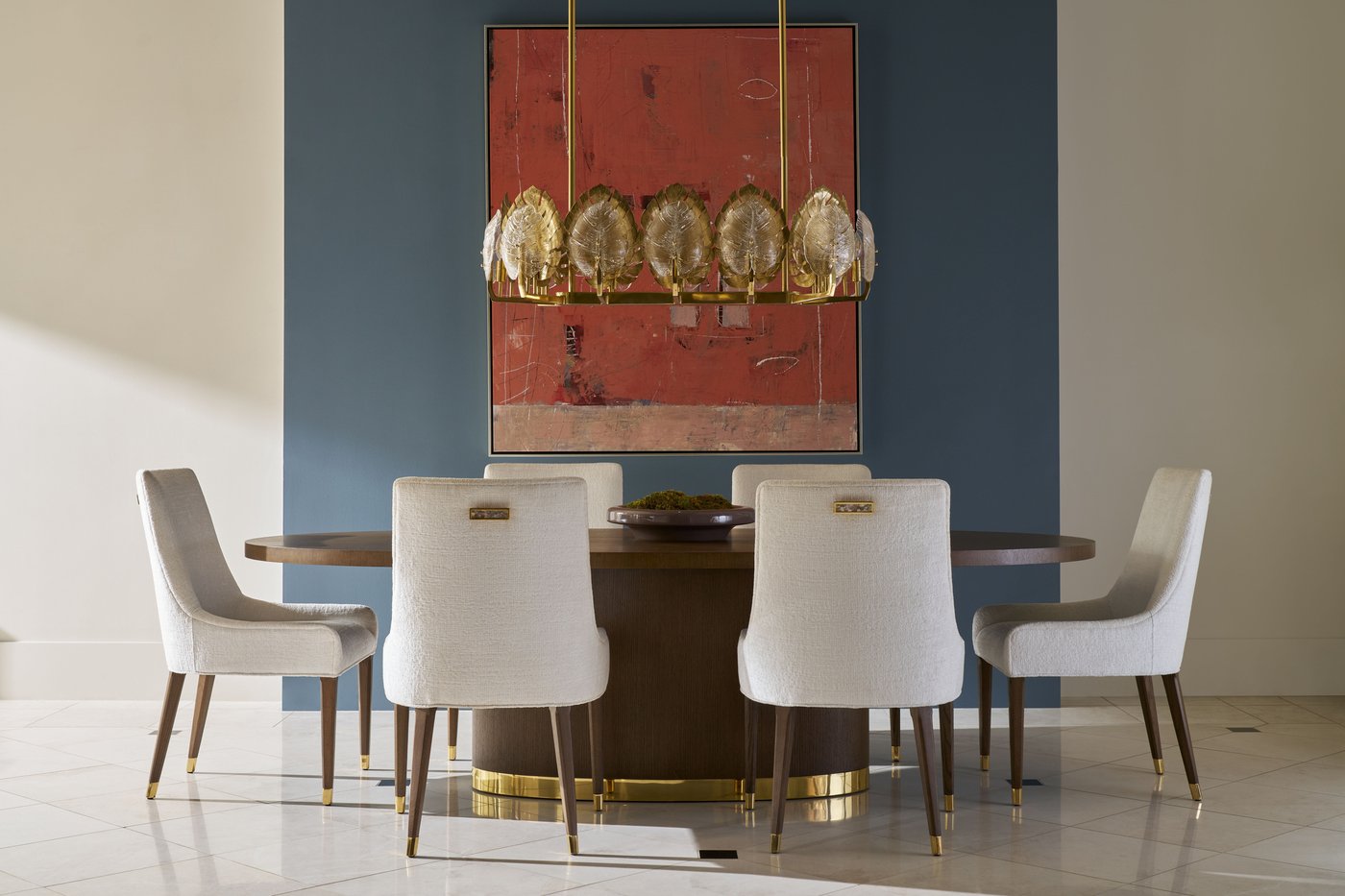
One caution: an oval loses a little usable surface at the ends compared with a rectangle of the same size, so check that a serving platter still fits down the center.
Does the base matter more on a round table?
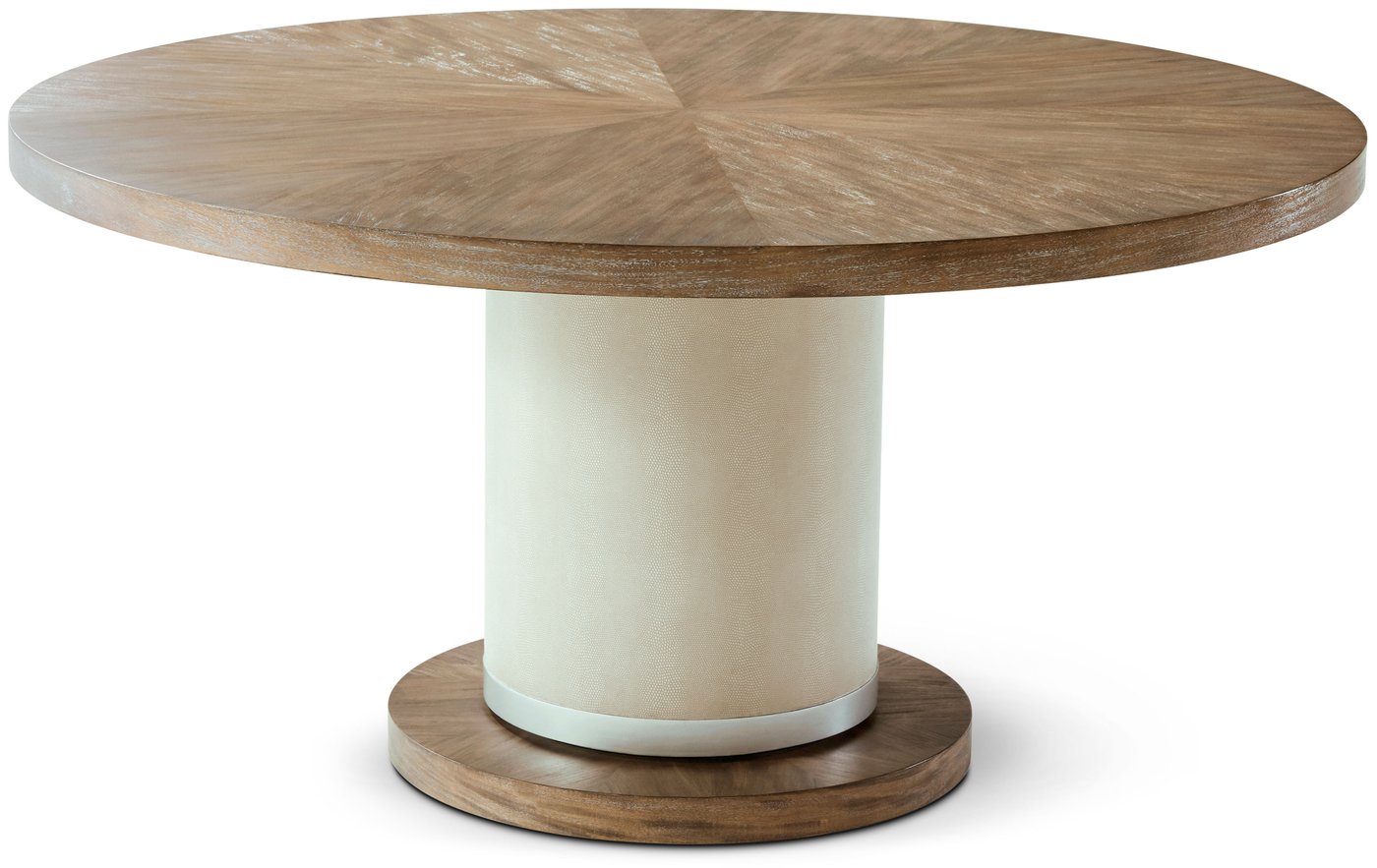
Yes: a single pedestal frees every position around a round table, while four legs fix where the chairs can go.
On a pedestal round, there are no legs around the edge, so you can pull up one more chair wherever it fits. A round on four legs seats exactly what the leg spacing allows, and on a smaller round the legs can land right where a guest's knees want to be. Sit at every position before you decide.
A rectangle has the same choice. Legs set at the corners keep the long sides clear, and a pedestal or trestle frees the edge so chairs can slide in wherever they fit, though guests at the ends may find their feet near the base.
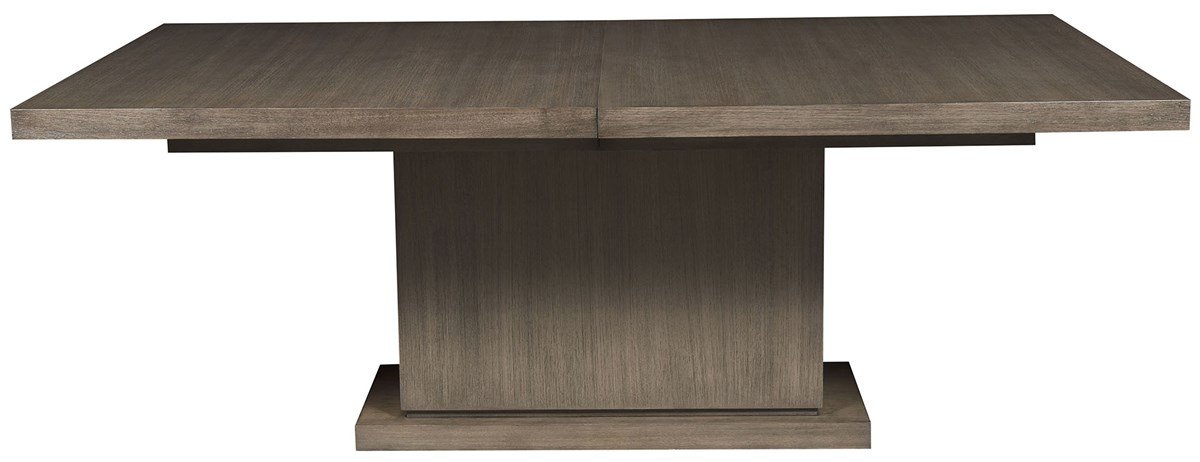
Which shape is easier to extend for the holidays?
Rectangles extend the furthest, but many round tables open into ovals that add two or more seats.
A rectangular table with two leaves can grow from a table for six to one for ten or more, which is why the rectangle remains the default for families who host the whole extended family. Round tables have their own answer. Many split down the middle and take a leaf: a 48-inch round that seats four commonly opens to an oval of about 66 to 72 inches for six, and a 60-inch round that seats six opens to about 80 to 84 inches for eight. A jupe table goes one step further and stays round as it grows. Our guides to extendable versus fixed dining tables and jupe tables explain how each mechanism works.
How do the rug and lighting change with the shape?
Echo the table: a round rug and a single centered fixture over a round table, and a rectangular rug with a linear fixture or a row of pendants over a long one.
Size the rug about 24 inches beyond the table on every side, so chair legs stay on the rug when someone pushes back. For a 60-inch round, that means a round rug about 9 feet across. Our rug size guide has the full measurements.
A chandelier generally looks right at one-half to two-thirds the width of the table, hung so its bottom sits about 30 to 36 inches above the tabletop. Over a 60-inch round, that is a fixture of roughly 30 to 40 inches across. Over a long rectangle or oval, a linear fixture or two or three pendants spreads the light along the whole table instead of pooling it in the middle. If a sideboard will stand nearby, our guide to sideboards, buffets, and credenzas covers the height and clearance to plan for.
Where can I compare round and rectangular tables in Kansas City?
The quickest way to settle the shape question is to sit at both, and the Seville Home showroom in Leawood keeps dining tables on the floor to try.
Bring your room measurements, a rough sketch of where people walk, and your largest guest list. A designer will help you weigh the shapes side by side, then settle the size, the chairs, and the rug and lighting that go with them. Visit us at 5205 W 135th Street in Leawood, Monday through Saturday, 10 a.m. to 5 p.m., or browse our dining collection before you come. Our designers offer complimentary design consultations, in the showroom or in your home, and directions are on our visit page.
Common questions
Is a round or rectangular dining table better?
Neither is better in every room. A round table suits a square room and groups of up to about six, because everyone can see and talk to everyone. A rectangular table suits a long room and gatherings of eight or more, and it extends further for holidays. An oval sits between the two: it seats like a rectangle but has no corners to walk around.
Does a round dining table take up less space?
Not usually less floor, but a different shape of floor. With 36 inches from the table to each wall, a 60-inch round that seats six needs a room about 11 by 11 feet, while a 72-by-40-inch rectangle that seats six needs about 12 feet by 9 feet 4 inches. A round fits a square room best, and a rectangle fits a long, narrow one.
How many people can sit at a round dining table?
A 48-inch round seats four, a 54-inch round seats five to six, a 60-inch round seats six comfortably and eight snugly, a 72-inch round seats eight, and an 84-inch round seats about ten. Past about 72 inches, guests sit far apart and the center of the table is hard to reach, so a long rectangle or oval is usually the better choice for ten or more.
What shape dining table is best for a square room?
A round or square table suits a square room, because it echoes the room's proportions and leaves an even walkway on every side. Allow at least 36 inches between the table edge and the walls, and 42 to 48 inches where people will walk behind seated guests.
Is an oval dining table a good compromise?
Often, yes. An oval seats about as many guests as a rectangle of the same length, but its rounded ends remove the corners that people bump into in a narrow room, and it keeps more of the easy sightlines of a round table. Many round tables also open into ovals with a leaf, which gives you both shapes in one table.