How to Choose a Sectional: Shape, Size and Which Arm Is Which
L-shape, chaise or U, how deep, how many it really seats, what left-arm-facing means and where the cocktail table goes: how to choose a sectional, from Seville Home in Leawood, KS.
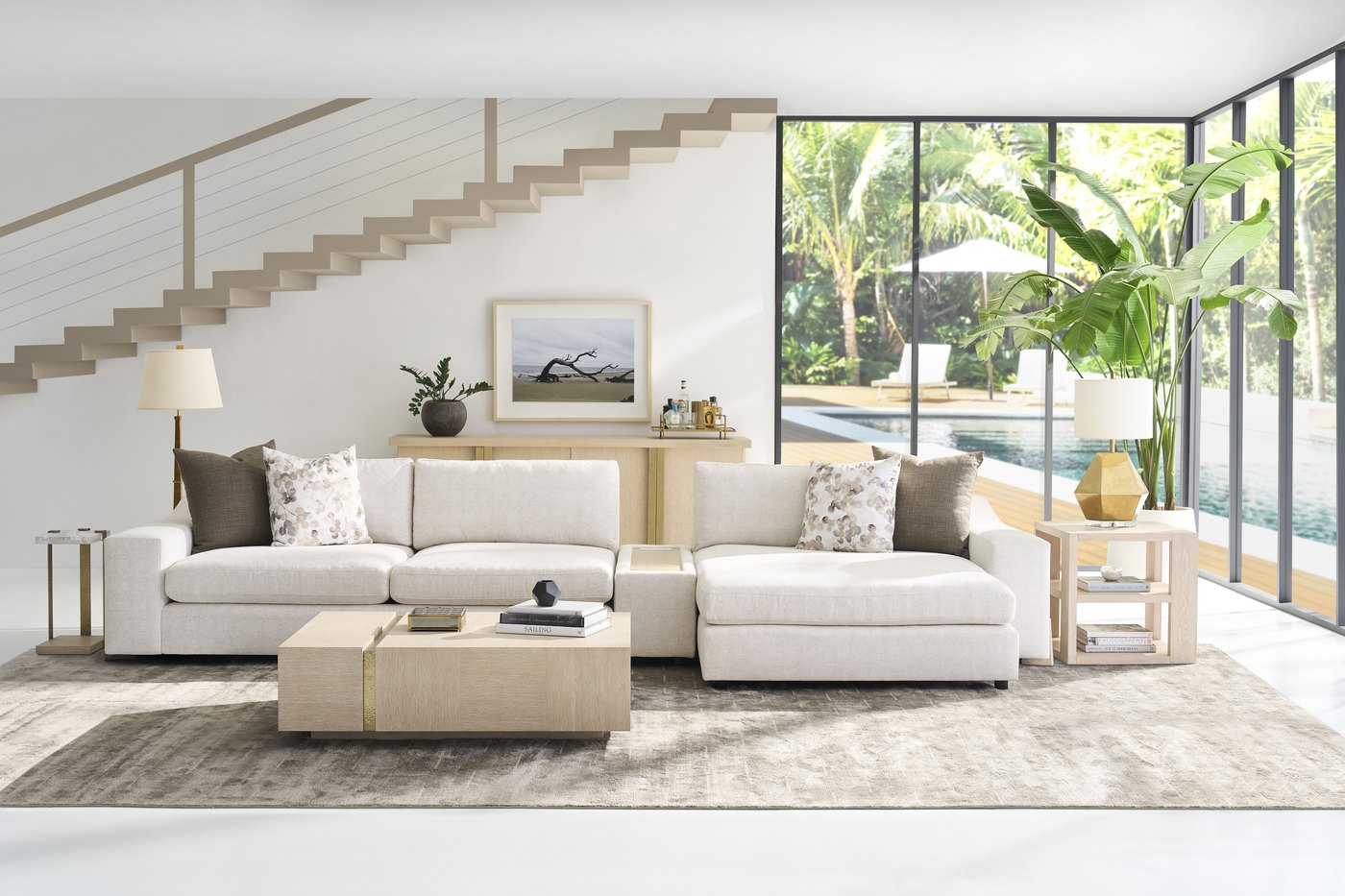
A sectional looks like one big decision, and it is really two. The first is shape: whether it turns one corner or two, whether it ends in a chaise, and which side the long run falls on. The second is size: how many inches each run takes up, how deep the seat is, and whether every piece can reach the room.
Settle shape first, because how the room gets used decides it. Then size that shape to the walls. One trap sits between the two: left and right on a sectional may not mean what you expect, and they do not mean the same thing from one maker to the next.
What shape of sectional should you choose?
Choose the shape by how the room gets used: an L for conversation, a chaise for stretching out and a U for a big room where everyone gathers around one spot.
Each shape asks for something different from the floor:
- L-shape. Two runs and a corner. The long side faces the fireplace or the television, and the return marks the edge of the seating area, as our guide to laying out a living room explains.
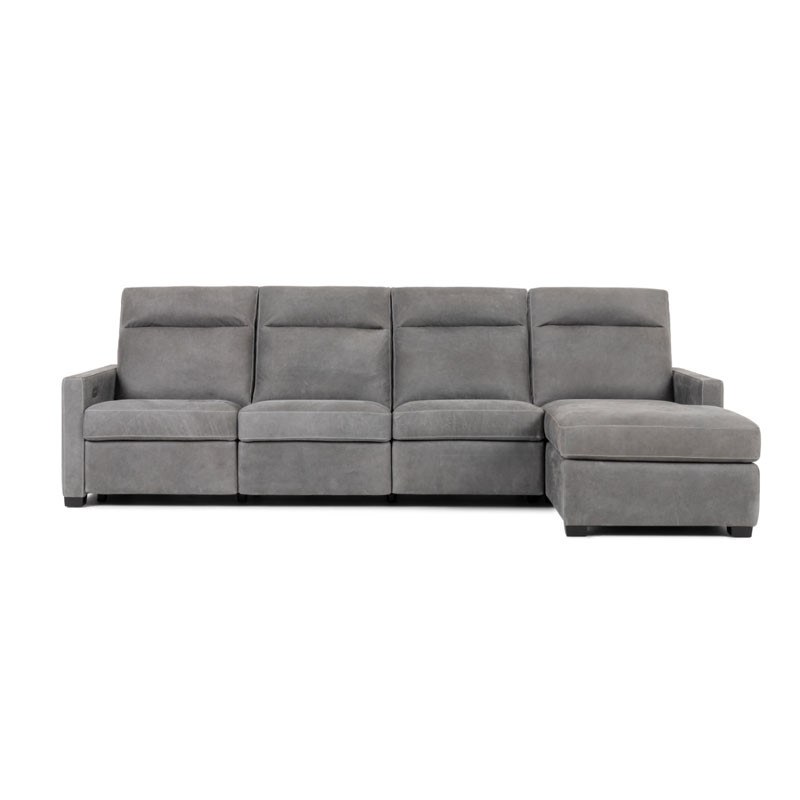
- Chaise. A sofa with one end that reaches into the room, so one person can put their feet up. It leaves the floor more open than a full return does.
- U-shape. Three runs and two corners. It takes the most floor, and the opening has to leave room for a table and for people's legs.
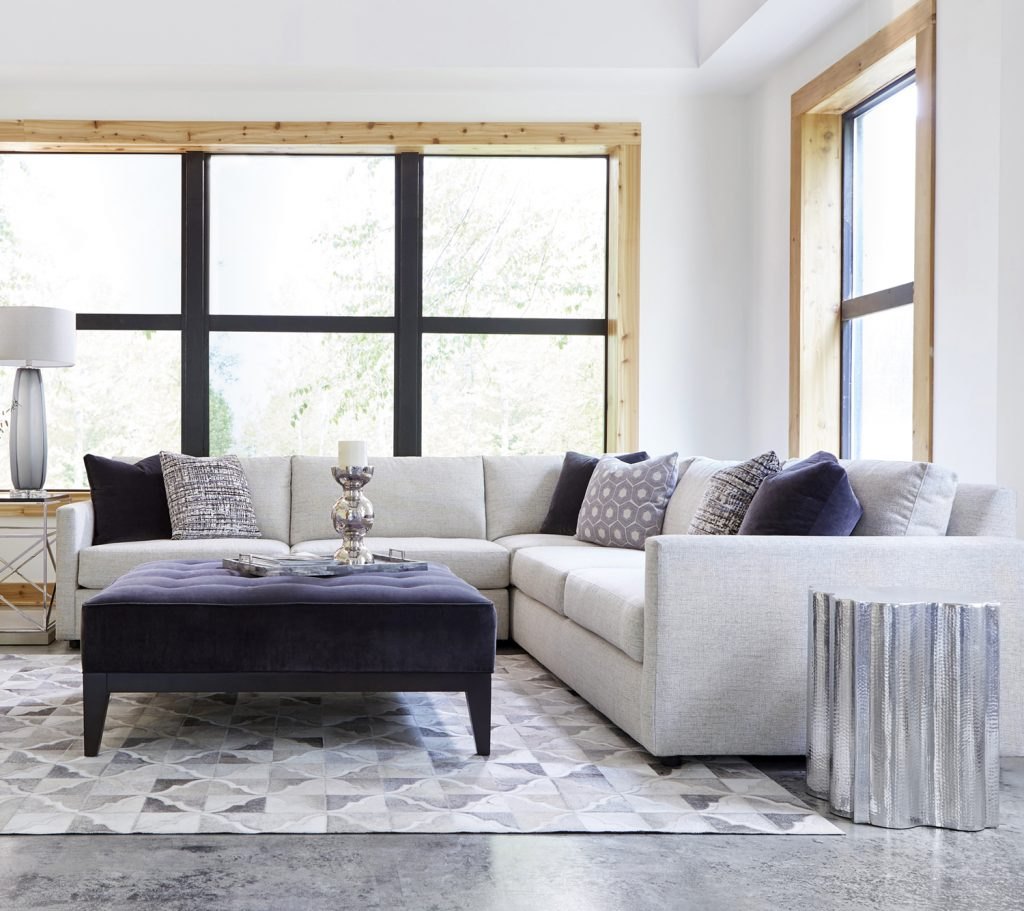
A left-arm loveseat, a square corner and a right-arm loveseat. Five seat cushions.
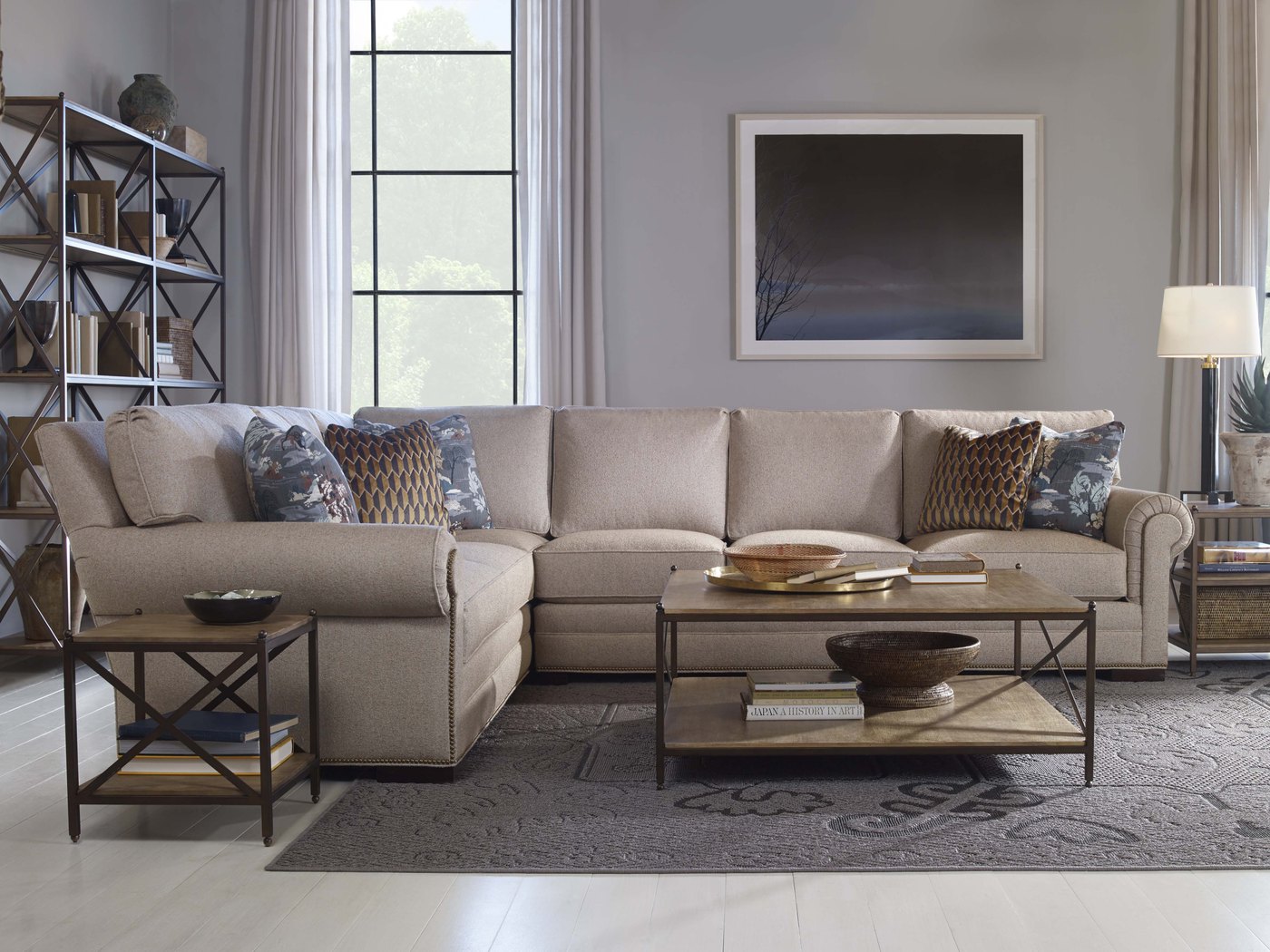
A left-arm chaise and a right-arm sofa. The sofa alone is 39 inches deep.
Two arm loveseats, two corner chairs, an armless loveseat and an armless chair. Nine seat cushions.
Most of these are built from separate pieces, so the same line can often make more than one shape. Compare a few on our sofas and sectionals page, or see what clients choose most on our best sellers page.
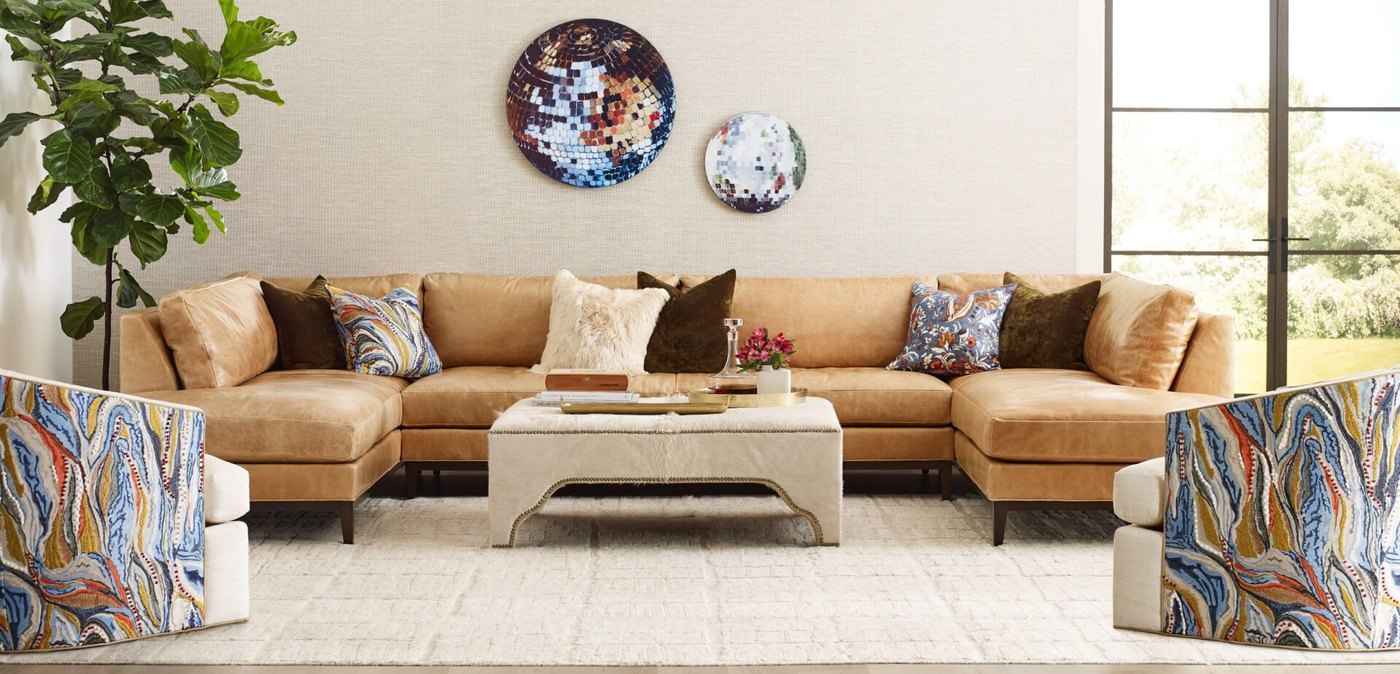
What do left-arm-facing and right-arm-facing mean?
Stand in front of the piece and look at it: an arm on your left makes it left-arm-facing, and an arm on your right makes it right-arm-facing.
The abbreviations are LAF and RAF. It is easy to guess the opposite, because most of us picture ourselves sitting on the piece, and once you sit down, left and right swap.
The label belongs to each piece, not to the whole sectional. The end without an arm is the end that joins the next piece. So a left-arm chaise joined to a right-arm sofa puts the chaise on your left as you look at it.
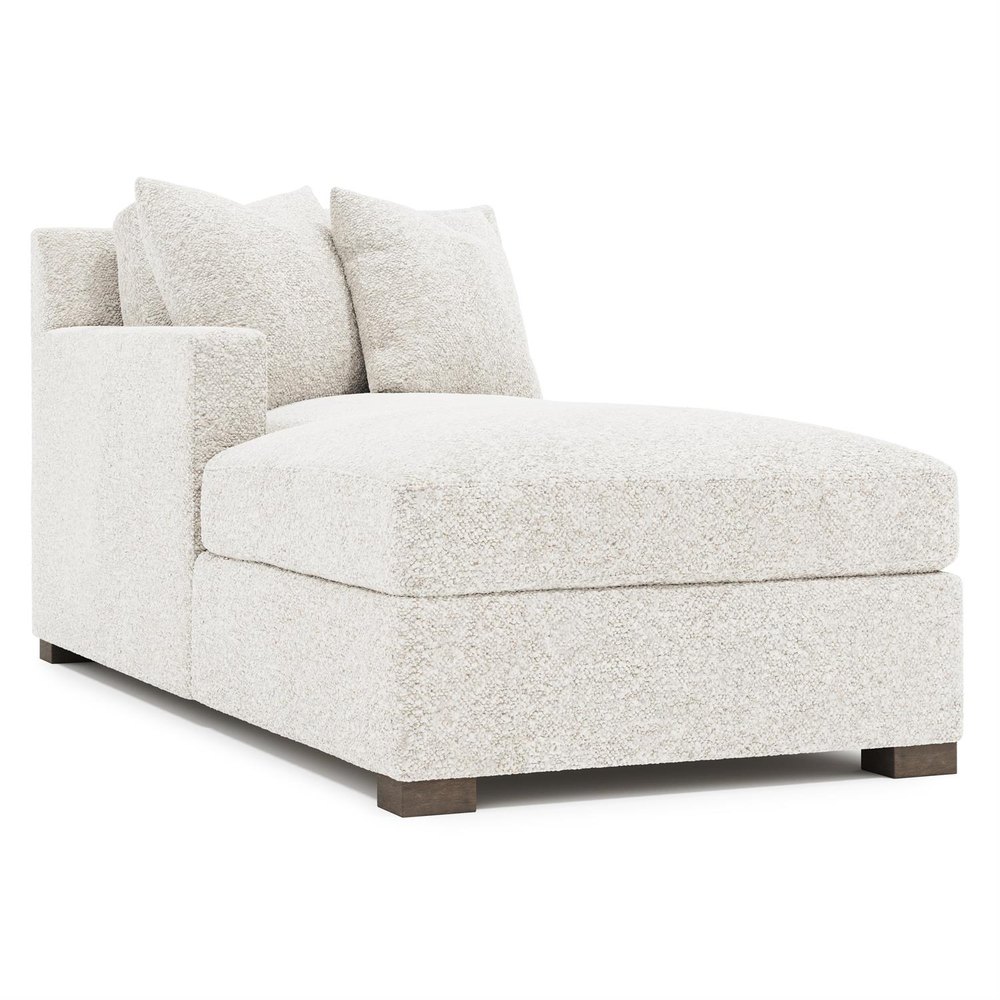
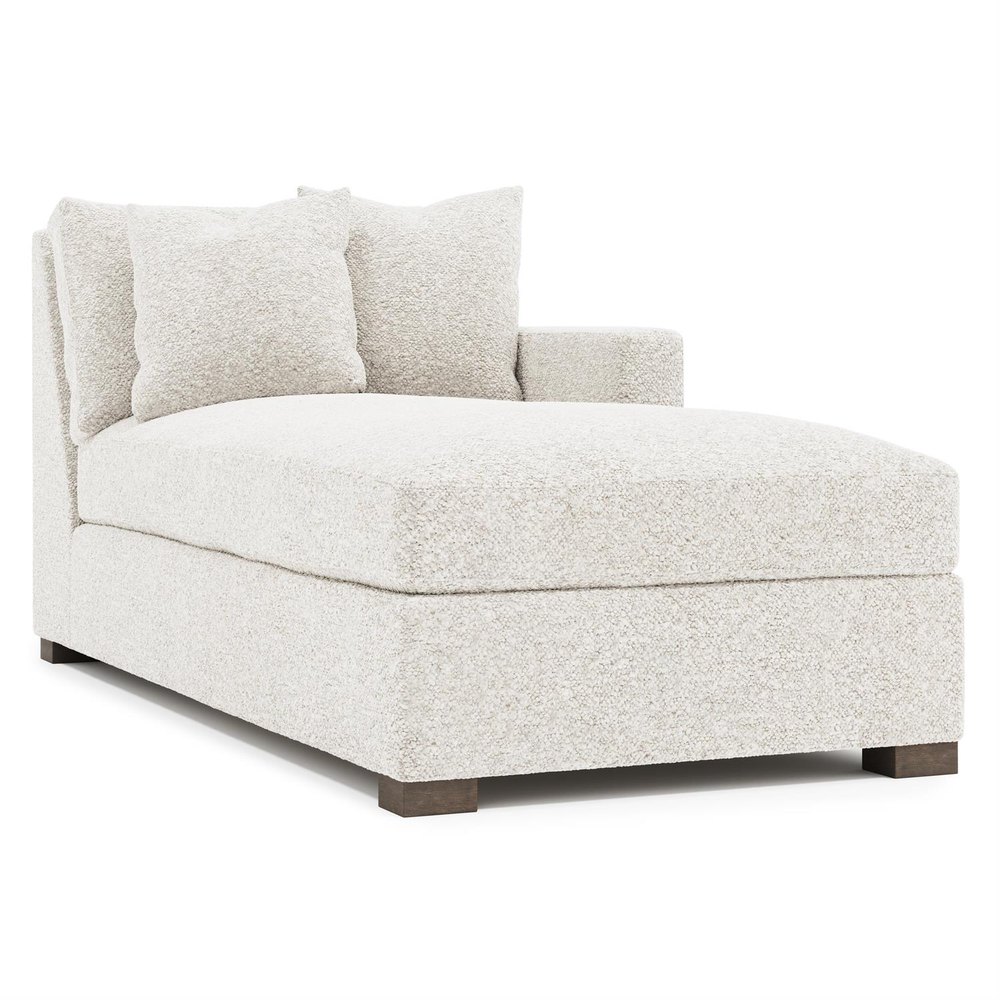
Most of the makers we checked name pieces from the front. Century writes LAF and RAF into its product names. Massoud, Bernhardt and Huntington House say left arm and right arm, and on the Vesper, Max, Zoe, Kelsey, Helena, 7100 and 2300, their drawings and photos put that arm on your left or your right as you face the piece.
American Leather works the other way. Its spec sheets for the Tennessee, Sarasota, Taos, Breckenridge and Dean say to specify components from the sitting position, and the drawings match: a piece marked RA has its arm on your left as you face it.
So do not order from the letters alone. Stand where you will usually see the sectional, sketch it from there and write down a plain sentence, such as "chaise on my left as I face it." Then compare that sentence with the maker's drawing of the exact pieces, and a Seville Home designer can check it with you.
How deep should a sectional be?
Choose the seat depth for how you sit, then check the overall depth, because the two numbers do not always move together.
Our guide to sofa size and seat depth sets out the rule: about 20 to 22 inches suits upright sitting, and 23 to 25 inches or more invites lounging. Sectionals lean toward lounging. Among those we compared, seat depths start at 23 inches and run to 28.
Seat depth Overall depth
The Kelsey and the Helena are both 40 inches deep overall, yet the Helena's seat is 2.5 inches deeper. A number from one column tells you little about the other, so ask for both.
Overall depth counts twice on a sectional, because the room gives it up along two walls. Some lines let you choose. Century builds its Cornerstone frames at 36, 38 or 40 inches overall, and lists its Great Room from 36 to 48 inches. Huntington House offers the 7100 in more than one depth. If a seat is deeper than you want, back pillows bring you forward.
How do you measure a room for a sectional?
Measure each run against its own wall, add the walkway, then tape the footprint on the floor.
Sketch the room and mark the doors, windows and vents. Then work through the numbers from our layout guide: 30 to 36 inches for main walkways, and 6 to 12 inches off the wall where you can spare it.
Two examples show how quickly the inches add up. The 127-inch run of the L above, with a walkway past its end, needs 157 to 163 inches of clear wall. The 67-inch reach of the Vesper chaise, with a walkway past its tip, needs 97 to 103 inches measured from the back of the sectional.
Chaise length is the number people tend to underestimate. Those we compared reach from 61 to 91 inches into the room:
- 61 to 70 inches: Century Cornerstone
- 67 inches: Massoud Vesper and American Leather Tennessee
- 69 inches: Massoud Max
- 71 inches: Huntington House 2300
- 74 inches: Bernhardt Kelsey
- 87 inches: Massoud Vesper bumper chaise
- 91 inches: Bernhardt Helena
Mark the whole footprint with painter's tape and walk around it for a day. Plan the rug at the same time: it should run past both arms, which often means a 9-by-12 or larger.
Will a sectional fit through the door?
Usually, because it arrives in pieces, but check the largest single piece against the tightest point of the path.
The overall size of the sectional does not matter on the stairs, since each section travels on its own. The largest section still has to make it, and it can be as long as a full sofa. The Massoud Vesper right-arm sofa is 91 inches long, the Bernhardt Kelsey return sofa is 105 inches, and Century lists its Great Room corner sofa at 120 to 139 inches. Ask whether a piece that long ships as one frame.
Measure every piece the way you would measure a sofa, including its diagonal depth, and compare it with your doors, halls and stairs. American Leather lists easy disassembly for delivery as an option on its Taos and Breckenridge. Our white-glove delivery crew can go over a close call before you order.
How many people does a sectional really seat?
Count the seat cushions, then treat the corner as a bonus seat and a chaise as one person.
Plan on about 30 inches of seat width for each person on a straight run. The Huntington House 7100 L has five seat cushions, and on paper it seats five. But each loveseat cushion is 36 inches across, from an inside width of 72 inches, while the square corner measures just 27 inches inside. The Huntington House 2300 works the same way, at 30.5 inches for each loveseat cushion and 24 inches for the corner. The Massoud Vesper corner measures 23 inches inside.
Knees meet in a corner seat as well, so it suits someone who likes to tuck in better than someone settling in for a long evening. Sit in the corner before you count it.
What are your options at the corner?
You have four choices: a square corner seat, a corner built into a long sofa, a curved or angled corner, or no corner seat at all.
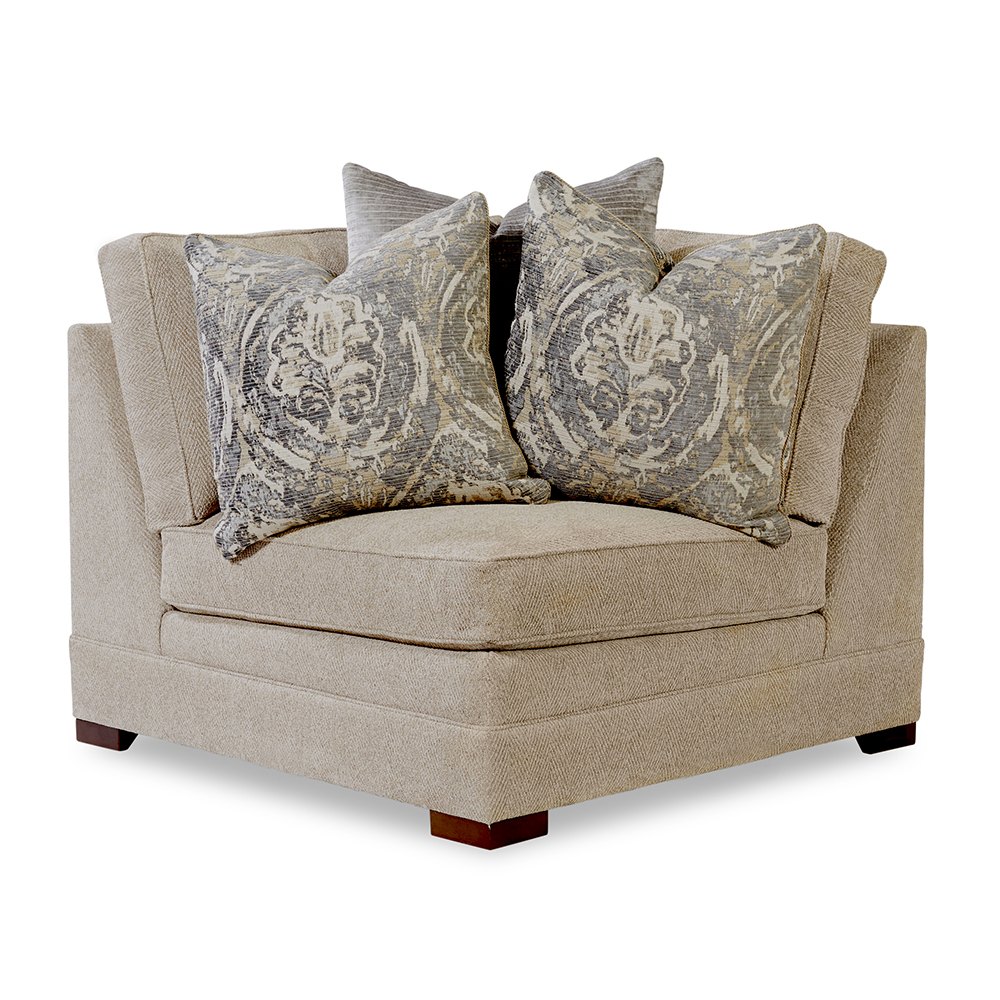
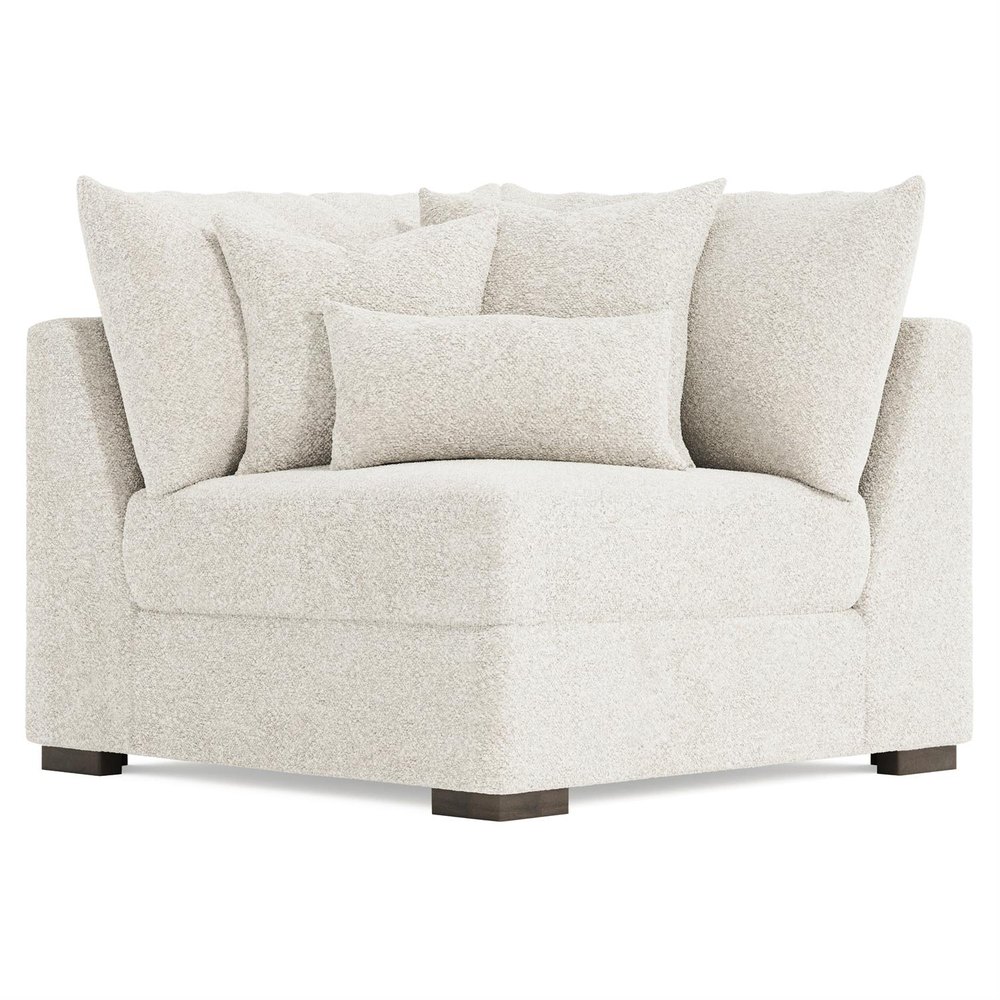
- A square corner seat. A separate piece that is easy to carry and to replan around. Those we compared run from 39 inches square on the Massoud Vesper to 45 inches on the Huntington House 7100.
- A corner built into a long sofa. Fewer seams, but one longer piece to deliver. The Bernhardt Kelsey return sofa is 105 inches, the Massoud Vesper sofa return is 107, the Huntington House 2300 corner sofa is 110, and the Century Cornerstone corner sofa runs from 100.5 to 111.
- A curved or angled corner. It softens the turn and takes more floor. The Century Cornerstone 90-degree wedge is 65 to 70 inches wide, and the American Leather Tennessee curved corner is 52 inches on each side.
- No corner seat. A bumper chaise closes the end with no arm at all. The Massoud Vesper bumper chaise is 39 inches wide and 87 inches long.
What makes a sectional modular?
A modular sectional is a set of separate pieces you choose and arrange, but only the armless pieces and ottomans can move freely.
A piece with one arm has only one end it can sit at, so a left-arm chair stays on one end of the run. The middle is where you have choices. The Massoud Zoe comes as 46-inch left-arm and right-arm chairs, a 40-inch armless chair, a 40-inch square corner and a 40-inch ottoman, and you decide how many of each. Bernhardt says its Kelsey and Helena frames can stand alone on request.
Some lines go further. The Century Cornerstone is configurable across 3 depths, 15 arm styles and 29 base styles, which is the kind of choice our custom upholstery program is built around. If you plan to rearrange the pieces later, ask how they connect.
Can a sectional recline?
Yes, but leave room in front for the footrests, and check which seats actually move.
Not every seat in a motion sectional reclines. On the American Leather Tennessee, the chaise and the corners have no motion, and the armless seats are stationary unless you choose the motion option. Closed, the Tennessee is 43 inches deep. Open, it reaches 66 inches, so plan for those 23 extra inches in front.
Behind the seat, go by the maker's number. The American Leather Dean asks for 14 inches of wall clearance, and its pieces connect with a 6-inch or 9-inch insert between them. Our guide to choosing a recliner covers how the mechanisms differ.
Where does the cocktail table go with a sectional?
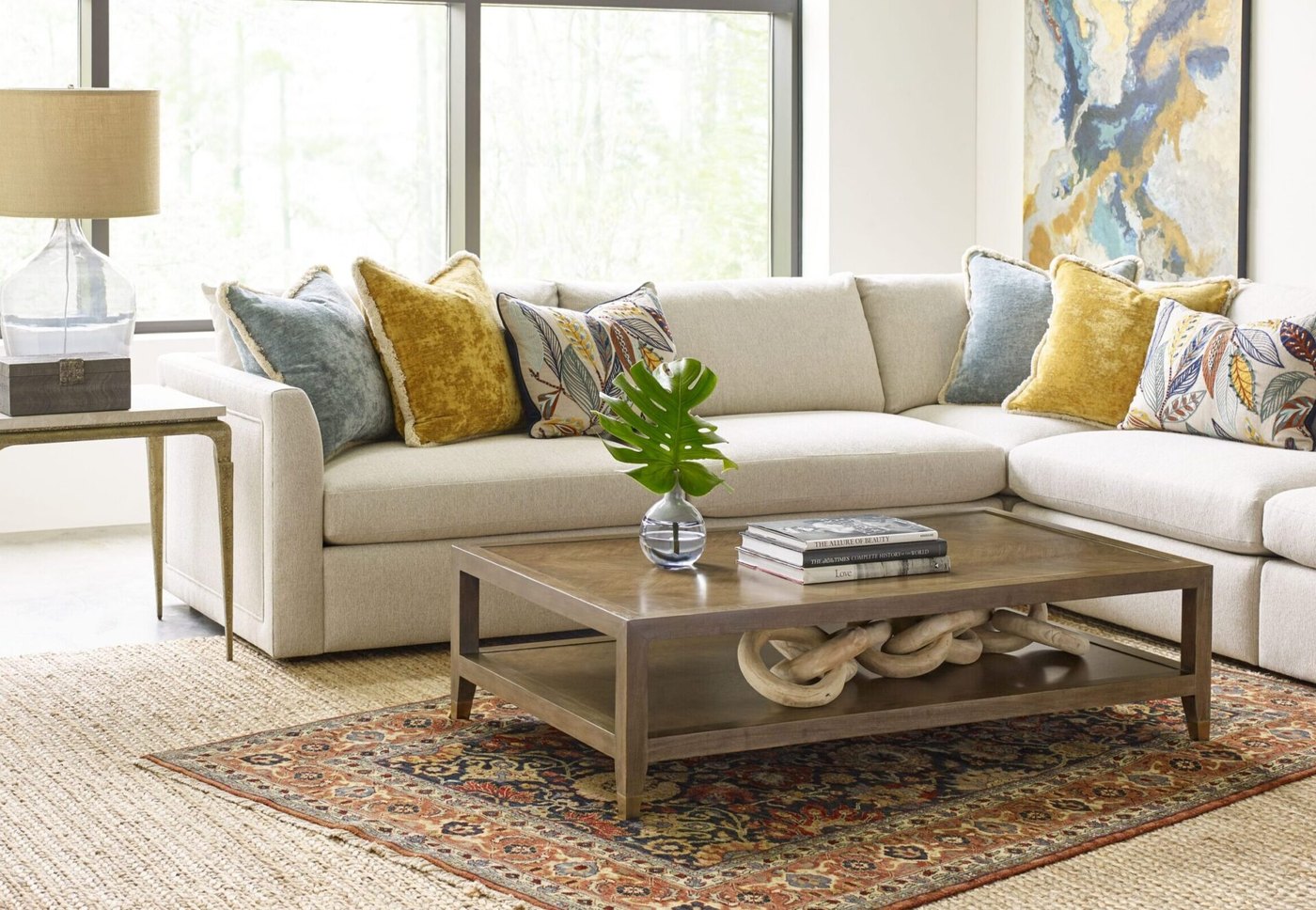
In an L, set it in the open corner, 14 to 18 inches from the seat fronts on both sides, and with a chaise, set it in front of the sofa run.
Fourteen to 18 inches is the same reach test our layout guide uses for any sofa, close enough to set down a glass without standing. A sectional asks you to meet it twice. A square or round table works well in an L, because it keeps an even gap on both runs. A longer table works beside a chaise, where it runs along the sofa and leaves the chaise clear.
It sits in the open corner, the same distance from both runs.
It runs along the sofa and stays clear of the chaise.
Where can you try a sectional in Kansas City?
Sit on them at Seville Home in Leawood, because seat depth and the corner seat are hard to judge from a photo.
The floor carries sectionals from Massoud, Bernhardt and American Leather. Bring your wall lengths and your door widths, and sit on a few depths back to back. A sectional built in your own fabric generally takes about 8 to 16 weeks, so one ordered around the New Year can be in place by spring.
The showroom is at 5205 W 135th Street in Leawood, open Monday through Saturday from 10 to 5. Plan your visit or book a complimentary design consultation, and a Seville Home designer will help you settle the shape, the size and which arm goes where.
Common questions
What does left-arm-facing mean on a sectional?
Left-arm-facing, or LAF, means the arm is on your left as you stand in front of the piece and look at it, even though it would be on your right if you sat down. Century, Massoud, Bernhardt and Huntington House name their pieces this way on the models we checked. American Leather's spec sheets say to specify components from the sitting position, so its labels read the other way. Check the maker's drawing before you order.
How deep should a sectional be?
Choose the seat depth for how you sit: about 20 to 22 inches suits upright sitting, and 23 to 25 inches or more invites lounging. Among the sectionals we compared, seat depths run from 23 to 28 inches and overall depths from 39 to 45 inches, and the two numbers do not always move together.
How much room do you need for a sectional with a chaise?
Add the chaise length to your walkway. The chaises we compared reach from 61 to 91 inches into the room, and a main walkway needs 30 to 36 inches. A 67-inch chaise with a walkway past its end takes 97 to 103 inches measured from the back of the sectional.
How many people does a sectional seat?
Count the seat cushions, then treat the corner as a bonus seat and a chaise as one person. A Huntington House 7100 L with two loveseats and a square corner has five seat cushions, but the corner measures 27 inches across inside, against 36 inches for each loveseat cushion.
How far should a cocktail table be from a sectional?
Leave 14 to 18 inches between the table and the seat fronts. In an L, set the table in the open corner with that gap on both sides. With a chaise, set it in front of the sofa run with the same gap from the sofa and from the side of the chaise.